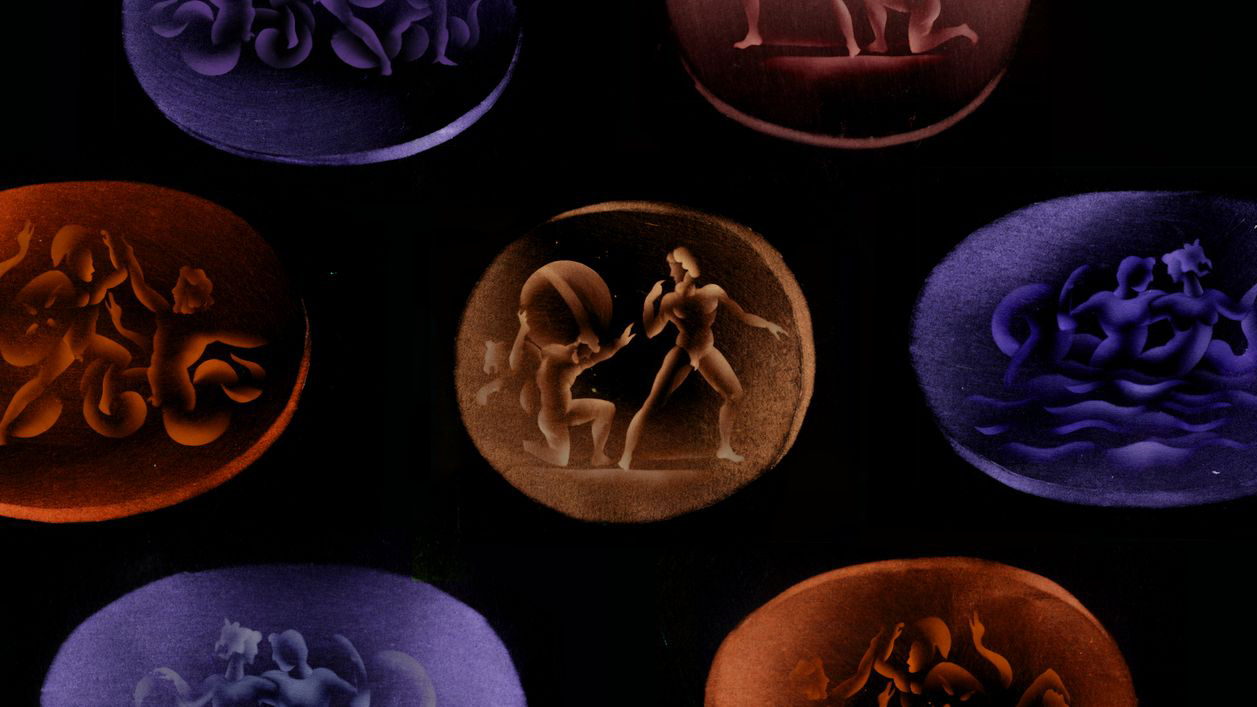
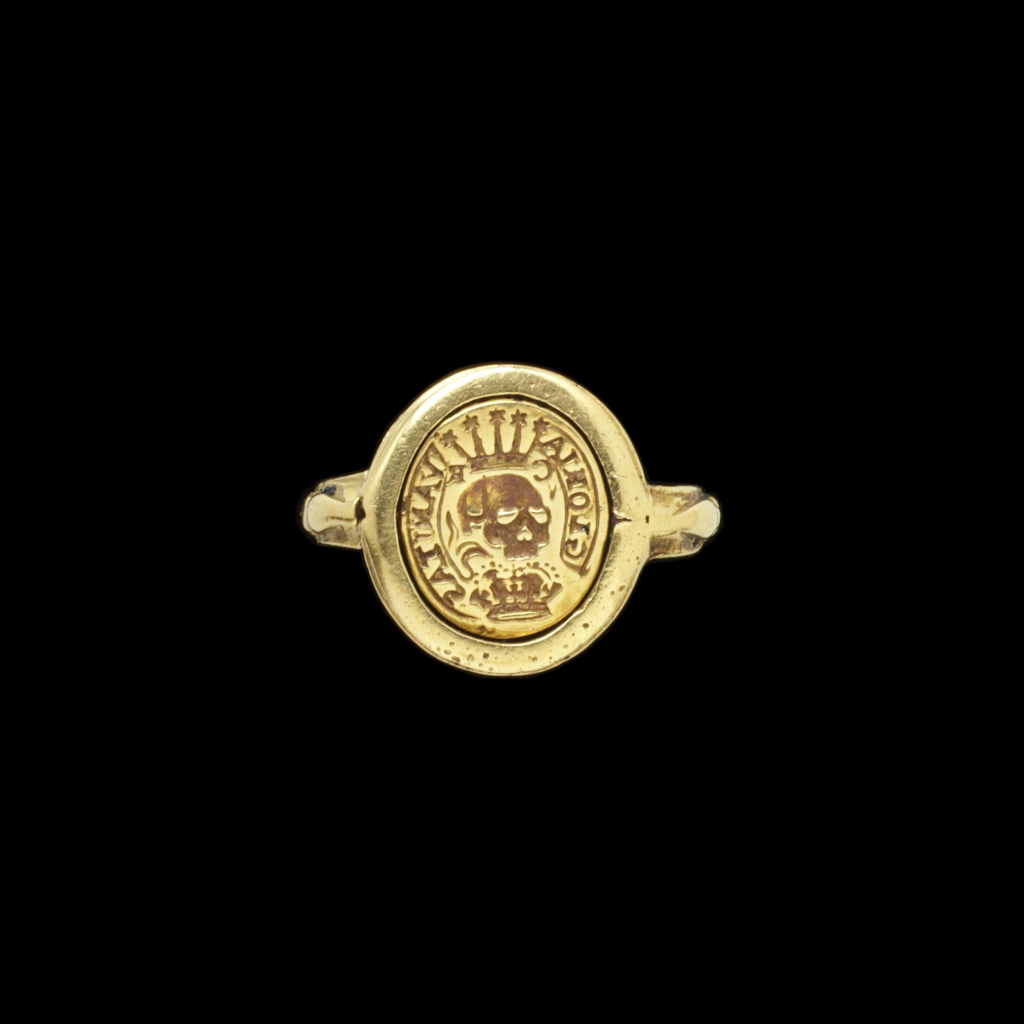
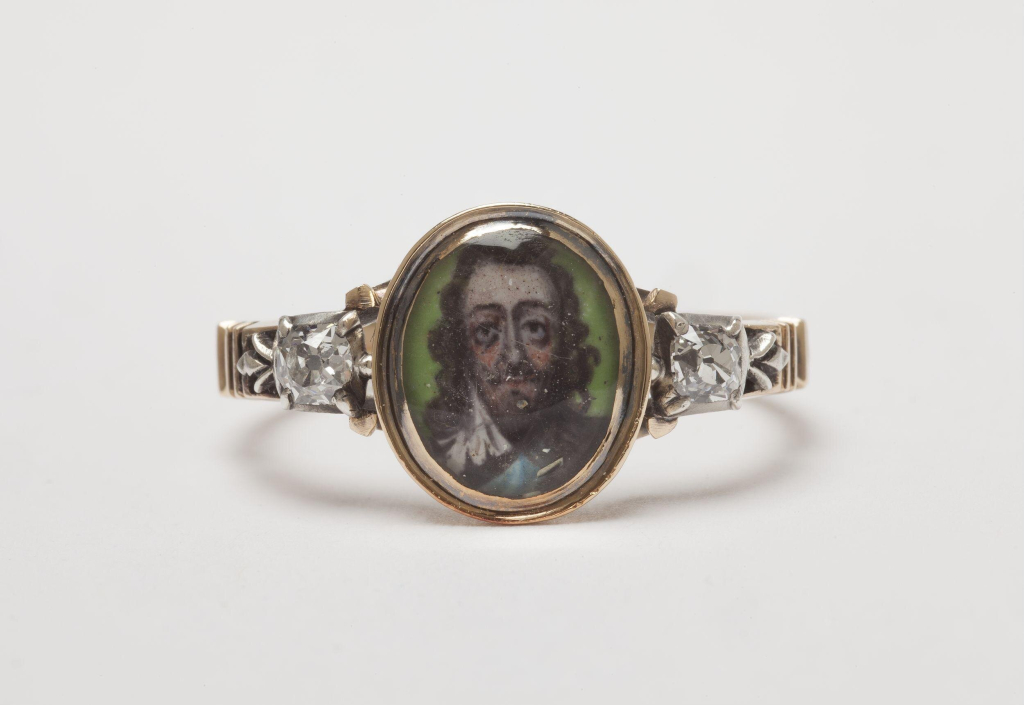
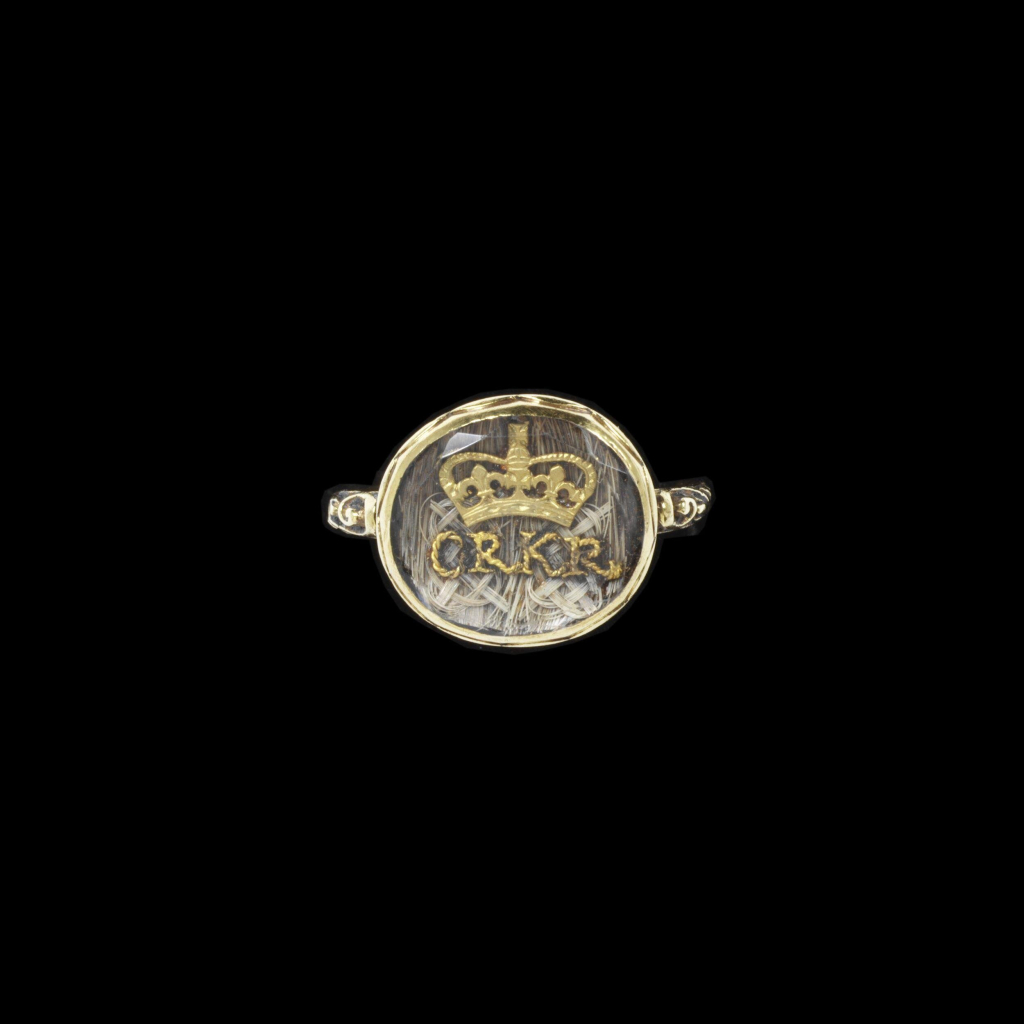
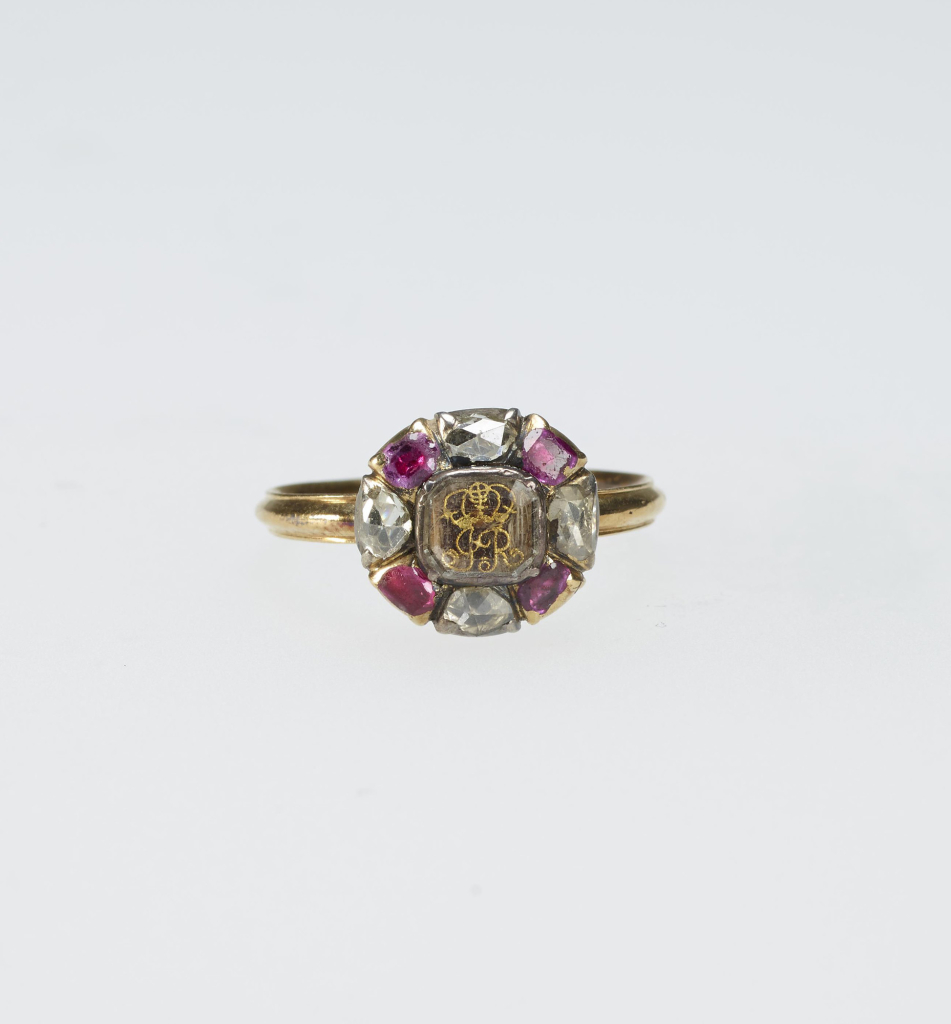
Gemstones. Despite their small size, the artistic value of these jewels can easily rival that of monumental sculptures, reliefs or bronzes. Although the most exquisite gems were once carved out of precious stones, such as amethysts or sapphires, semi-precious stones were used more often – be it carnelian, agate or jaspis. The history of hardstone carving started 5000 years ago in Mesopotamia, but glyptic art was emulated and enriched by the ancient Romans and Greeks.
Gems were considered valuable goods – they were set in rings as portable seals to validate documents before signatures replaced wax. They slowly acquired the status of luxury goods and reflected their owners’ beliefs and class identity. Basically, gems can be divided into two kinds: cameos with sunk reliefs, and intaglios with raised ones. A certain Polish prince became fascinated with the latter kind, and the scandal his collection caused rocked Europe.
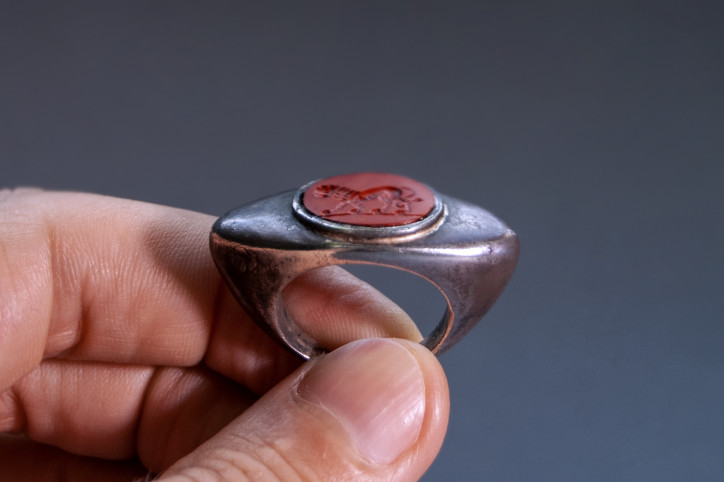
Roman ring with an intaglio depicting a lion, 3rd century CE – jasper, silver; intaglio 1.4 cm wide, ring 3.6 cm wide; photo: Tomasz Wichrowski
Prince Stanisław Poniatowski was the son of Kazimierz Poniatowski – chamberlain at the court of King Stanisław II Augustus (and the king’s nephew). His father provided him with a careful upbringing and enrolled him in the modern Warsaw school founded by the Italian Theatines, who were known for educating the offspring of wealthy nobility. In order to acquire taste and experience, the monarch’s young pupil undertook a few longer voyages across Europe, following the popular Grand Tour tradition. However, it was the prince’s year-long stay in Italy that greatly influenced his personal development, since it awoke in him a passion for collecting that later made him famous.
The turn of the 18th century witnessed a true collecting frenzy among European nobility – especially when it came to antiquities. Johann Joachim Winckelmann’s work on the reception of ancient Greek art was groundbreaking. Its publication in 1755 and the archaeological excavations in Pompeii, Stabiae and Herculaneum gave rise to a phenomenon nowadays known as antiquomania, which lasted throughout the 19th century. Its most famous Polish symptom was the collection of the Czartoryski family, made partly available to the public by princess Izabela alongside the patriotic memorabilia exhibited in the Temple of the Sybil in Puławy.
Antiquomania also had its dark sides – wealthy nobles succumbed to the rage of the day and often became victims of forgers, who took advantage of the shopping craze and sold them completely useless objects. Thanks to a letter written from Rome by August Moszyński, the art advisor of King Stanisław, we know that the nephew of the Polish monarch suffered the same misfortune. However, getting swindled did not hamper the young aristocrat’s enthusiasm for collecting.
During his extensive journeys, Stanisław Poniatowski built a collection of various artefacts that became renowned throughout Europe. However, only the gemstones in his possession brought him true fame, since his gem collection was one of the largest in the world. Moreover, it had been founded in the wake of the glyptic craze that engulfed Europe at the turn of the 18th century.
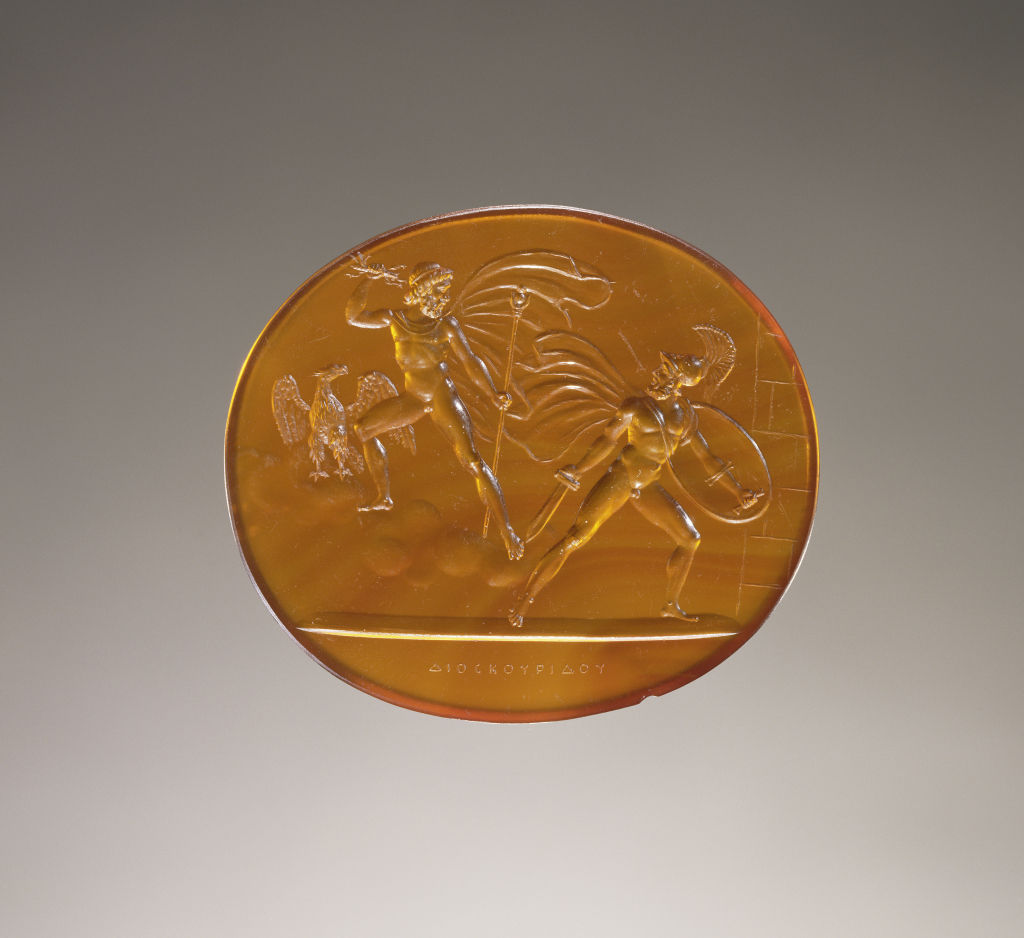
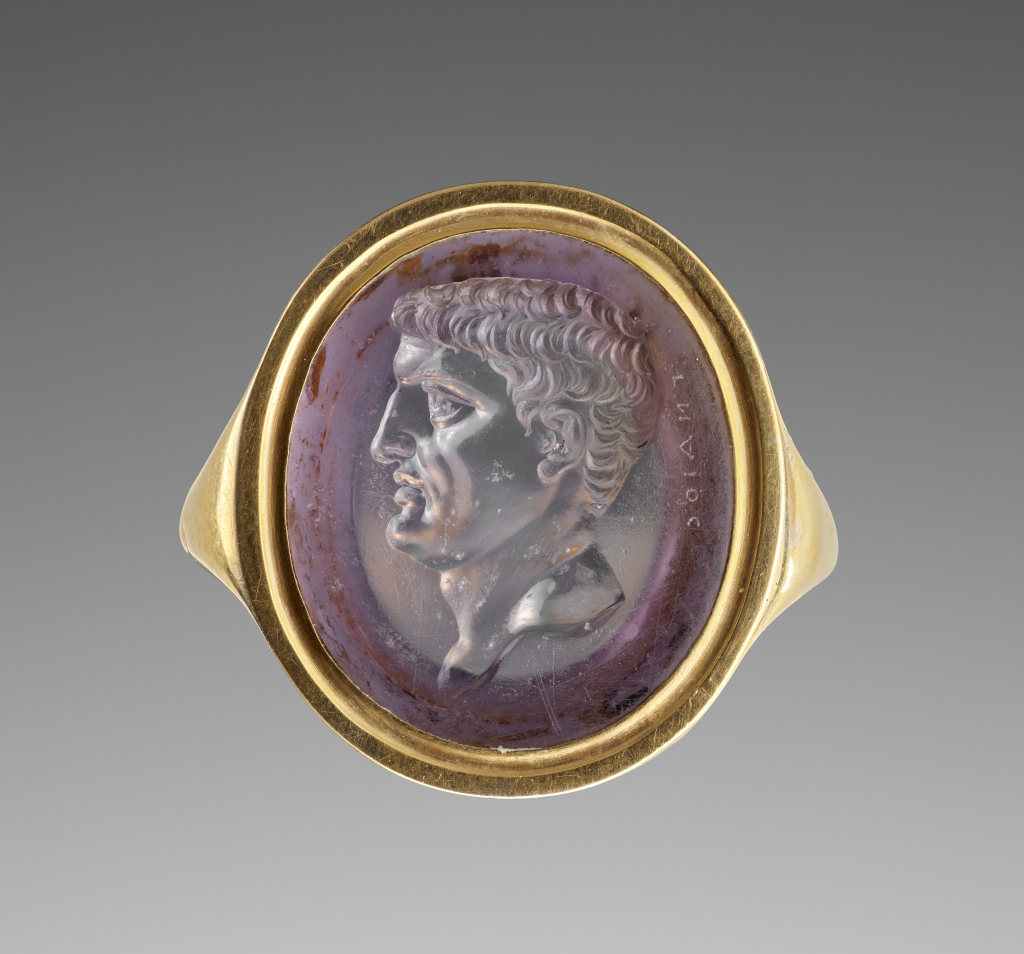
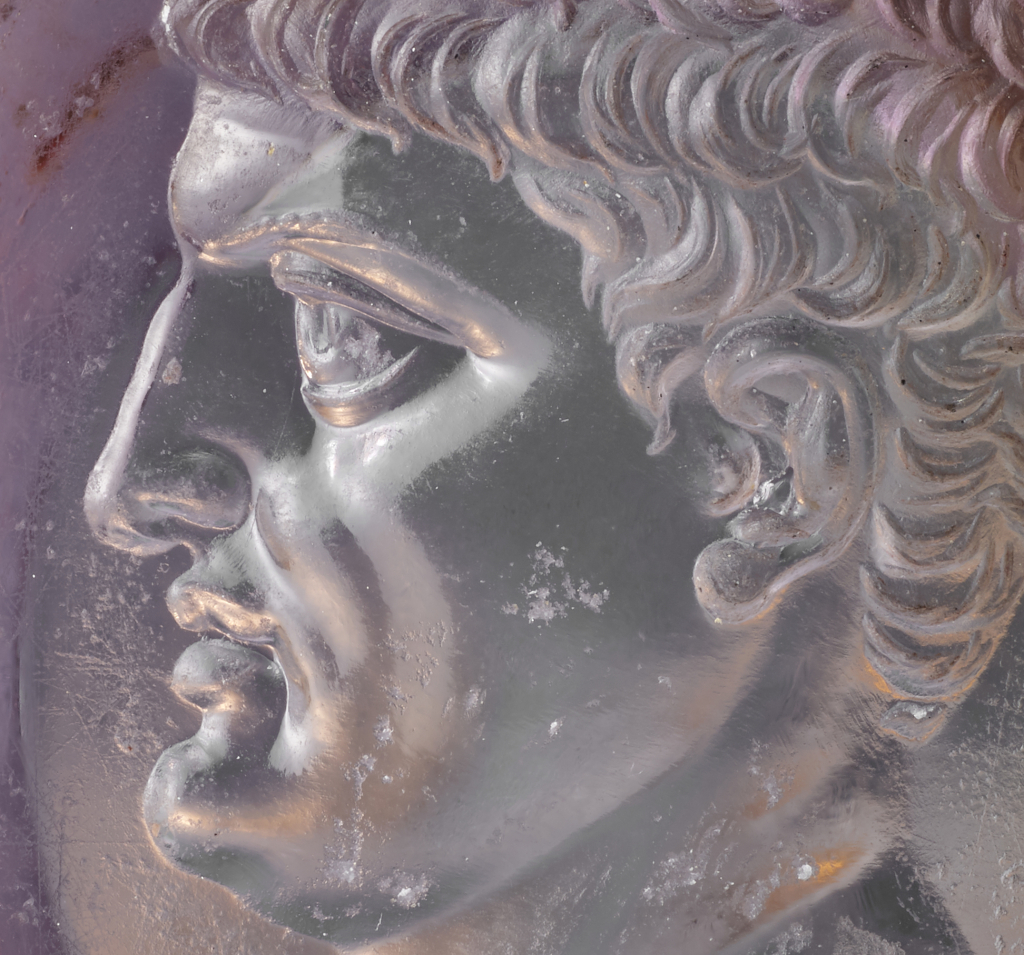
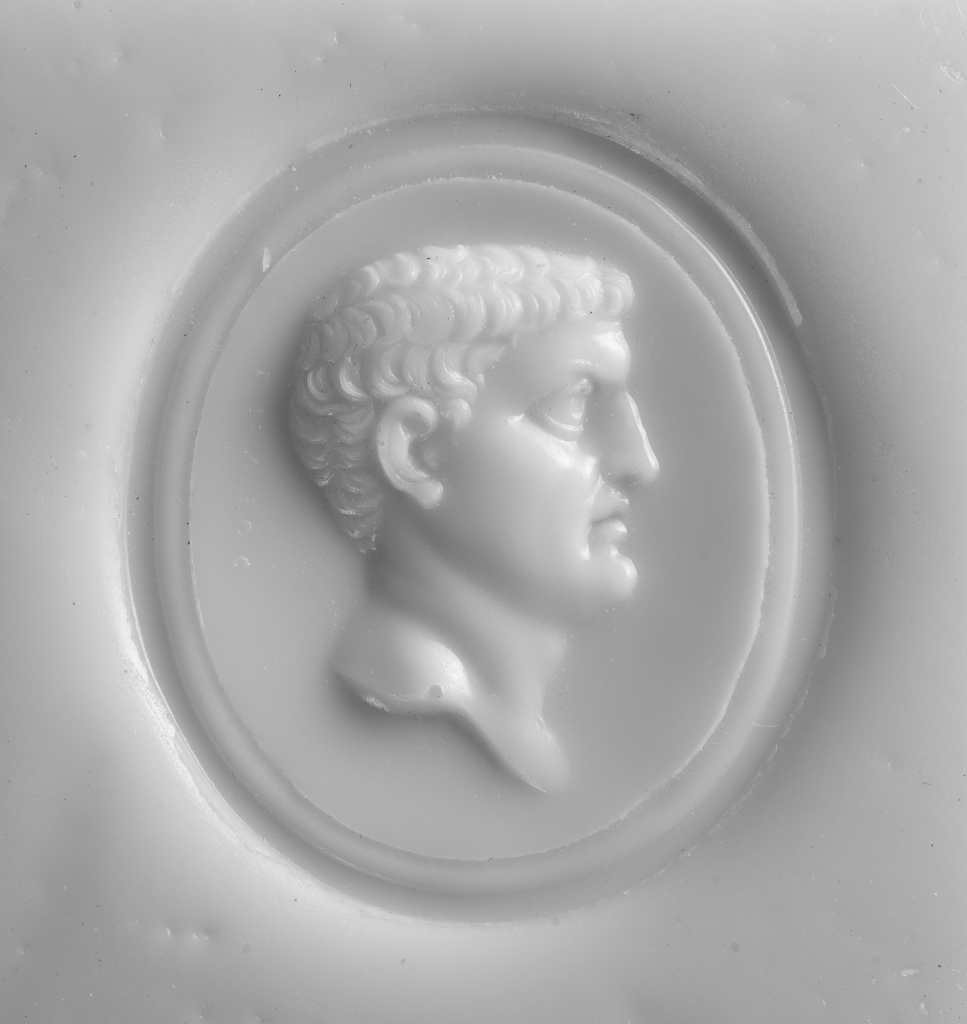
Engraved gemstone from the Poniatowski collection depicting Zeus and Capaneus (signed Dioscourides), attributed to Giovanni Calandrelli (1784–1853), 1816–1827 – carnelian, 3.4 × 3.9 × 0.3 cm; J. Paul Getty Museum, Villa Collection, Malibu, California; photo: public domainRing set with an amethyst intaglio from the Poniatowski collection depicting Mark Antony (signed Gnaios), Giovanni Calandrelli (1784–1853), 1817–1824 – amethyst, gold, 1.7 cm; J. Paul Getty Museum, Villa Collection, Malibu, California; photo: public domainDetail of the depiction of Mark Antony on an amethyst intaglio from the Poniatowski collection; J. Paul Getty Museum, Villa Collection, Malibu, California; photo: public domainImpression of an amethyst intaglio from the Poniatowski collection depicting Mark Antony; J. Paul Getty Museum, Villa Collection, Malibu, California; photo: public domain
Poniatowski succumbed to the gem trend very early and started collecting intagliated stones during his first trip to Italy, gathering more and more jewels with every voyage. His collection developed tremendously after he moved to Rome, then Florence, right before the end of the century. At the height of his success, the prince had more than 2600 specimens in his possession, of which 1700 were gemstones allegedly signed by ancient cutting masters. The first-class jewels held in Poniatowski’s collection were decorated with unknown motifs from Ovid’s Metamorphoses, the Iliad and the Odyssey. Such stones were incredibly rare in those times, hence the legendary status of the collection. However, its owner jealously guarded his prized possessions and rarely showed them to others. He decided to present the collection right before his death and even published a special catalogue in 1831, containing information about all the gemstones.
Trouble is, Poniatowski’s gemstones were forged.
This was discovered after the prince’s death in 1833. The German archaeologist Ernst Heinrich Toelken, who worked on the glyptic collection at the Berlin Museum, noticed the unusually high artistic level of the prince’s stones. He became suspicious of their immaculate state – the supposedly ancient stones were perfectly preserved and even carved in the same style. And yet the catalogue described them as masterpieces cut by various ancient artisans. Moreover, many gemstones resembled the renowned pieces of Anthony Canova, who had died a dozen years earlier.
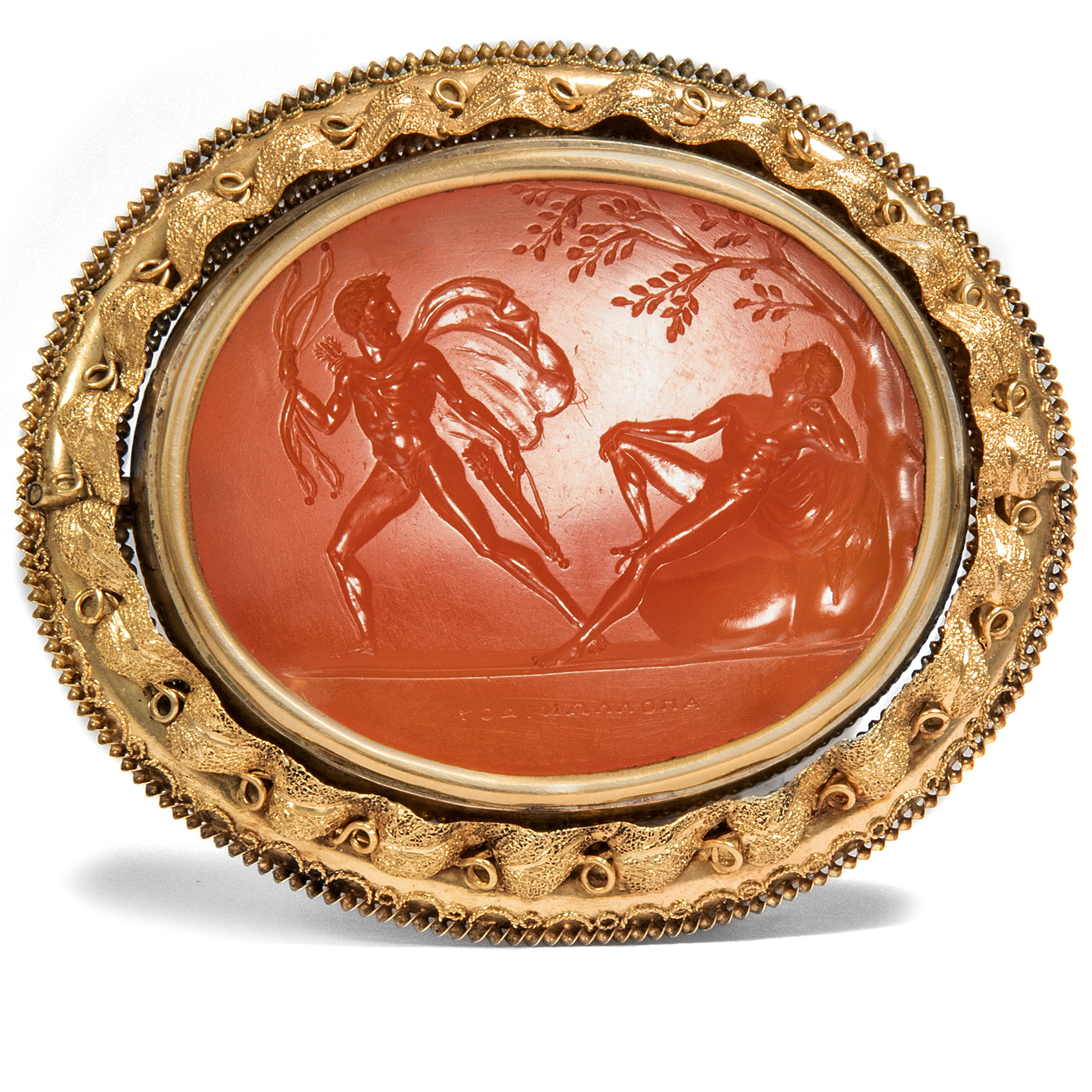
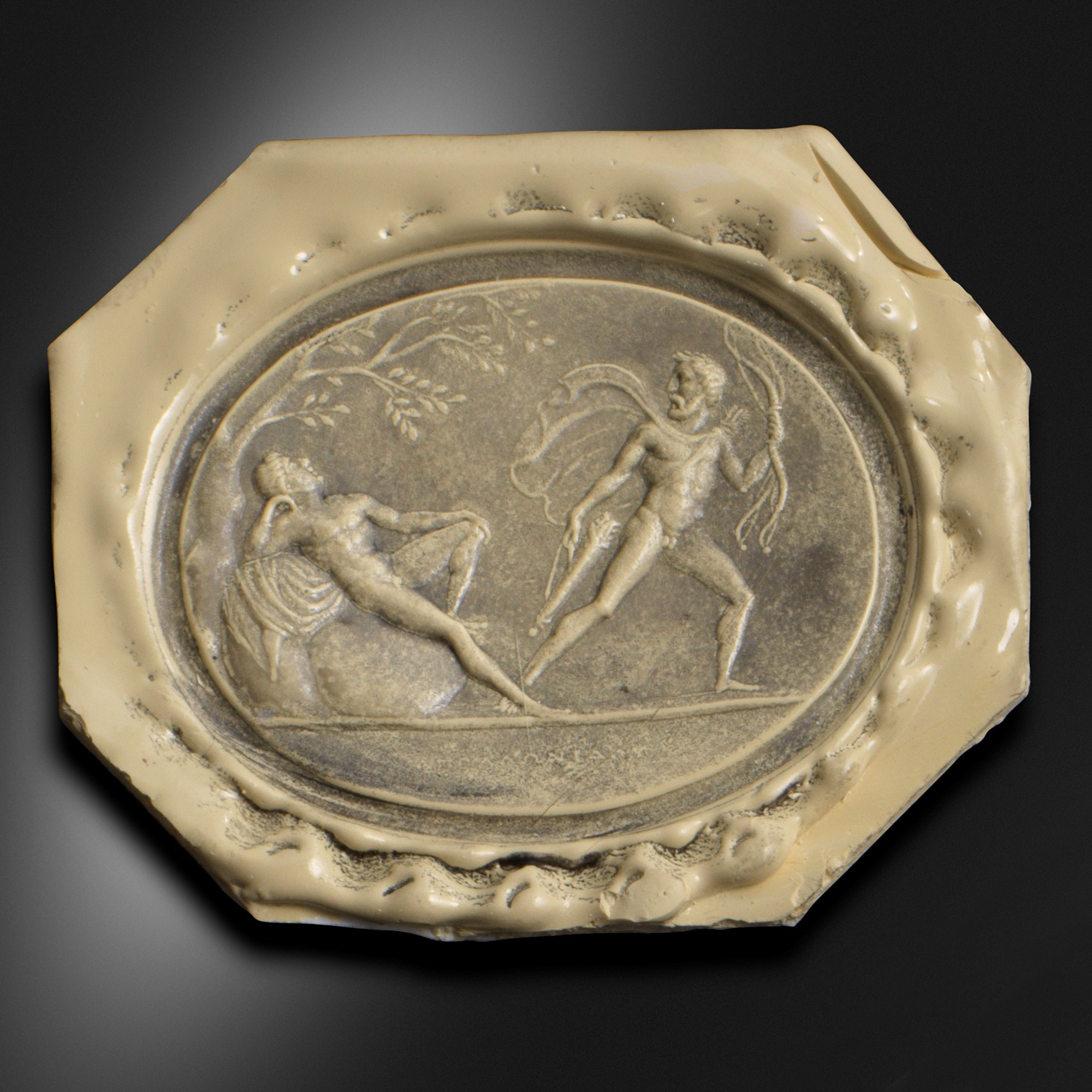
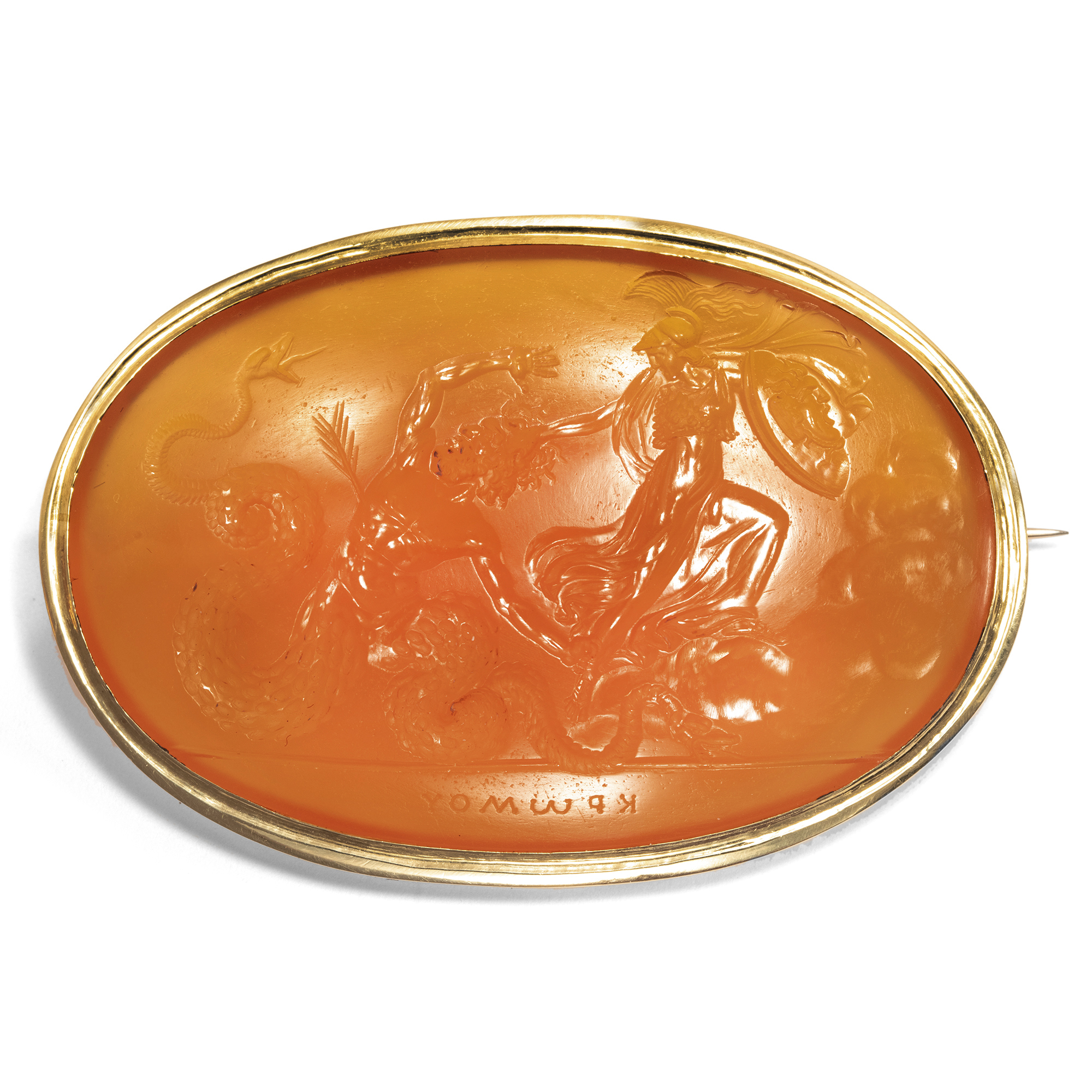
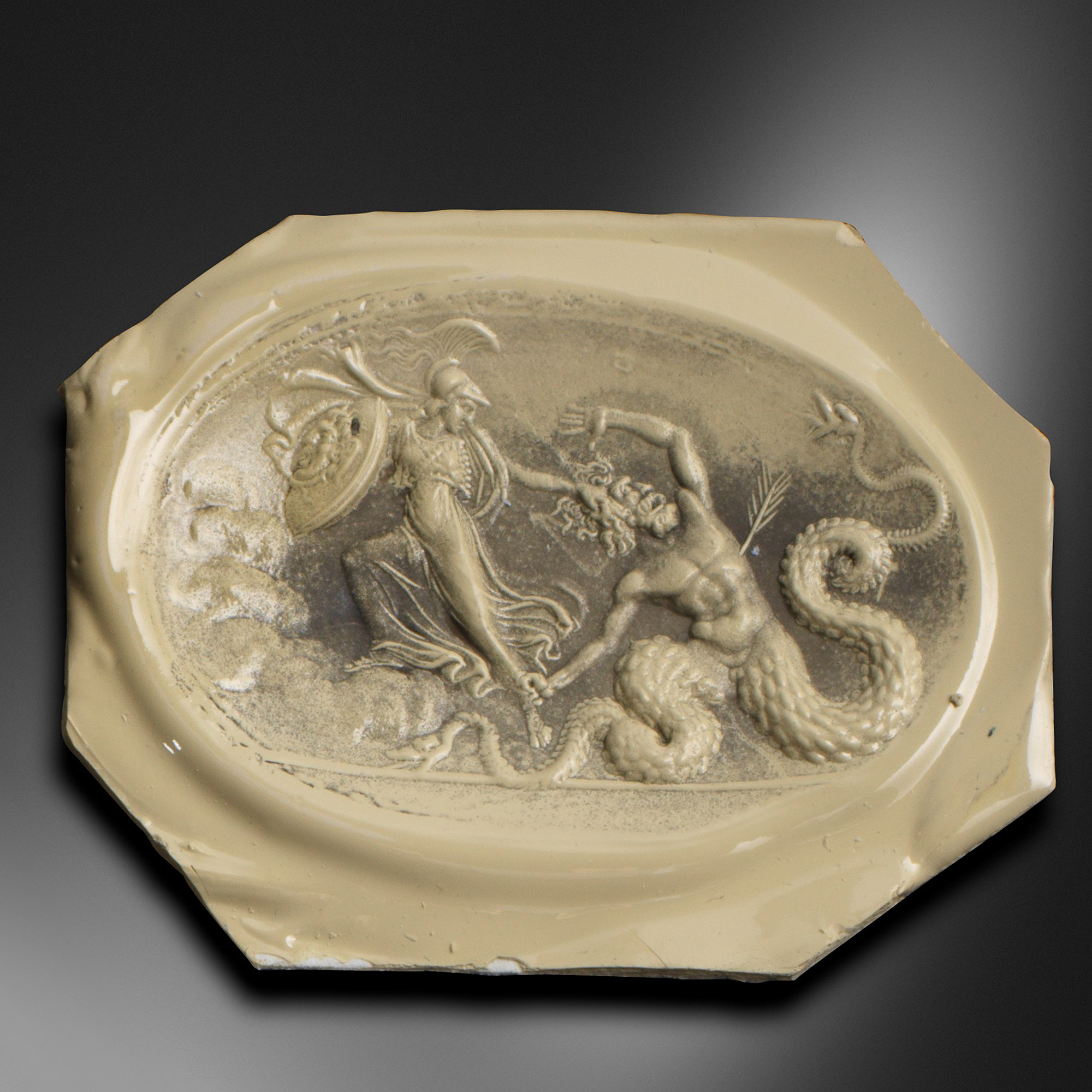
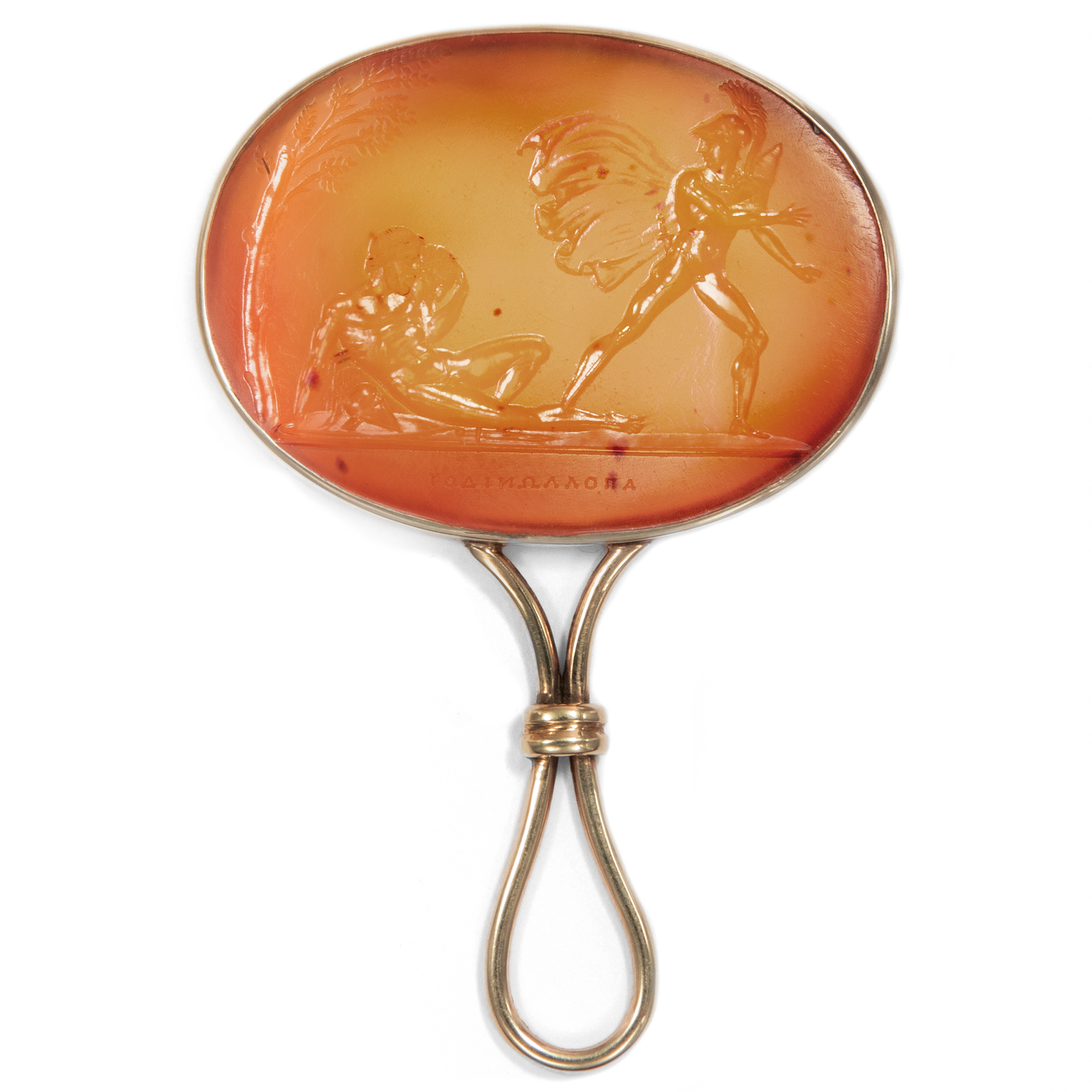
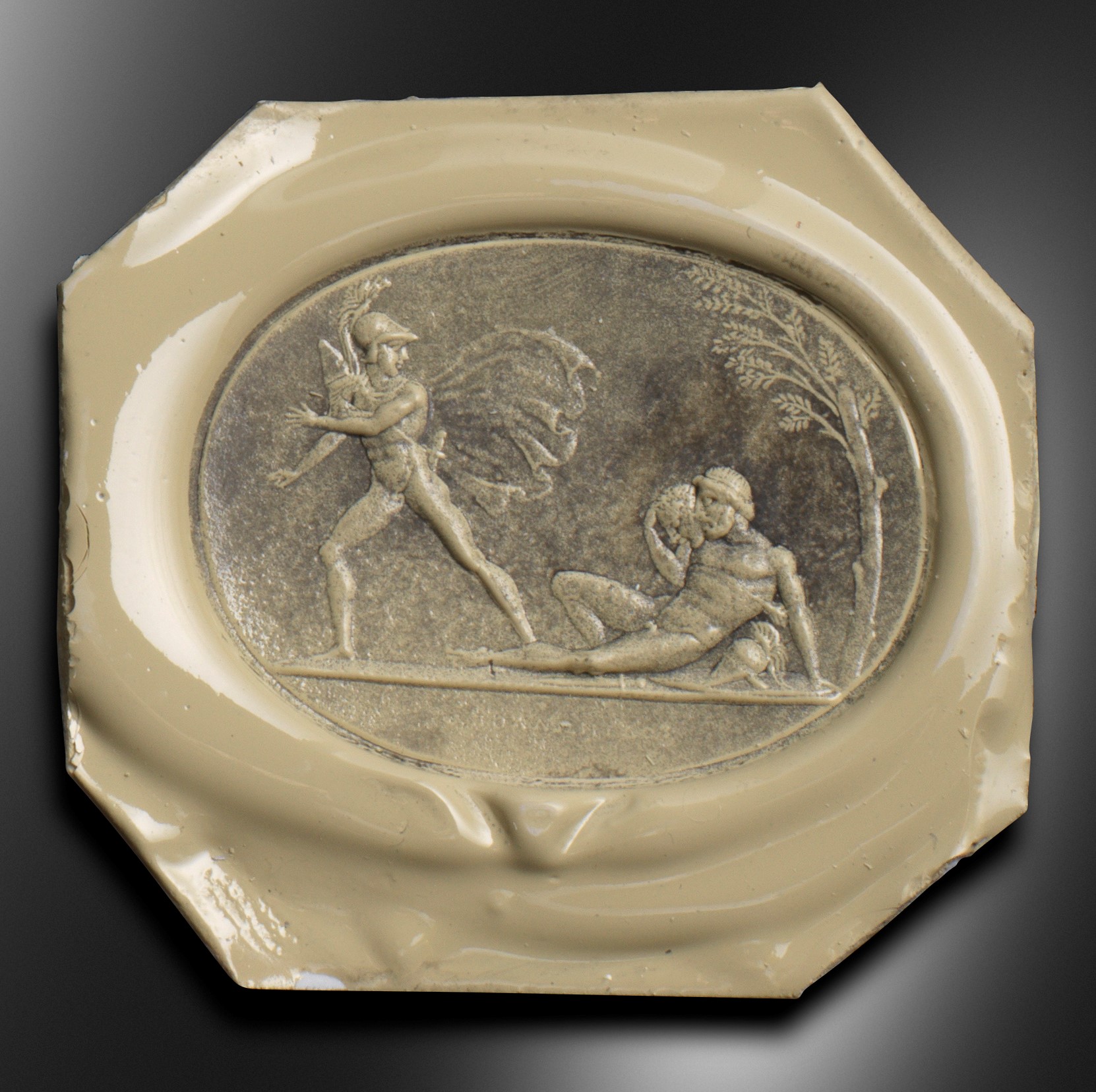
Gold-mounted engraved gemstone from the Poniatowski collection depicting Acastus stealing the arrows from the sleeping Peleus (signed Apollonides), made c. 1815 (mount c. 1870) – carnelian, gold, 3.2 × 4 cm (mount 5.8 cm); photo: Hofer Antikschmuck, Berlin, GermanyImpression of an engraved gemstone from the Poniatowski collection depicting Acastus stealing the arrows from the sleeping Peleus; photo: Woolley and Wallis SaleroomsBrooch set with an engraved gemstone from the Poniatowski collection depicting Athena seizing the giant Alkyoneus by the hair after he has been wounded by an arrow from Heracles (signed Kromos), gemstone made c. 1815 (later mount) – carnelian, gold, 3.4 × 5.1 cm (mount 5.5 cm); photo: Hofer Antikschmuck, Berlin, GermanyImpression of an engraved gemstone from the Poniatowski collection depicting Athena seizing the giant Alkyoneus by the hair; photo: Woolley and Wallis SaleroomsEngraved gemstone from the Poniatowski collection depicting Tydeus holding the severed head of Melanippus (signed Apollonidos), made in the 19th century – carnelian, gold, 2.9 × 3.9 cm (mount 4.2 cm wide); photo: Hofer Antikschmuck, Berlin, GermanyImpression of an engraved gemstone from the Poniatowski collection depicting Tydeus holding the severed head of Melanippus; photo: Woolley and Wallis Salerooms
Toelken took the opportunity to study approximately 419 pieces from Stanisław’s collection. During his analysis, he concluded that only two or three stones may have had an ancient provenance, while the rest had been manufactured by contemporary artists. The German researcher’s discovery led to a scandal that shook the very foundations of the European art world. News of his critique, published in the Peterborough Weekly, circulated in Poland as well.
The widespread indignation among archaeologists did not stop the 2639-stone strong collection from being auctioned at Christie’s in April 1839. The auction led to the artefacts’ dispersal, since most of them were acquired by many different buyers, then sold on to others. The new owners, fearing financial loss, continued to claim their pieces were authentic. This led to a widespread polemic in the press, with two factions fighting over the authenticity of the collection.
Nevertheless, after years of sharp discussion it was concluded that Poniatowski’s collection had been almost entirely composed of gemstones carved by his contemporaries. Still, most of the jewels were masterpieces cut by the finest artists of his times. Unfortunately, remnants of the collection disappeared without a trace in the 19th century, which is not surprising, considering collectors refused to admit sticky ownership after the truth was discovered.
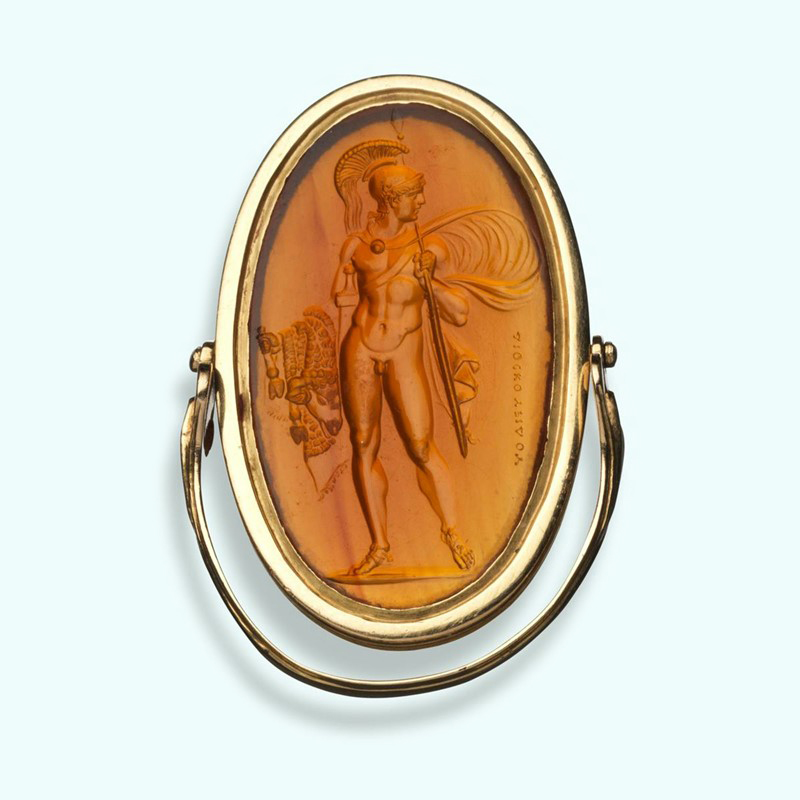
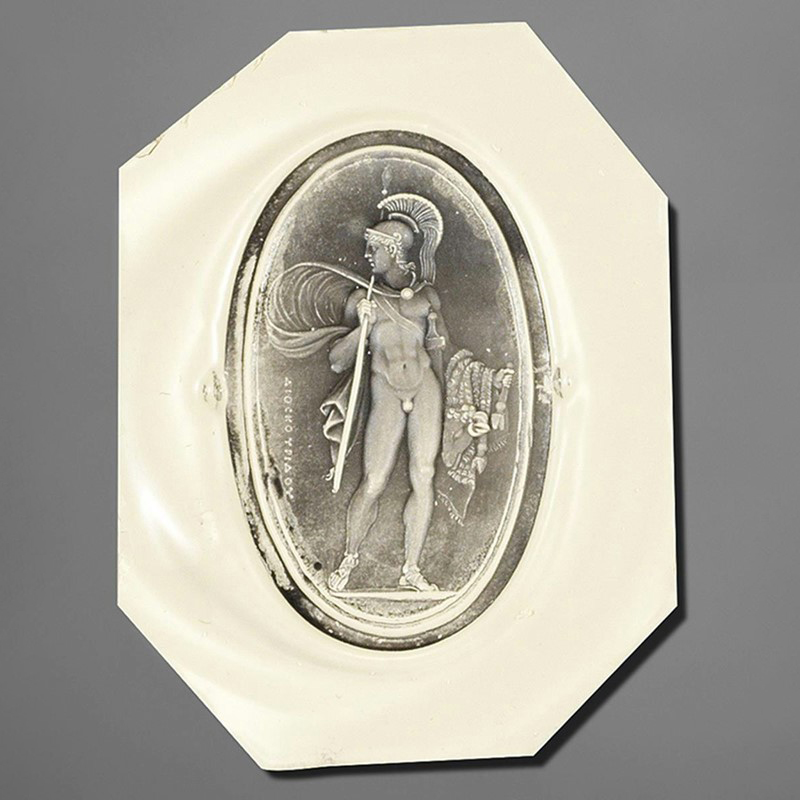
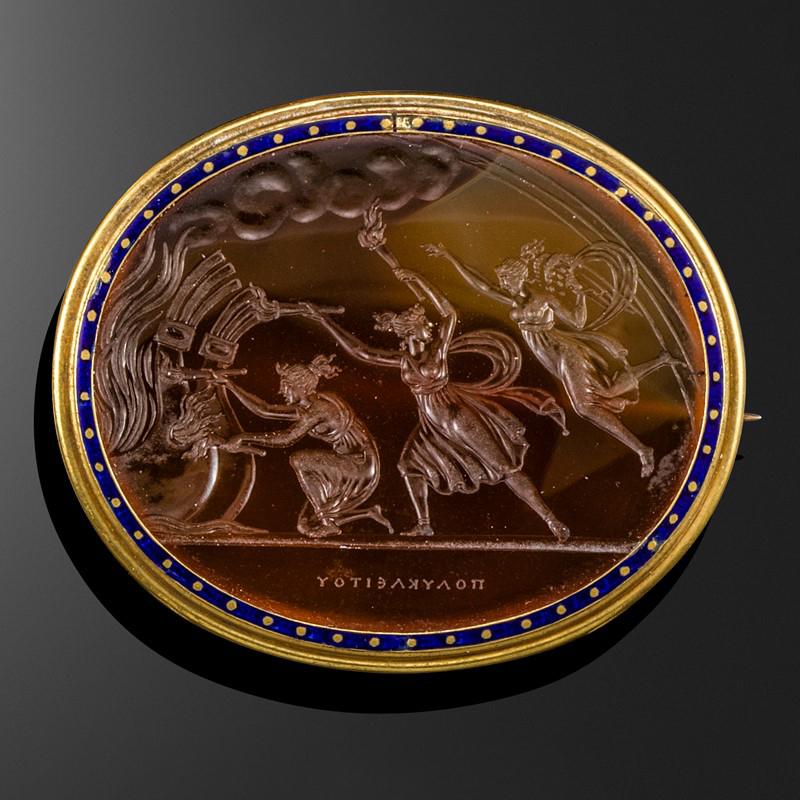
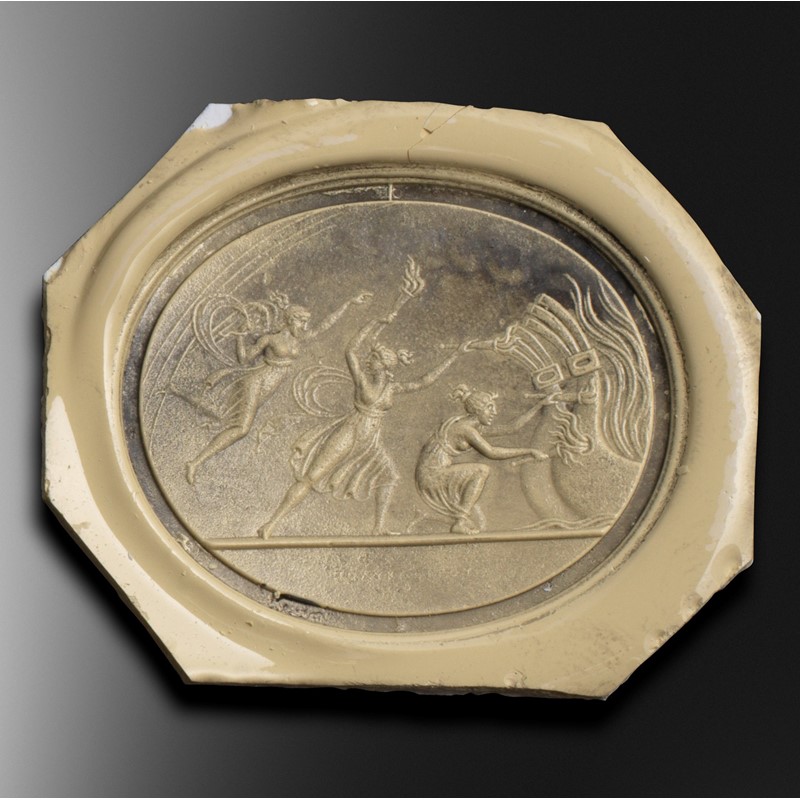
Swivel ring set with an engraved gemstone from the Poniatowski collection depicting the standing figure of Jason holding the Golden Fleece (signed Dioskourides), attributed to Giovanni Calandrelli (1784–1853), early 19th century – carnelian, gold, 3 × 1.7 cm; photo: Woolley and Wallis SaleroomsImpression of an engraved gemstone from the Poniatowski collection depicting the standing figure of Jason holding the Golden Fleece; photo: Woolley and Wallis SaleroomsBrooch set with an engraved gemstone from the Poniatowski collection depicting Trojan women, urged on by Iris, setting fire to Aeneas’s fleet (signed Polyklet), early 19th century – carnelian, gold, blue enamel, 4.5 cm wide (including mount); photo: Woolley and Wallis SaleroomsImpression of an engraved gemstone from the Poniatowski collection depicting Trojan women setting fire to Aeneas’s fleet; source: Woolley and Wallis Salerooms
The controversy overshadowed the radiance of Poniatowski’s gemstones, but their artistic value should be acknowledged all the same. The prince personally selected from ancient poetry the intriguing motifs that the gems were decorated with. He commissioned works from the best of the best, most probably to satisfy his personal ambitions – he longed to be recognized as a great patron of art and the owner of a collection that surpassed all expectations. However, by commissioning these ‘forgeries’, he developed the most extraordinary classical glyptic collection that ever existed.
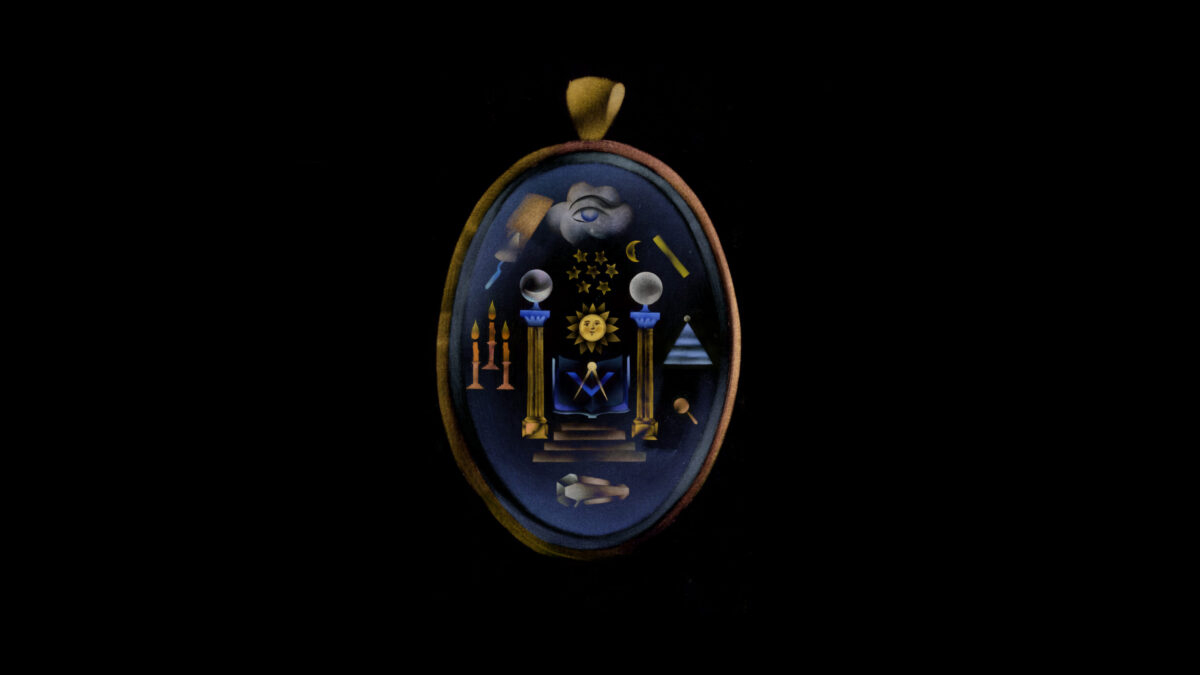
An acacia branch, a rope, a skull, a compass, a square – every symbol depicted on a Masonic artefact serves to remind its owner about the duties of a lodge member and the knowledge they have acquired in arcane rituals.
Contrary to popular opinion, Masonic lodges are not secret organizations – although Masonic rituals are certainly shrouded in mystery. Their secretive character is a key factor in the selection of props used by brotherhood members. Apart from symbolic emblems, such as aprons, sashes or gloves, the society’s customs are enriched by extraordinary regalia: Masonic jewellery.
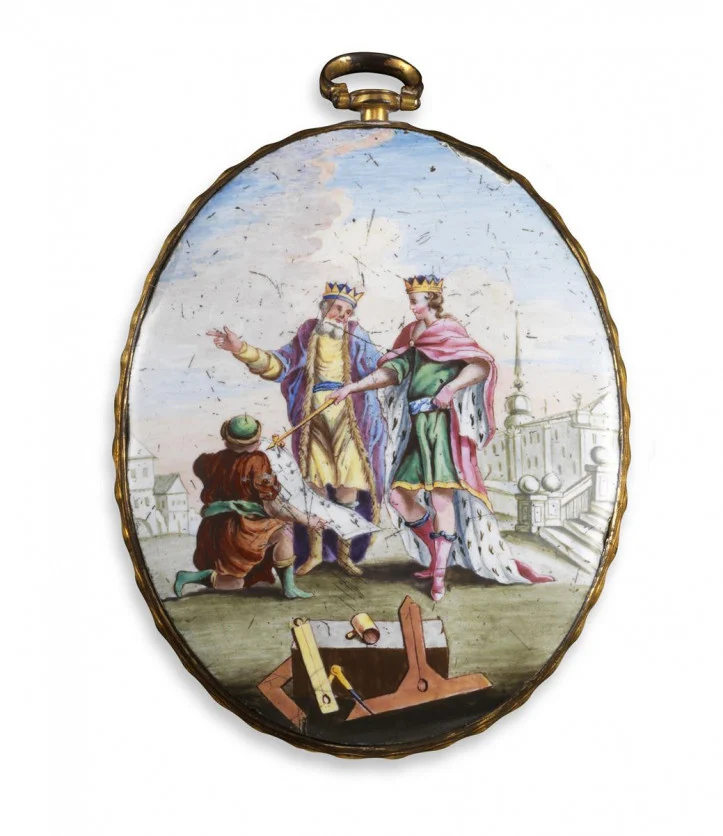
The word ‘mason’ is an occupational name for someone who works with stone. The name of the fraternal organization is also tied to its founding myth. The principle figure in this story is the architect Hiram Abiff, who was delegated by his namesake, the ruler of the Phoenician city of Tyre, to watch over the construction of King Solomon’s temple in Jerusalem. Abiff was a Freemason, the only man alive who knew the Grand Masonic Word – the most important secret of the Master Mason. He promised to reveal it to his disciples after the completion of the temple. However, the impatient apprentices decided to force his hand earlier, and murdered the Master when he refused. The rest of the myth describes King Solomon himself resurrecting Hiram. Once the architect returned to the living, he allegedly revealed the Secret of the Masonic Master in the first word he pronounced – passed on to his successors to this day.
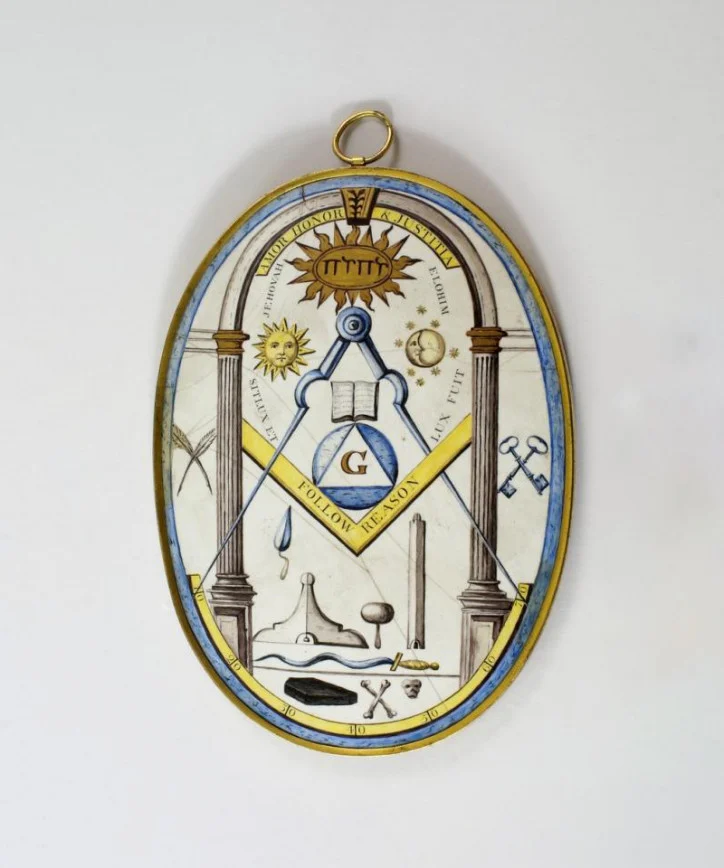
Large oval medallion, 9 cm in length, decorated with an enamelled scene depicting King Solomon and his son Rehoboam; photo: Woolley and Wallis
Freemasonry, sometimes called a royal art by its followers, is organized into fraternities or lodges (from Old French, ‘arbour’ or ‘hut’). It first became active in England and Scotland at the turn of the 17th century.
It was a chaotic time in the history of the British Isles. King Charles I was executed at the beginning of the third civil war, Oliver Cromwell became Lord Protector of the Commonwealth and his dictatorship deepened the existing divides. The restoration of the Stuart dynasty after Cromwell’s death did not last long. During the so-called Glorious Revolution, the English Parliament declared war against Jacob II and forced him to flee the country. The coup was driven by the Parliamentarians’ fear of royal dominion and the risk of Catholicism being reinstated as official religion. However, it must be said that the Protestant majority not only controlled, but also persecuted Catholics. This religious and political turmoil gave birth to Freemasonry.
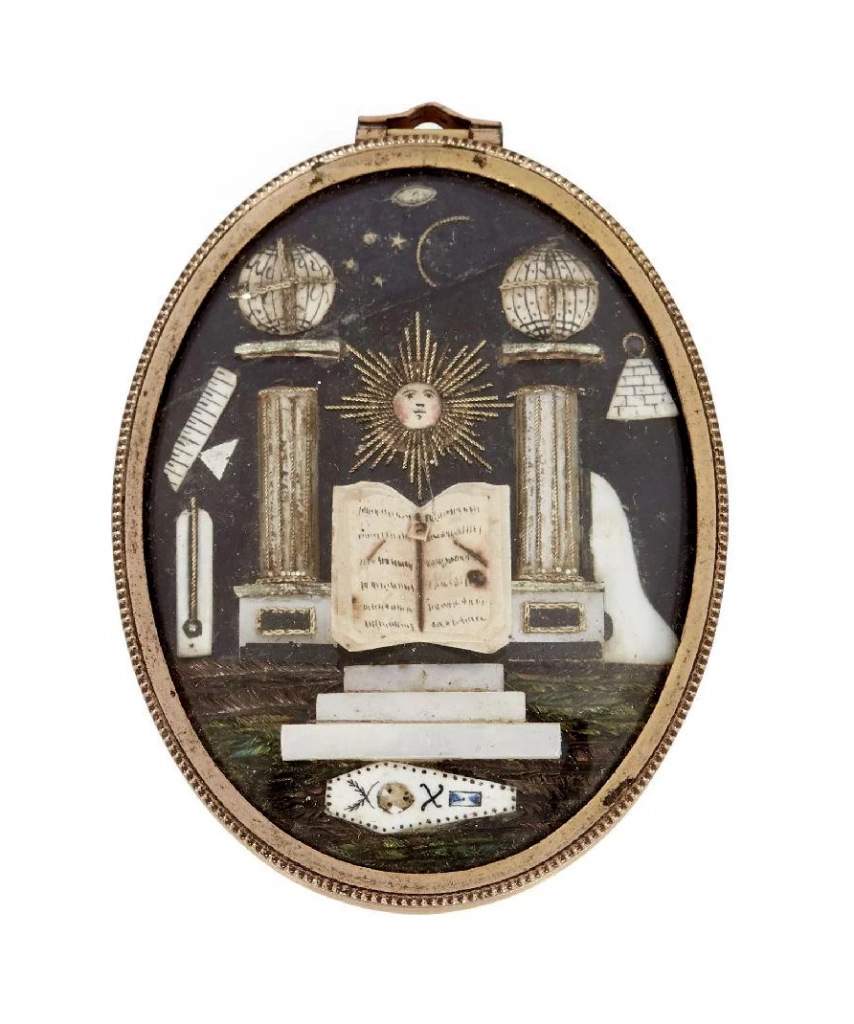
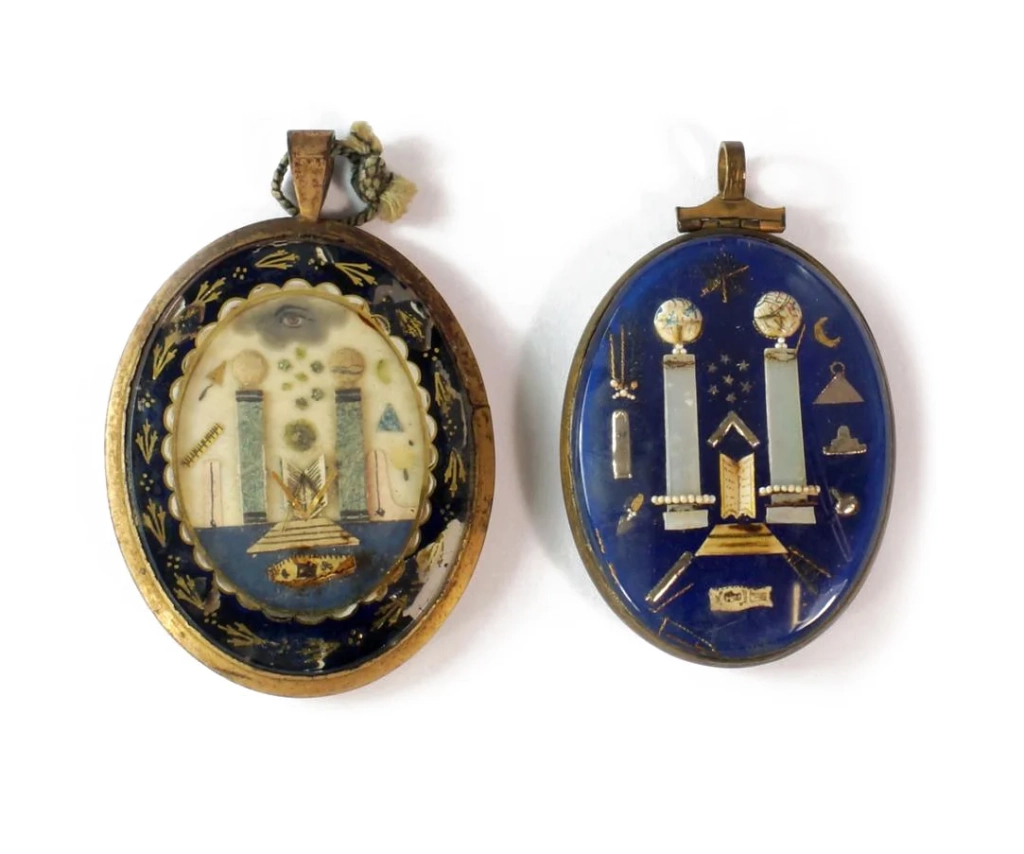
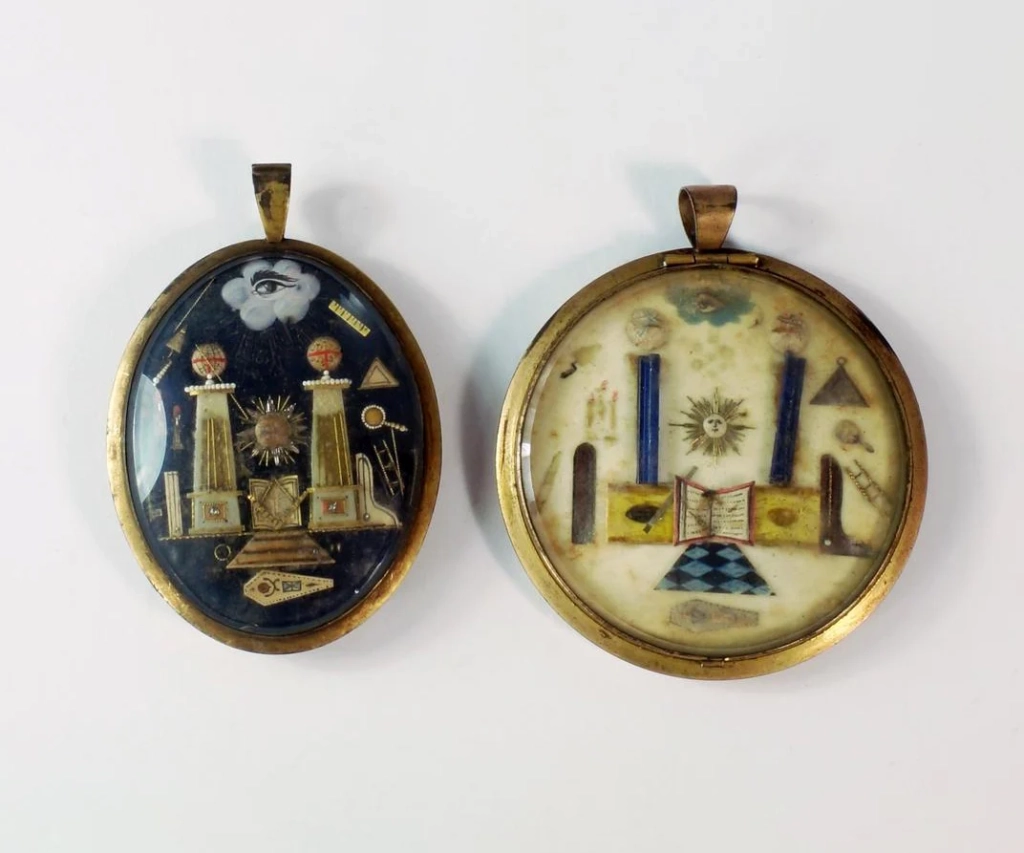
During the Napoleonic Wars, a large number of French prisoners were held in England. Among them was a significant proportion of Freemasons. Their number can be estimated by the fact that they were sufficiently numerous to establish lodges in various parts of England; as many as 30 such lodges were recorded. | Masonic jewel made by a French prisoner of the Napoleonic Wars, late 18th / early 19th century, 5.7 cm in length, made of crystal, gilt metal, mother-of-pearl, and peacock feathers; photo: Roseberys London, www.roseberys.co.ukMasonic prisoners could often count on favourable treatment from their British brethren, who would take them into their homes. The long period of captivity forced prisoners to seek means of earning a living. In order to survive, some produced small decorative objects. | Two Masonic jewels made by a French prisoner of the Napoleonic Wars, c. 1805, each 5.5 cm in length, made of crystal, gilt metal, and coloured paper; photo: Roseberys London, www.roseberys.co.ukAll available materials were used in their production: fragments of bone, mother-of-pearl, paper, straw, and various trinkets. The objects were then sold or exchanged at markets. Over time, some were mounted in metal, which ensured their survival to the present day. | Two Masonic jewels made by a French prisoner of the Napoleonic Wars, c. 1805, each 5.5 cm in length, made of crystal, gilt metal, and coloured paper; photo: Roseberys London, www.roseberys.co.uk
The main goal of the first Freemasons was to reconcile the two fatally conflicted religions. Soon enough, they became engaged in solving the social problems of modernization, as well as establishing dialogue between the old and the new elites.
Neither contemporary nor historical Freemasons functioned in uniform organizations. Freemasonry was always a movement that relied on ethics. It was developed through symbols and allegories and promotes its own conception of man and society, based on a set of principles Freemasons consider crucial. Various fraternities developed different ceremonies, symbols and rituals that resemble religious mores in some ways – and also rely on ceremonial clothes, props, allegories and symbolism. As a whole, Masonic practices share one common feature – they depend upon a secret initiation ritual.
The discreet character of Masonic rituals may have influenced the society’s black legend. The most frequent accusation brought against it was its secretive activity, which of course had to mean that Freemasons were driven by unholy intentions. The fact that Masonic principles clearly promote tolerance and encourage members to care for their own self-development (and nurture that of others) did not help.
Although the Protestant church was generally favourable towards Freemasons, they did not enjoy Christian support. Almost 21 years after the first Grand Lodge opened, Pope Clement XII decided to compromise the activity of the organization. He published the papal bull In eminenti apostolatus specula and forbid Christian followers from joining lodges under threat of excommunication. He gave three arguments: first, Freemasons kept numerous secrets; second, they dared to claim all men were created equal; and third, most important, those liber muratori had the gall to act as if all religions were equally worthy. Of course, the pope’s efforts did not cause the demise of Freemasonry, but his claims must have worsened the widespread belief in Masonic conspiracy.
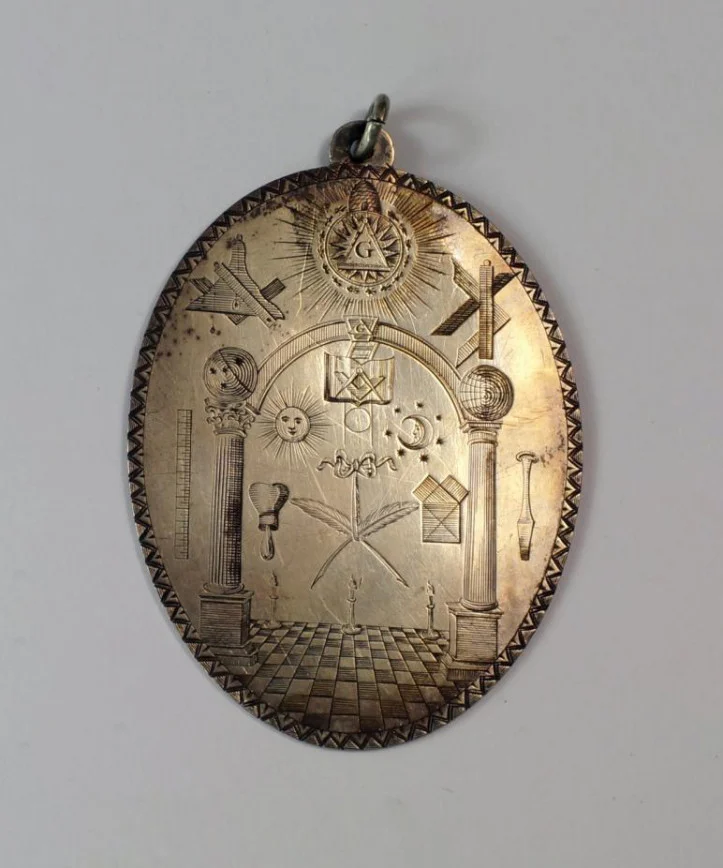
White-metal pendant, 18th/19th century, 8.5 cm in length, decorated with Masonic motifs; the reverse inscribed: “This medal was presented by the members of Fidelity Lodge No. 512 …… 1802”; photo: Roseberys London, www.roseberys.co.uk
Keeping Masonic secrets was mostly possible due to the language of symbols used by the society’s members. Lodges would often borrow symbols from various chivalric orders, with alchemist iconography being an important source as well. However, the vast majority of Masonic terminology was inspired by the work and rituals of ancient architects. Depictions of the compass, the trowel or the square (a tool used to measure right angles) are among the most popular Masonic emblems. Their original meaning changed during the Enlightenment, becoming more complex and better suited to a given lodge. The meaning encoded in symbols is an important addition to Masonic artefacts.
Mysterious jewellery
If we take into account the secrecy of Masonic ceremonies, it is not surprising that the ornaments used by Freemasons had to be equally puzzling. Although they looked like normal jewellery, their meaning was highly symbolic. Thus, the jewels embodied the arcana of Masonic knowledge, only comprehensible to initiated members.
When pocket watches were in fashion, fobs were a widely-used addition. Fobs were short watch chains that kept the chronometer from falling out of the owner’s pocket. The chain usually had a radial ending, used to attach other decorative objects. Thus wearers could present various symbolic pendants as discreet signs of membership in their chosen organization. However, the most intriguing objects of this sort were undoubtedly Masonic crosses.
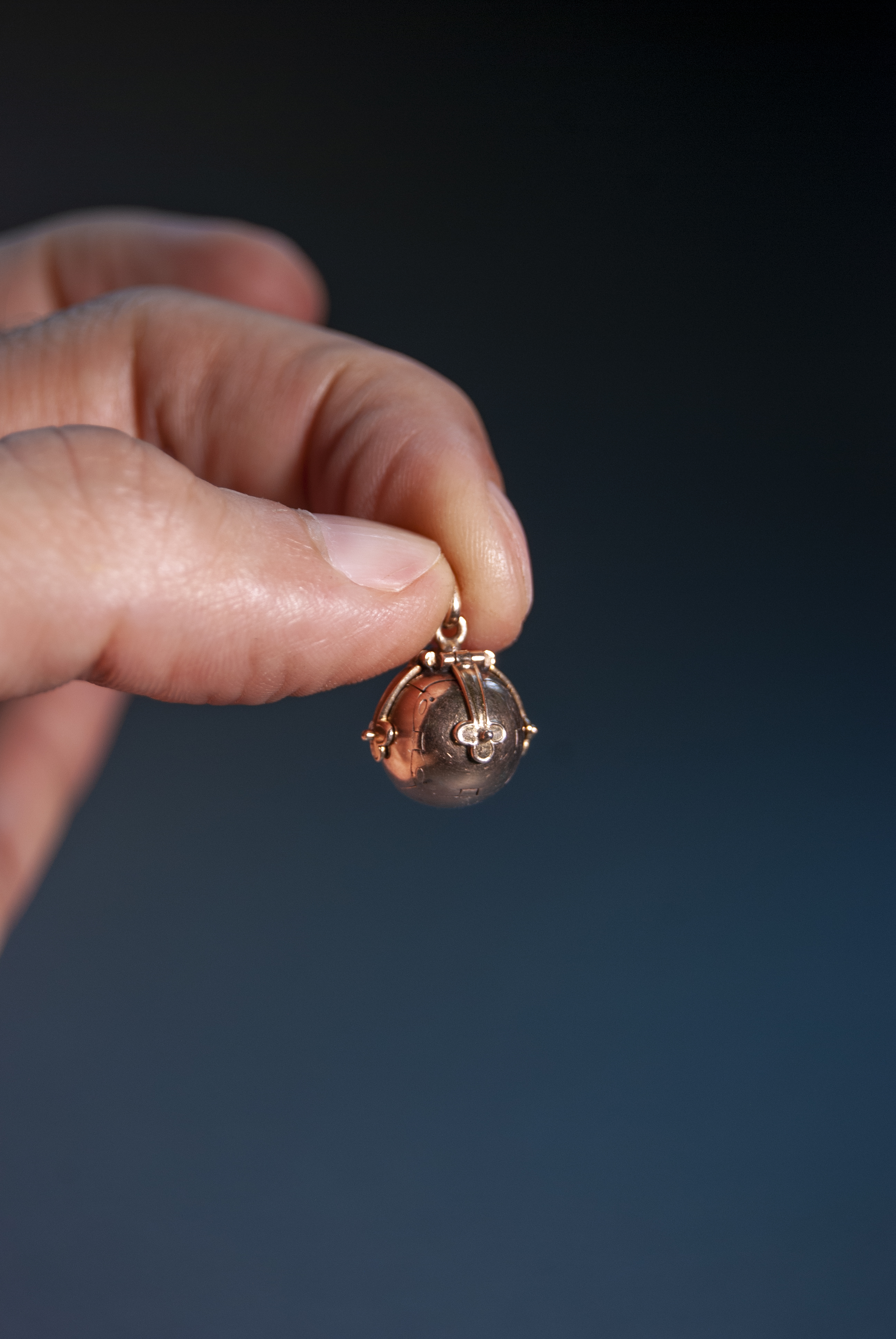
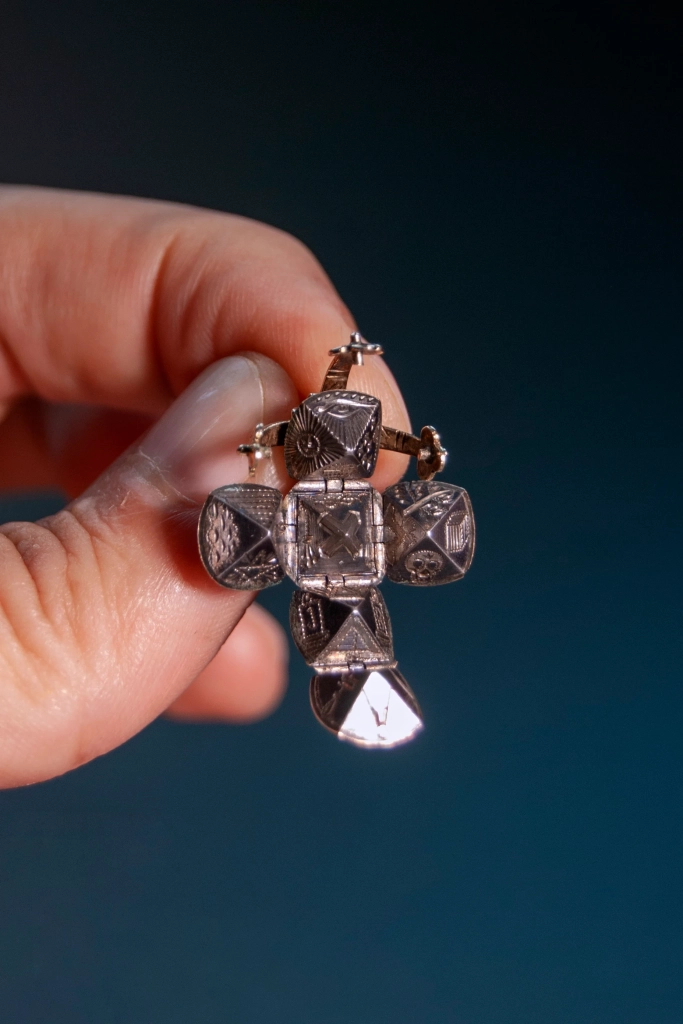
These jewels are still produced today, but the most beautiful ones were made in the 19th century. At first glance, they seem to be simple golden balls decorated with four little clamps and a small circle to hang by. Due to an ingenious placing of the hinges, the ball opens into the shape of a cross once the clamps are loosened. Each of the six segments of the cross has the shape of a pyramid with a circular base. The base used to be golden or gilded, and its walls were made of blackened silver. Each pyramid facet is marked by an engraved symbol – with a total of 24 engravings.
Masonic orb, 19th/20th century, 1.1 cm in diameter, made of gold and silver, engraved on the interior; photo: Tomasz WichrowskiMasonic orb (open), 19th/20th century, 1.1 cm in diameter, made of gold and silver, engraved on the interior; photo: Tomasz WichrowskiPyramid-shaped pendant, 6 cm in length, made of 9-carat gold, decorated with Masonic symbols; photo: Roseberys London, www.roseberys.co.uk
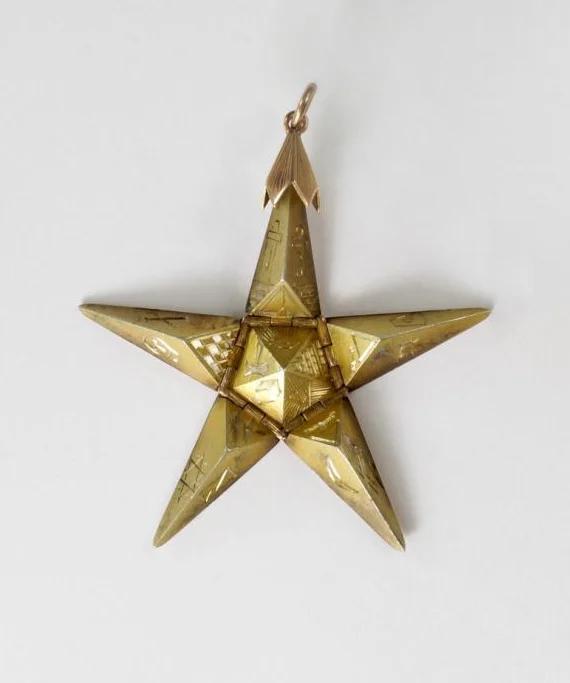
The placement and selection of symbols are not the same on each jewel, and their meaning depicts its owner’s principles. The symbols should be read from left to right, then top to bottom. Owners usually choose the Eye of Providence (the Grand Architect of the Universe), the Sun (direct, intuitive knowledge) and the Moon (sensitivity and feeling), a rope, a knot and two tassels (fraternal unity), a skull and crossbones (death and resurrection into new life), a rough ashlar (noviciate), an acacia branch (immortality), a perfect ashlar (mastery), as well as the following tools: a compass (wisdom), a square (balance, honesty, zeal), a trowel (cooperation), a hammer (work and power), a level (moral law) or a chisel (caring for others). If a cross was purchased, its owner would obtain a convenient narrative description of the engraved symbols prepared by the jewel’s maker. Other artefacts also existed – for instance, jewels that formed a five-point star after opening and represented membership in the Order of the Eastern Star, or cube-shaped pendants that symbolized the road to a master’s perfection.
Moving jewels
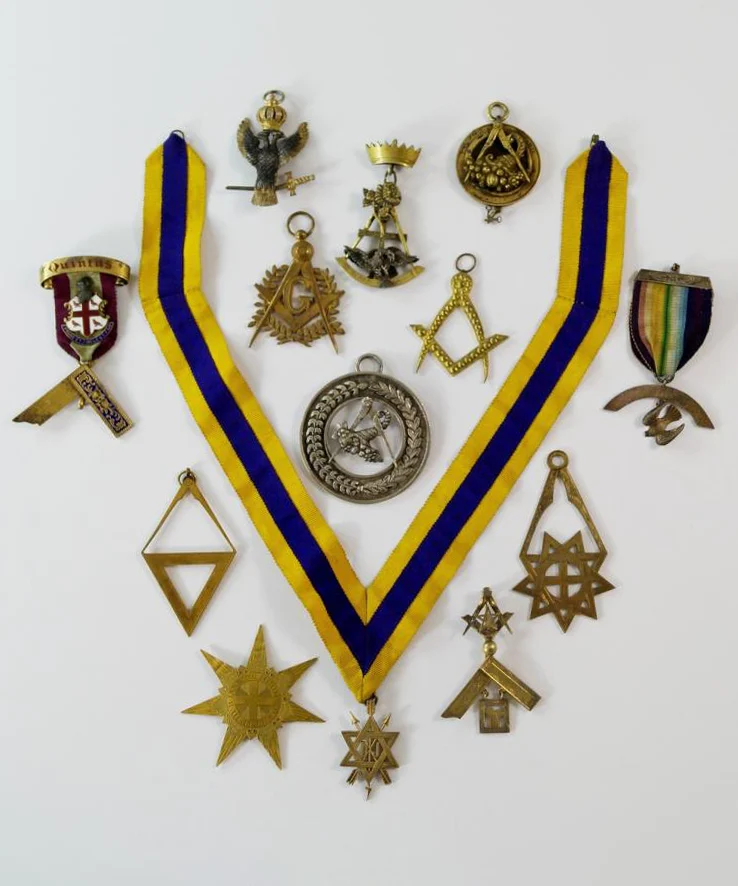
Another, more formal kind of Masonic ornamentation are the so-called moving jewels. These small, metal emblems, fastened to the sash of a Masonic official, symbolize his power and the authority of his rank. Their design and meaning depend on the rites they are used for. The ornaments are called ‘moving’ because they are passed on from one Freemason to another. They do not have to be very valuable. However, some pieces are made of gold and precious stones. Pinned to the masters’ sashes, the artefacts show their level of initiation.
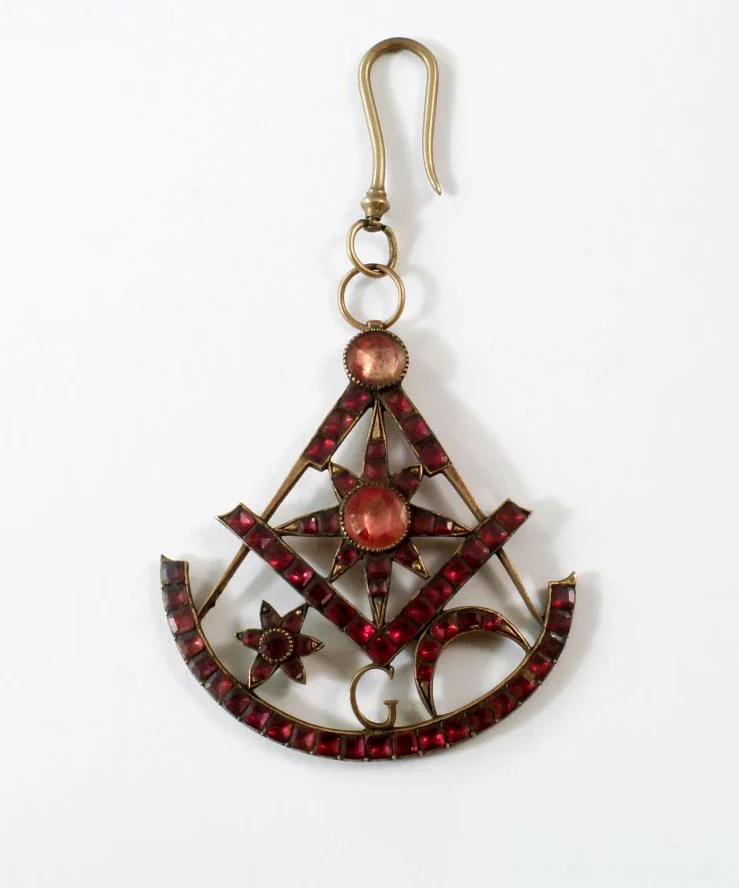
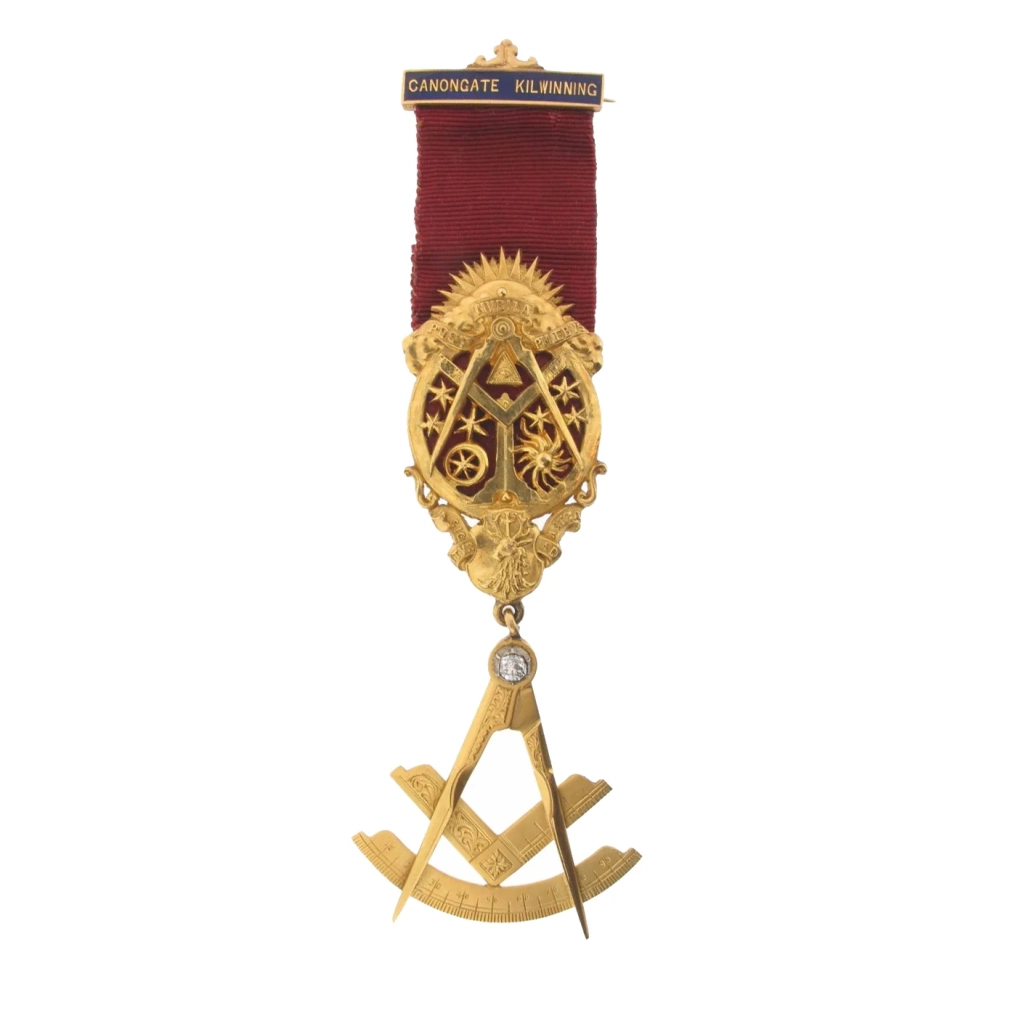
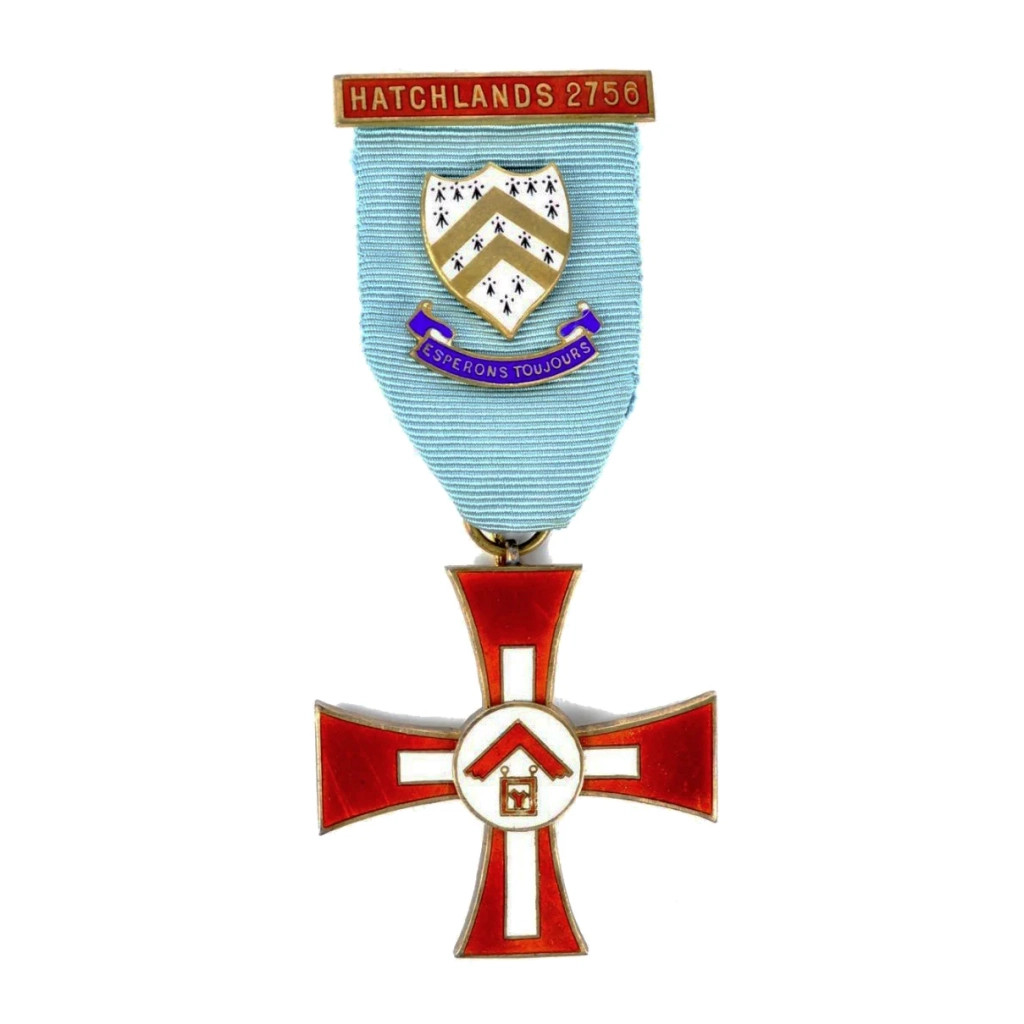
Masonic jewel for suspension from a sash, 19th century, 6 cm in length, made of metal and decorated with coloured crystals; photo: Roseberys London, www.roseberys.co.ukSash jewel associated with the Royal Arch degree, together with other Masonic jewels, 19th/20th century; photo: Roseberys London, www.roseberys.co.ukLarge Masonic jewel dated 1845, 12 cm in length, made of silver and crystal; the reverse inscribed: “To the Worshipful Captain Jocelyn, from his friends in the Celtic Lodge of Edinburgh, 1845”; photo: Roseberys London, www.roseberys.co.ukMasonic lodge medal from Canongate Kilwinning Lodge, mid-20th century, 13 cm in length (including ribbon), decorated with the mottos “Post Nubila Phoebus” and “Sic Itur Ad Astra”; photo: Woolley and WallisMasonic order, “Hatchlands 2756”, dated 1971, made in Birmingham from gilt and enamelled silver; photo: Woolley and Wallis
Rings
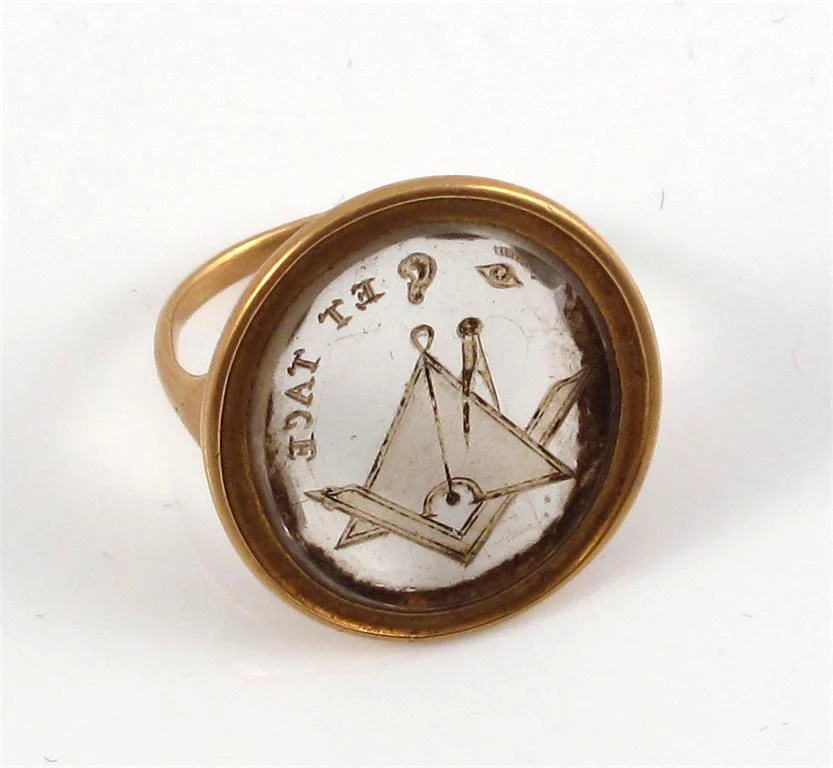
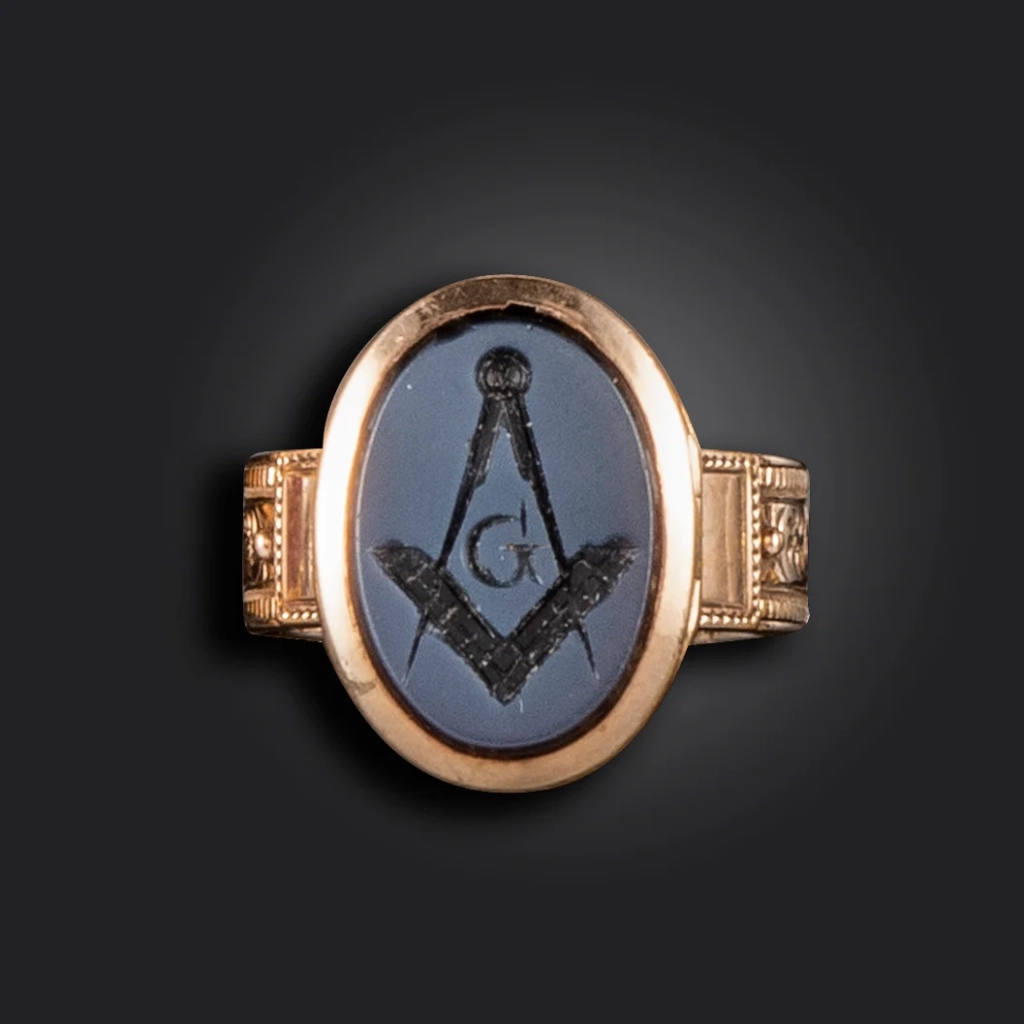
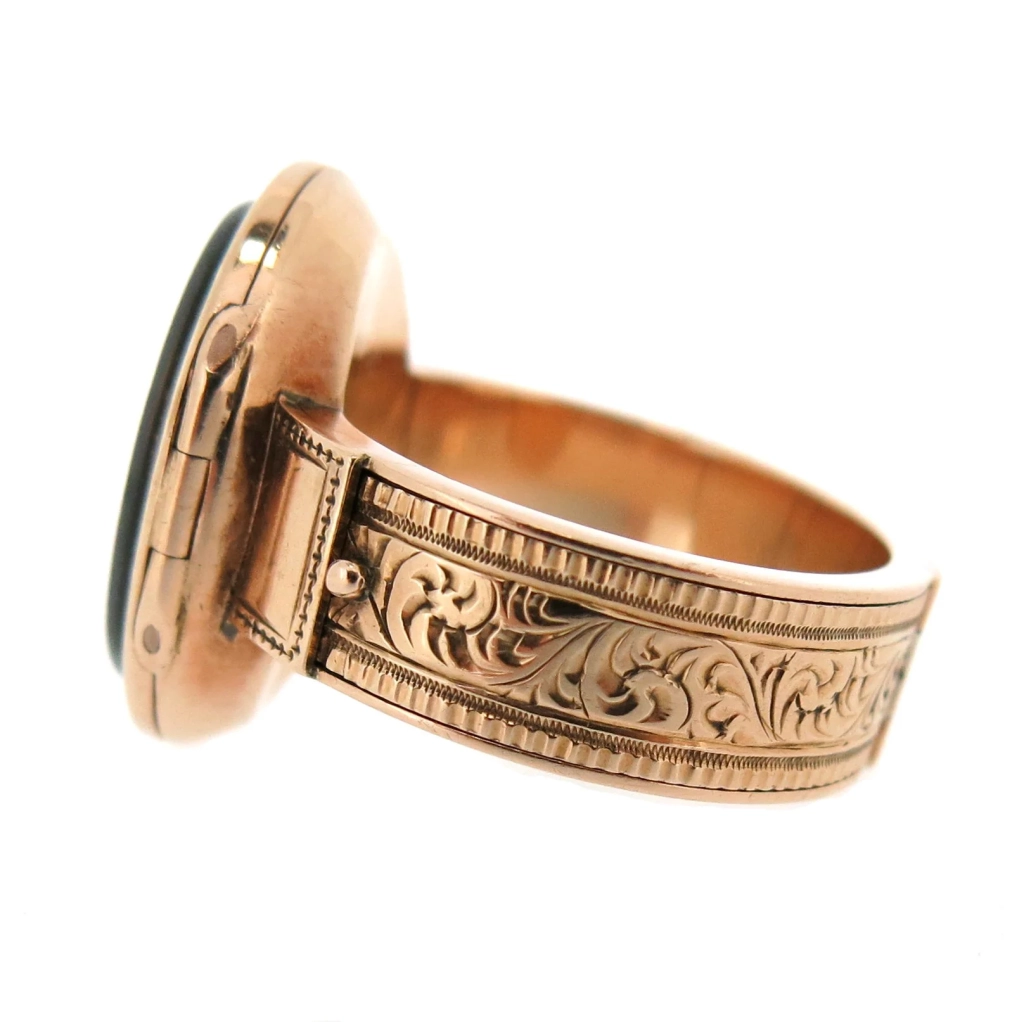
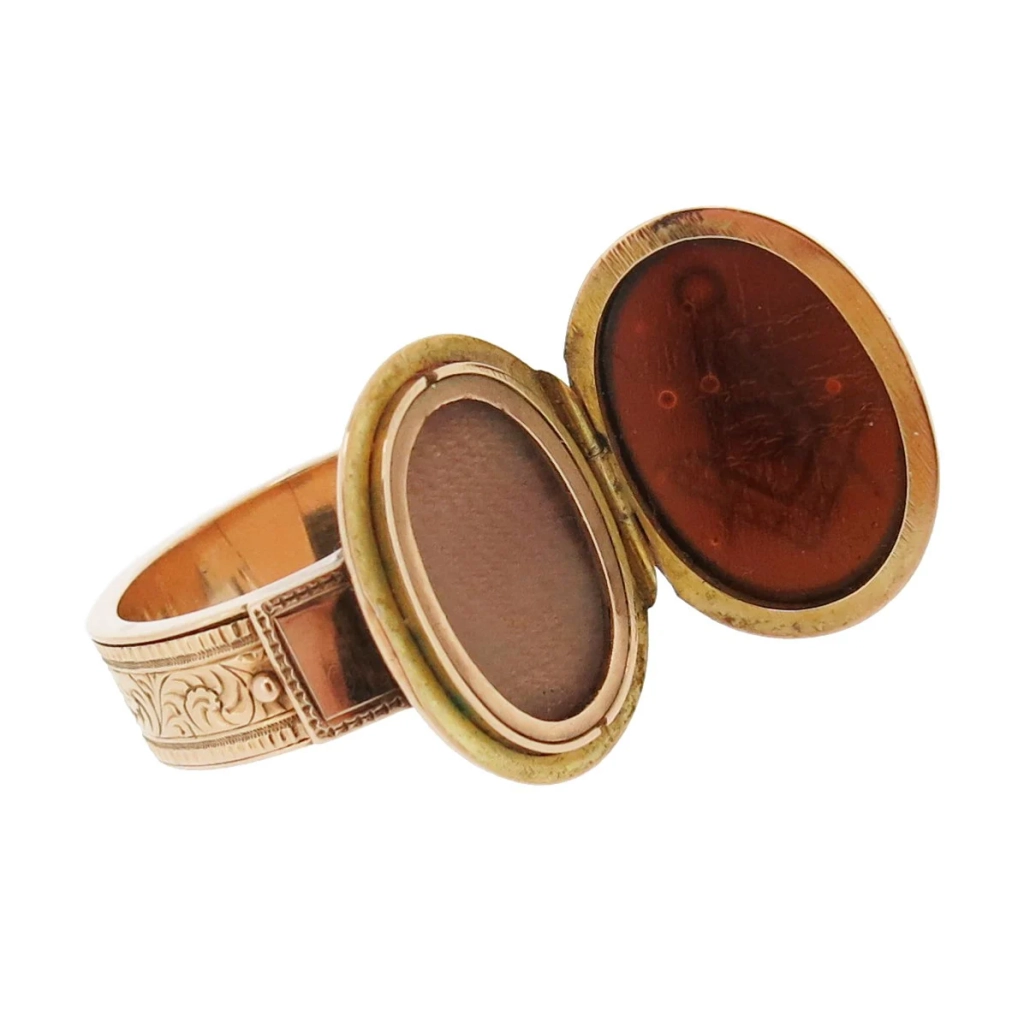
These jewels are not a mandatory Masonic accessory. They usually have the form of a signet engraved with a chosen symbol. They serve to underscore their owner’s adherence to Masonic goals and values.
Gold ring from the reign of George III, set with an oval rock crystal engraved with Masonic emblems and the motto “ET TACE”; photo: Woolley and WallisMasonic ring with an intaglio depicting compasses and square, containing several hidden compartments intended to hold a portrait and locks of a loved one’s hair; photo: Woolley and WallisMasonic ring with an intaglio depicting compasses and square, containing several hidden compartments intended to hold a portrait and locks of a loved one’s hair; photo: Woolley and WallisMasonic ring with an intaglio depicting compasses and square, containing several hidden compartments intended to hold a portrait and locks of a loved one’s hair; photo: Woolley and Wallis
The square and compass
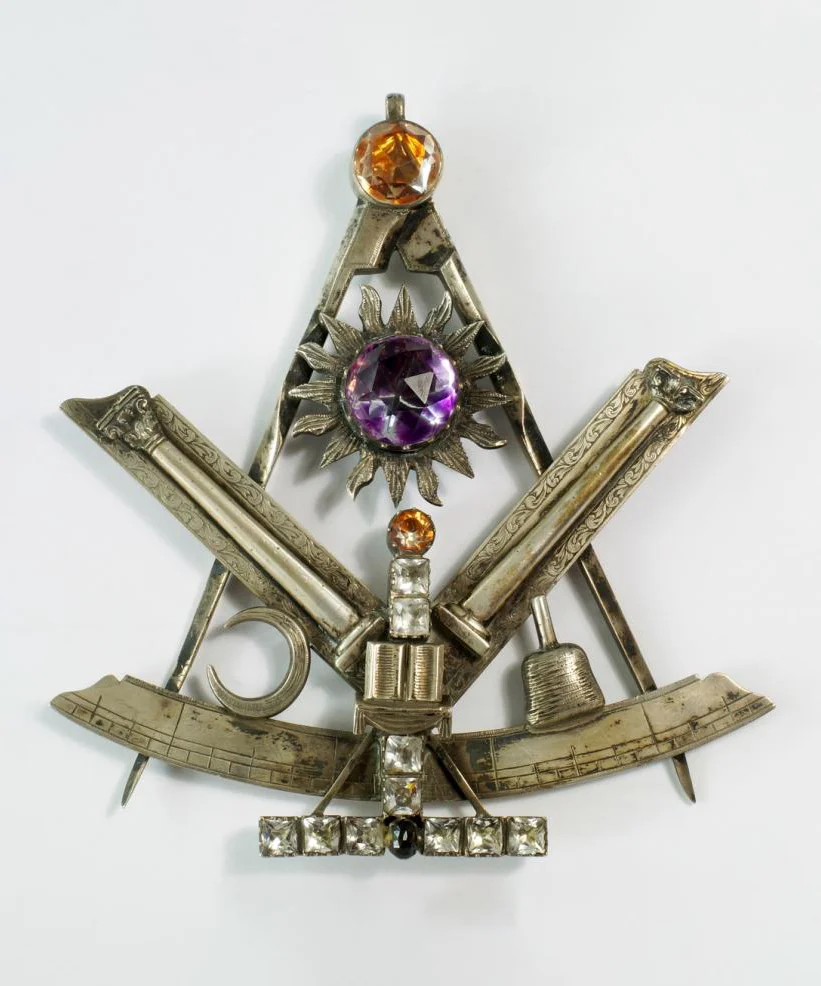
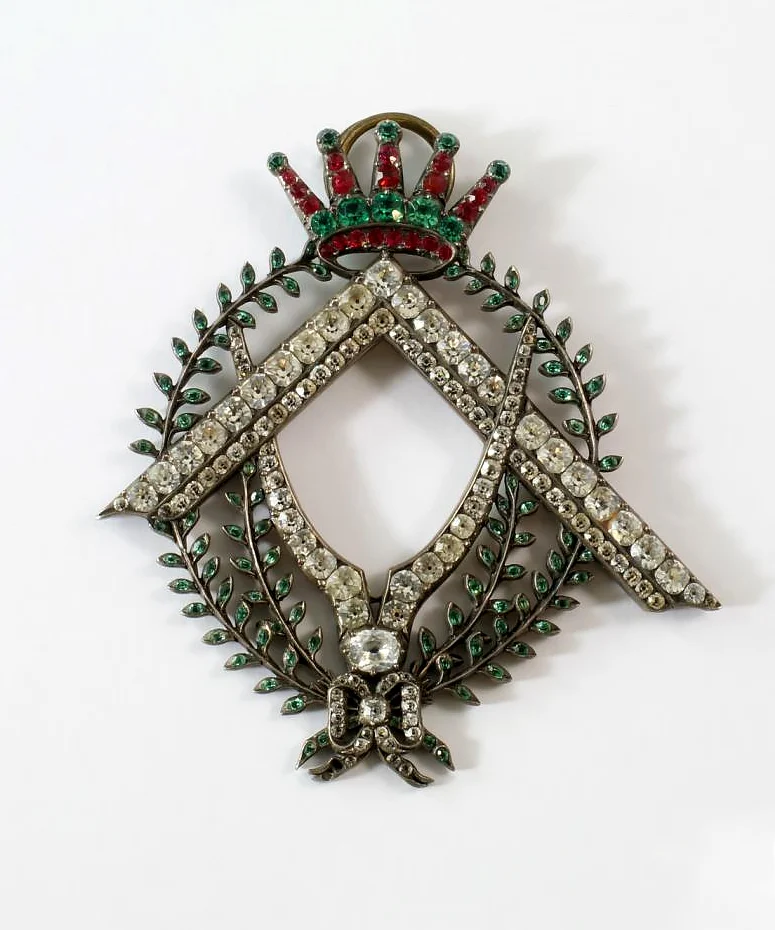
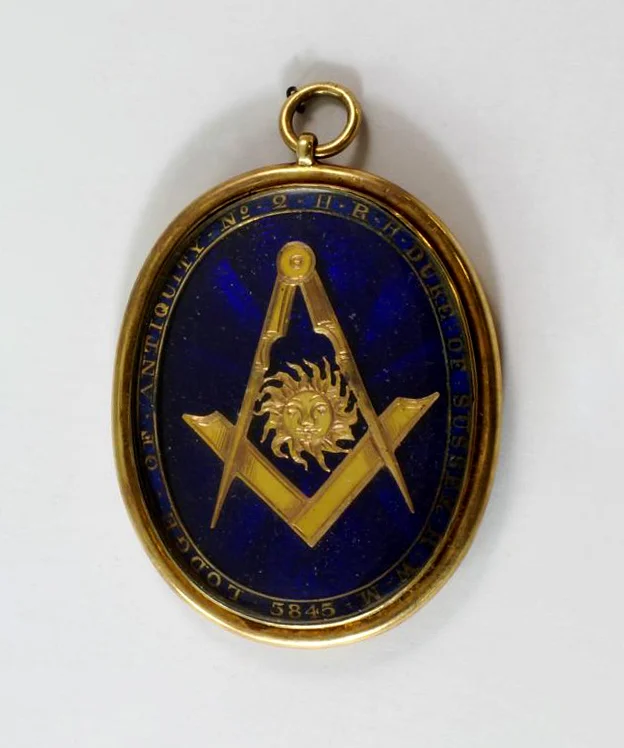
The symbol of the compass juxtaposed with the square is a basic attribute in Masonic iconography. Stonemasons once used these tools on a daily basis.
Decorative pendant in the form of compasses and square within a crown, 19th century, 8 cm in length, decorated with coloured crystals; photo: Roseberys London, www.roseberys.co.ukJewel of the Lodge of Antiquity No. 2, early 19th century, 5.5 cm in length, decorated with blue guilloché enamel and a compasses-and-square motif; photo: Roseberys London, www.roseberys.co.uk
The square has transcendental meaning and relies on allegory. Just as the mason uses it to make sure his work is balanced and proportionate, the square reminds the Freemason to treat others in a just and equal way. The same goes for the compass, once used to trace arcs and circles on stone. In Masonic iconography, it serve to remind its wearer about the need to follow established moral principles.
The letter G and the Eye of Providence
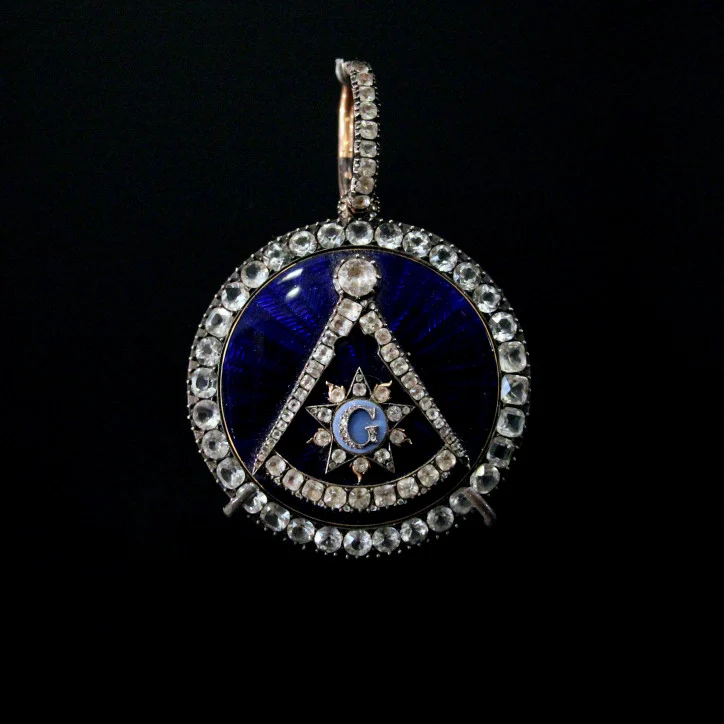
Sometimes, the symbol of the square and compass is enhanced with the letter G. The history of its use is most probably related to Scottish rites. Its specific interpretations may vary, depending on the brotherhood.
Some say the letter G should be read as the third letter of the Hebrew alphabet – gimel – that reflects the symbolism of mercy. Others read it as the initial letter of the word ‘gnosis’, meaning ‘knowledge’. However, the most common interpretation of the letter G presents it as the crucial Masonic symbol of the Great Architect of the Universe, a depiction of spiritual and intellectual ideas, instead of a personified God. Furthermore, all these meanings are enriched by the letter’s relation to geometry, which mediaeval builders believed to be the source of all knowledge.
Jewel presented to the Earl of Moira in 1813, decorated with blue guilloché enamel and rock crystals; photo: Can Pac Swire
The idea of connecting God and geometry – that is, faith and science – is another reference to Masonic tradition. Freemasons see it as originating from the history of ancient masters who participated in the great Biblical projects. The architects, fascinated by the great possibilities offered by geometry, saw it as a gift from God. The symbol of the Eye of Providence has a very similar meaning – the eye represents God, whereas the triangle stands for the mathematical perfection of geometry (although some also see it as a reminder that human thoughts and actions are closely scrutinized).
The Masonic twin pillars
Another extremely important Masonic symbol are the twin pillars, Jachin and Boaz. According to biblical sources, they were made of bronze (or brass) and guarded the entrance to the first Temple of King Solomon in Jerusalem. The word ‘Jachin’, spelled יָכִין, may be translated as ‘He will establish’ or ‘God has made steadfast’, whereas ‘Boa’ – בֹּעַז – signifies ‘strong’ or ‘in him (lies) strength’. The Jachin pillar stood on the right side of the temple portico, while Boaz stood on the left. Each was 18 ells (8.2 metres) high, with a circumference of 12 ells (1.8 metres diameter). The capitals were lily-shaped, 5 ells high (2.4 metres), decorated with palm leaves and pomegranates.
An enamelled pendant from the 18th century, 14 cm high, inscribed with a Judaic motif. Source: Roseberys London, www.roseberys.co.uk
In Masonic iconography, Jachin references the idea of ascension as well as the concept of activity, and traditionally represents the male element. Boaz depicts the concept of wisdom and the passive forces of nature, connoting femininity. Both pillars remind onlookers about the limitations of the created world and symbolize dualism as a necessary manifestation of Unity.
***
Exact explanations of specific symbols and rituals cannot be divulged, since Freemasons are obliged to keep them secret. Nowadays, however, when information flows globally, many secrets – once dutifully guarded – have become common knowledge among the educated public.
The Georgian era in Britain was a time of opulence, extravagance and sharp social inequalities. Hunger and poverty grew exponentially, but so did coal-fuelled fortunes, the owners of which did everything to flaunt their wealth, changing jewellery a few times a day or encrusting such mundane object as buckles, clasps and buttons with precious stones.
Anne Stuart died on the morning of 1st August 1714. Despite 17 known pregnancies she died without an heir and her death ended the reign of the Scottish dynasty on the British throne. That same day, under the Act of Settlement, her cousin George Louis of Hanover was named successor to the throne. The new king arrived on the British Isles at the age of 55, not speaking a single word of English. He became the ruler of a country he knew even less about. His enthronement, however, marked the beginning of Britain’s mercantile and military successes. The Georgian era lasted 100 years, its timeline fixed by the reign of four kings of the same name.
The turn of the 18th century brought about significant political changes. Scotland and England united into one kingdom under the Act of Union in 1707. The newly formed United Kingdom of Great Britain became one of the most prosperous countries in the world. Its glory was fuelled by the industrial revolution, which had just begun.
Mass production slowly replaced age-old agricultural processes and artisanal manufacturing. In 1733, John Kay built the first mechanized loom, the flying shuttle, which allowed one weaver to produce fabric of any chosen width twice as fast as before. Another extraordinary innovation in the weaving industry was the spinning jenny, a machine built by James Hargreaves. At first it was manpowered, then a water frame was added and the upgraded, water-powered machine became one of the key factors in the industrialization of textile production.
However, it wasn’t weaving machinery that brought about true change. The father of the industrial revolution was Thomas Newcomen, who built the atmospheric steam engine prototype in 1712. In the following decades, his invention paved the way for industrialization. The famous Scottish engineer James Watt modernized Newcomen’s machine much later, in the 1870s, creating the steam engine as we know it. Its widespread use included powering furnace bellows and mine dewatering pumps. Moreover, it significantly increased coal extraction and accelerated the development of metallurgy and transportation. In the case of the latter, asphalt also turned out to be a crucial invention, since it shortened the two-week journey from London to Edinburgh to a 48-hour trip. Britain was becoming powerful, and the revolution that propelled it went hand in hand with incredible success in trading policy.
In those times, most European superpowers were focused on territorial expansion and dynastic interests, whereas the United Kingdom followed in the Netherlands’ footsteps and concentrated on developing trade. Of course, it did not turn a blind eye to the above-mentioned issues, but undertook an awe-inspiring effort to create a global network of influence and secure the interests of both kingdom and its entrepreneurs. The security of this investment was ensured by the Royal Navy who guarded the new trading routes. It was a machine that was so well-oiled that it remained unrivalled for the next 100 years and was considered the most powerful naval fleet in the world. Its existence allowed the United Kingdom to set up a network of trade posts all over the globe and establish direct control of overseas colonies.
By the mid-18th century, Britain had gained control over global trade, generating huge income, both in public and private wealth. The upper and middle classes became incredibly rich over a short period of time (as opposed to the increasingly poor citizens of the underprivileged classes). For the first time in history, one’s social position depended on money instead of birth status. The inheritors of recently made fortunes could either engage in social activity or lead carefree lives. Fashion, art and architecture flourished. Entire city districts were transformed: houses, representational public offices, and palaces for the old and new elites were all built at the same time. Urban spaces were packed with architectonic projects designed in full swing. The ‘old’ Stuart trends were replaced by ‘new’ classical designs.
The beginning of the Georgian era saw a boom in palladianism, an architectural style based on the work of the Italian Andrea Palladio (palladianism was soon replaced by neoclassical, then neo-Gothic forms). When George III became king, the interiors of wealthy British homes were gradually filled with Wedgwood porcelain, Chippendale and Sheraton furniture, and paintings by the likes of Joshua Reynolds and Thomas Gainsborough. In fact, the Georgian era revolutionized not only architecture and interior design, but decorative arts as well. Enormous amounts of jewellery were commissioned and the craft of British jewellers quickly gained worldwide renown.
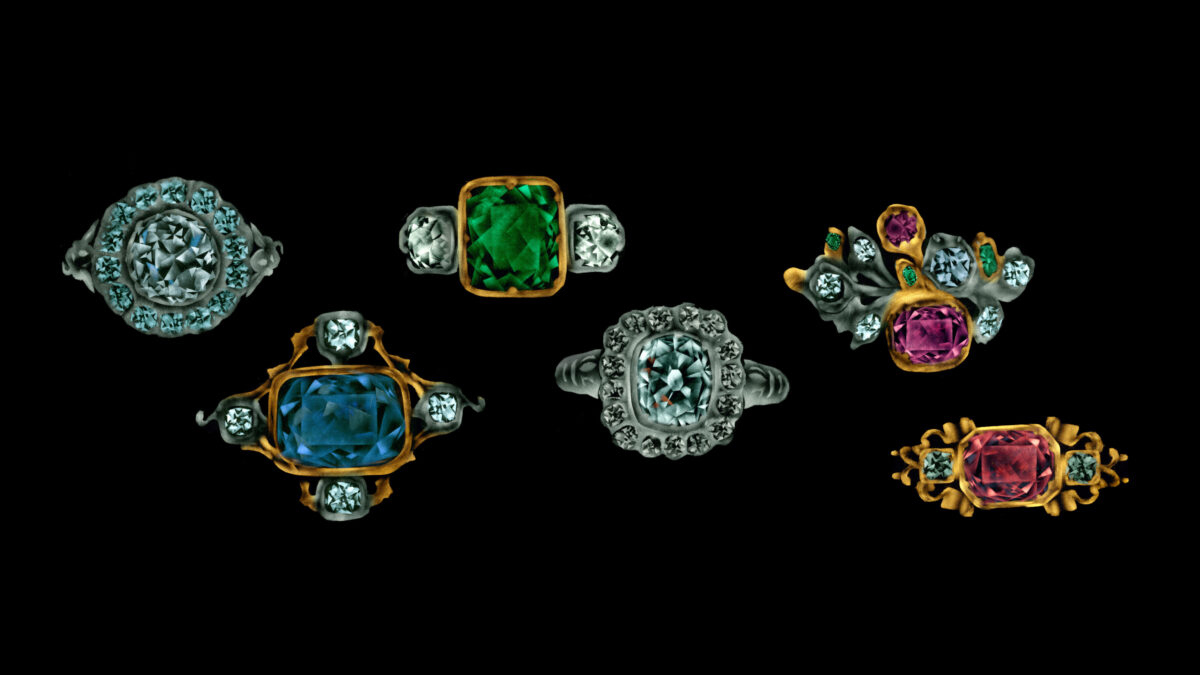
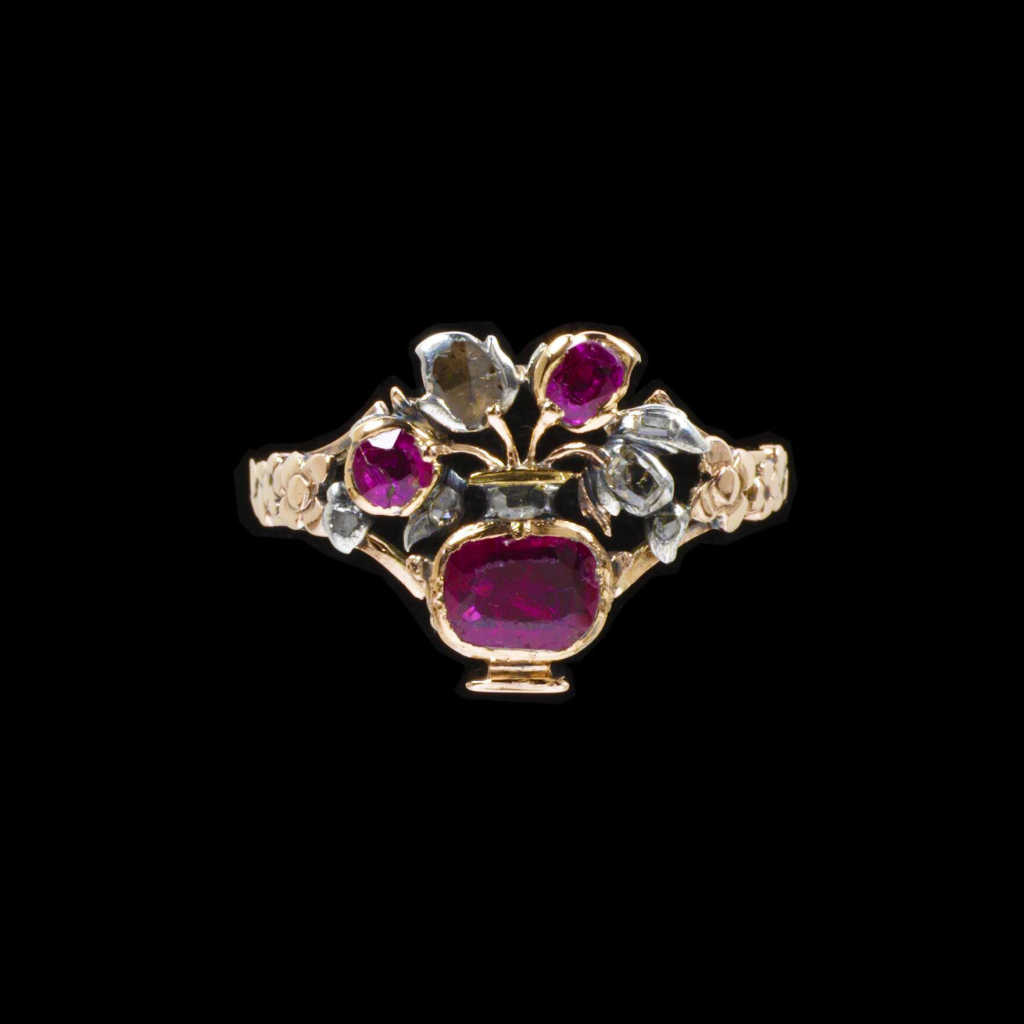
The rococo style and its floral themes were in vogue at the beginning of the 18th century. A formidable example of rococo jewellery are giardinetti rings, which imitate tiny floral compositions and flower baskets. With time, these intricate jewels were slowly replaced by simpler forms: geometrical and neoclassical designs marked the end of the era.
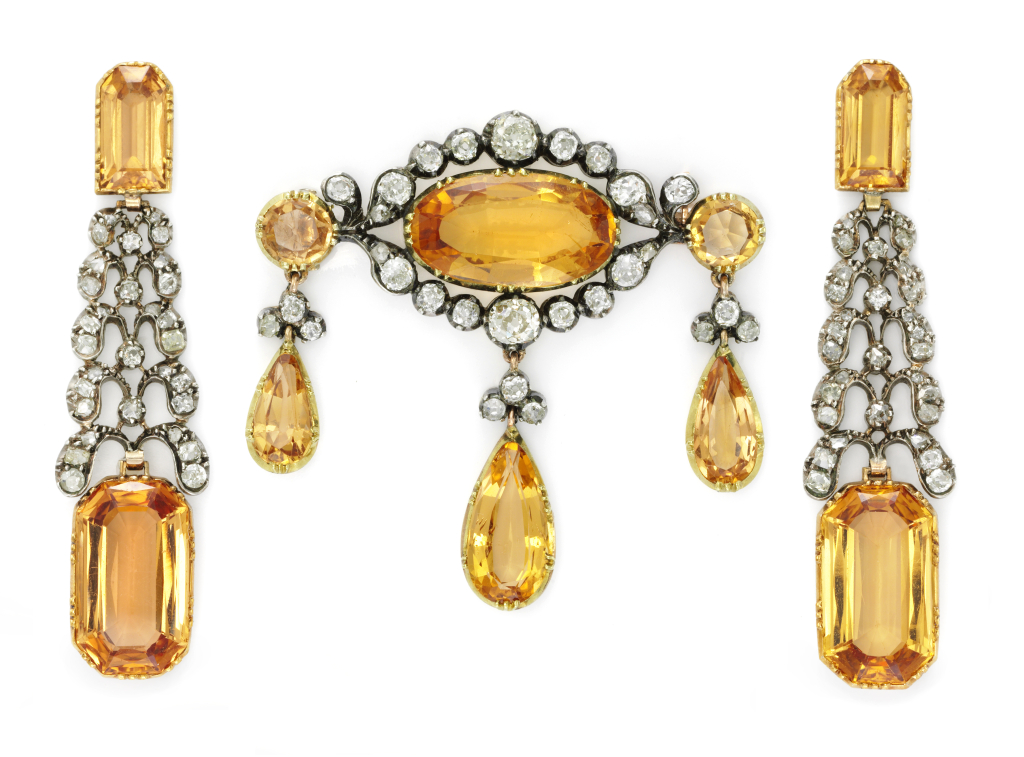
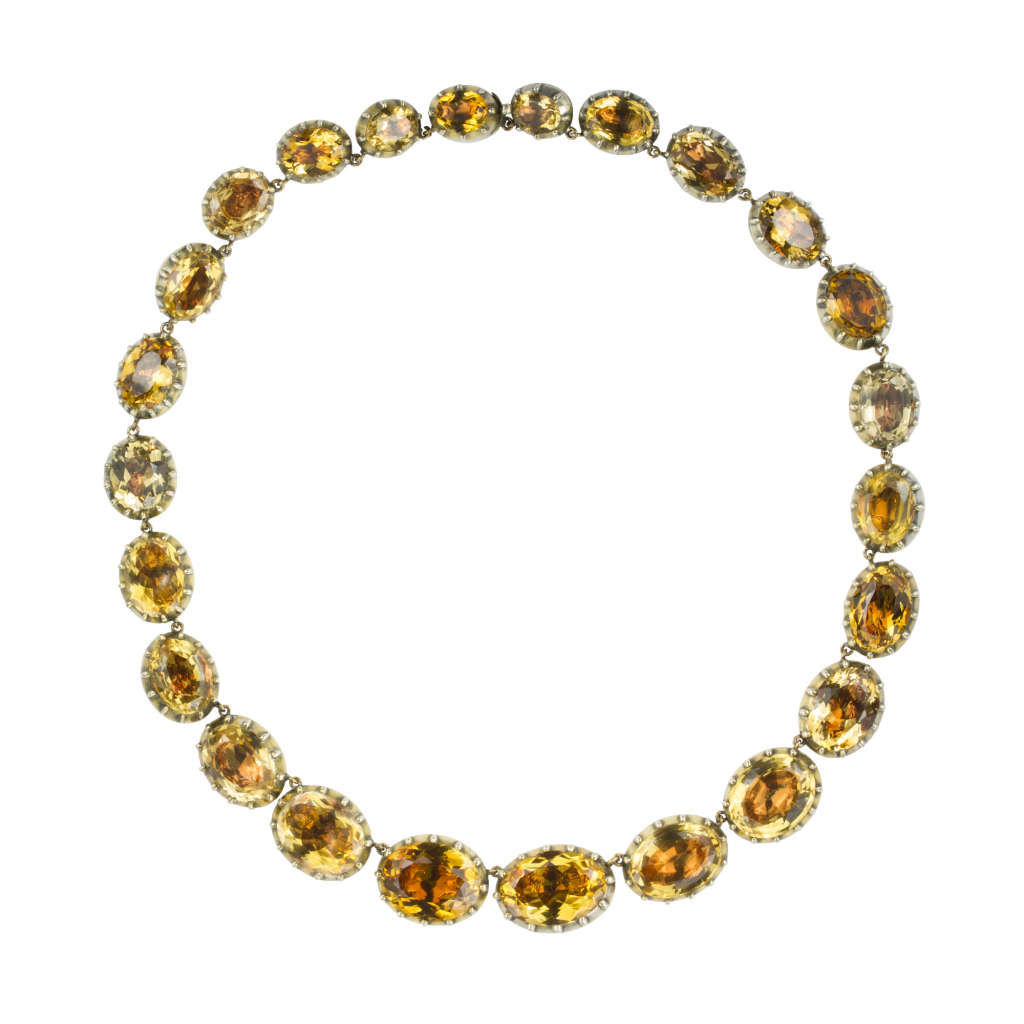
Georgian ornaments were entirely handmade, but manufacturing was sped up by the invention of modern rolling mills, patented in the mid-1800s. Rolling mills replaced the extenuating manual labour of apprentices who spent hours hammering gold and silver into thin sheets for their masters’ use. Although clients could undoubtedly afford gold, the most fashionable precious metal was silver, mostly used for setting diamonds. In order to protect the client’s skin and clothes from stains caused by silver ornaments, jewellers would coat the pieces with gold from the inside. If diamonds were set in silver, gold settings, on the other hand, were often used with gemstones; the most popular kinds were garnets, amethysts, topazes, emeralds and rubies.
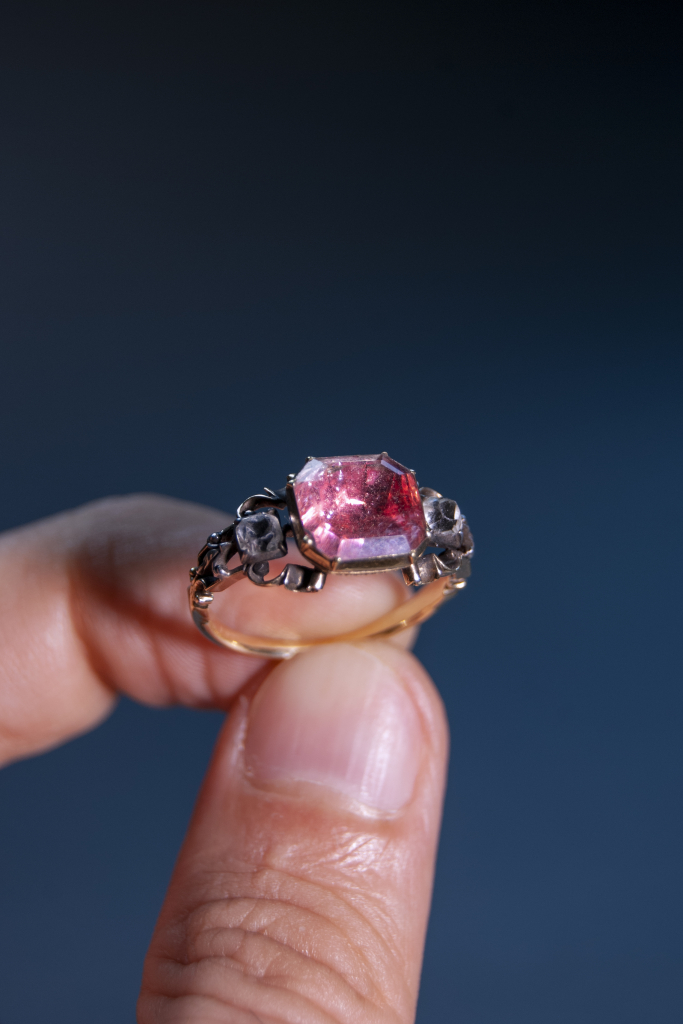
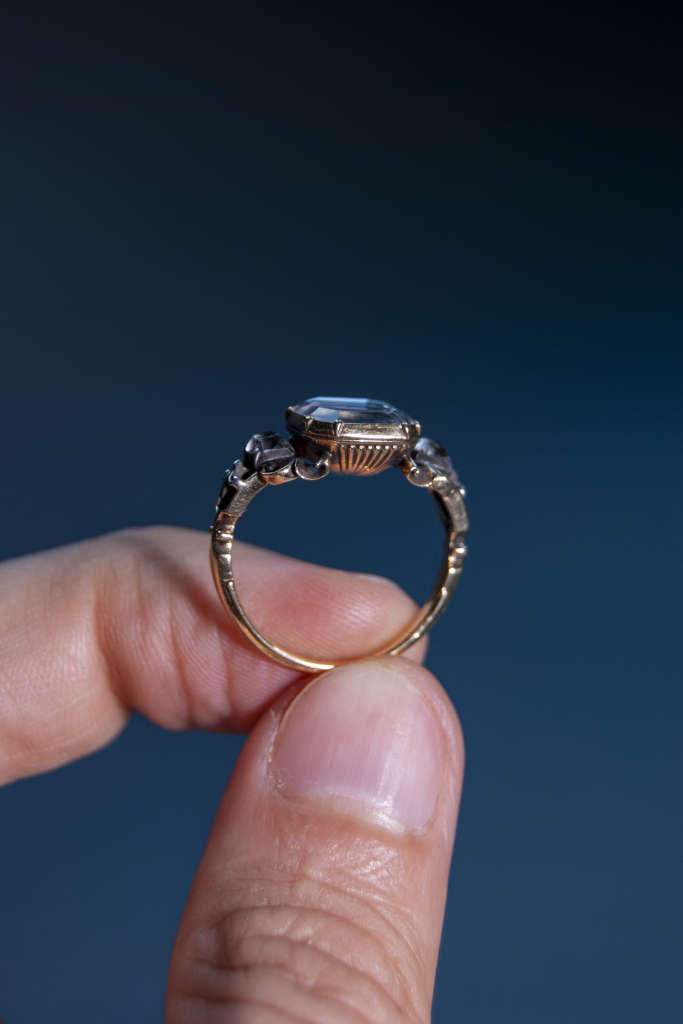
A very unique feature of Georgian jewellery were closed settings lined with coloured foil. Foiling precious stones was an effective way to enhance their brilliance, insufficiently highlighted by the existing gem-cutting techniques. Foiling beautifully refracted the light that shone through the gem into the setting. It gave a radiance to the jewels and ‘coloured’ the paler specimens. These ingenious ornaments were produced by placing gems over tiny mirrors made of thin metal foil. Such refractors could be made in different colours, but fuchsia-pink foiling was especially coveted.
Late Rococo English ring, c. 1779, made of gold and silver, decorated with white crystals and pink foil; photo: Tomasz WichrowskiLate Rococo English ring, c. 1779, made of gold and silver, decorated with white crystals and pink foil; photo: Tomasz Wichrowski
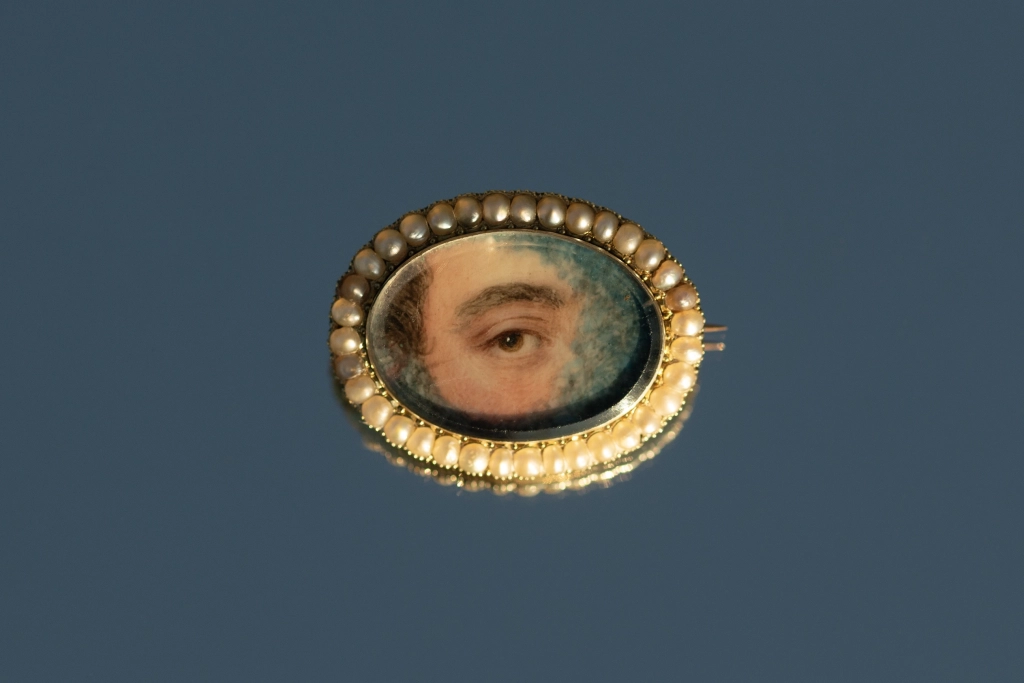
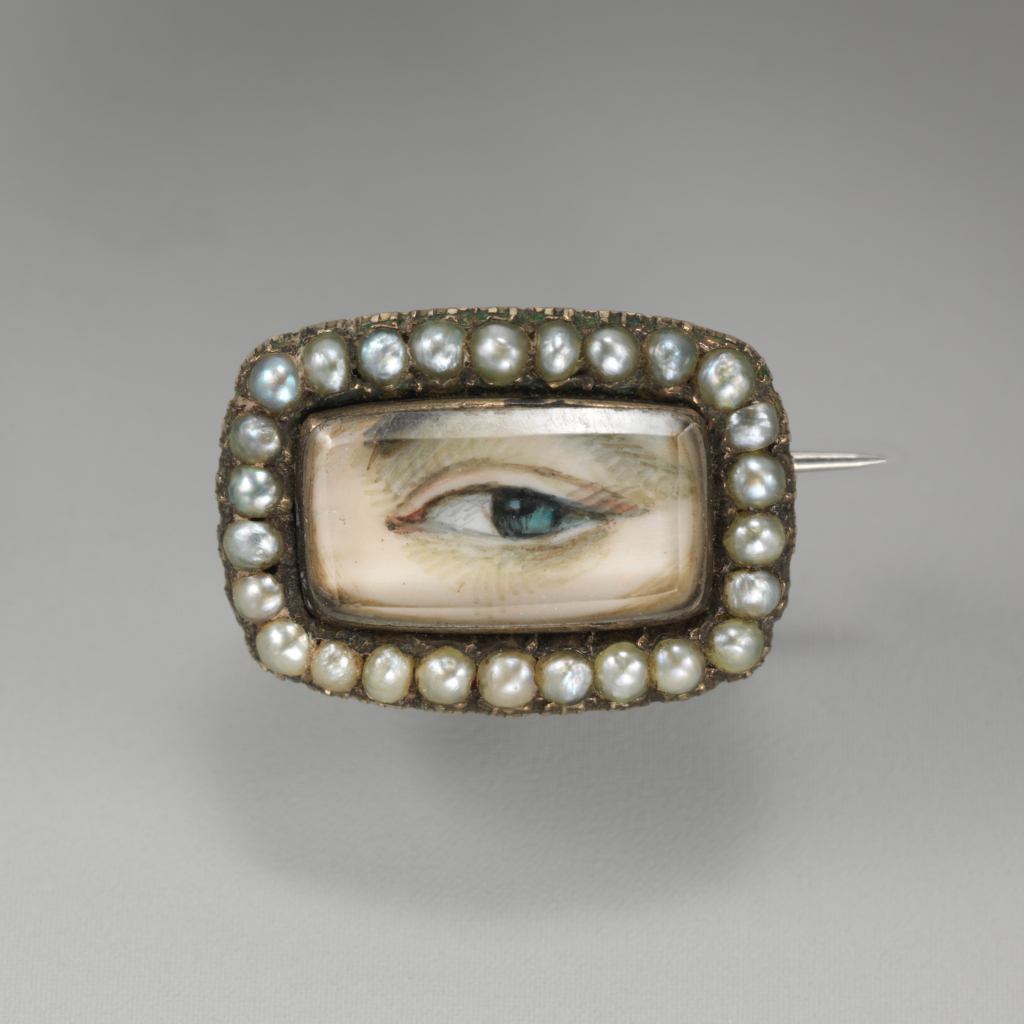
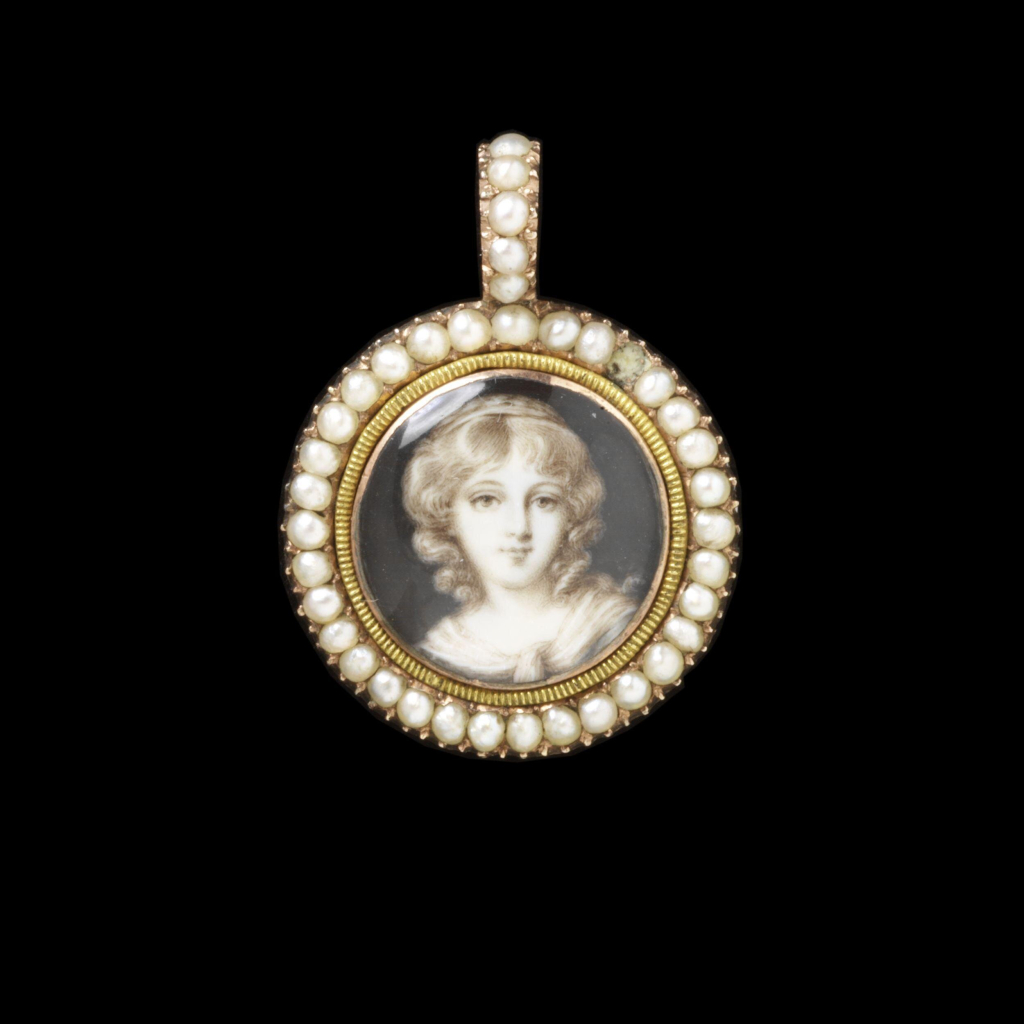
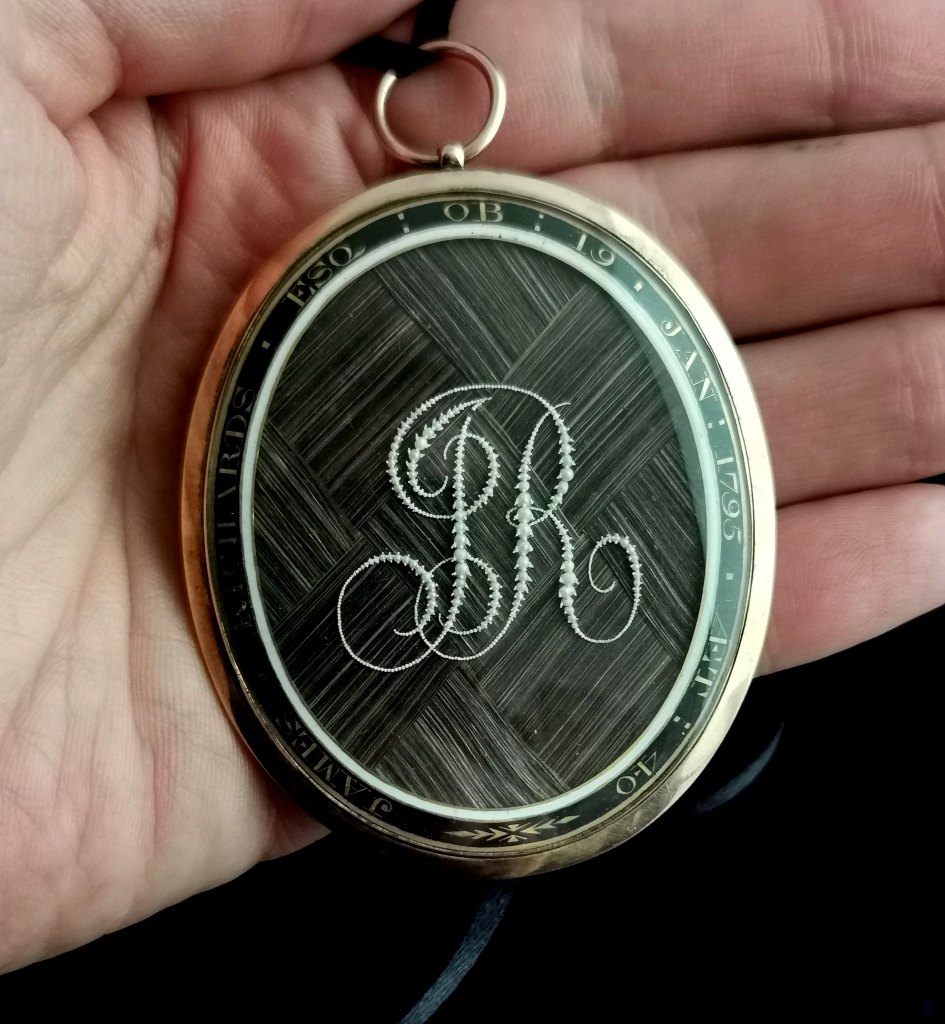
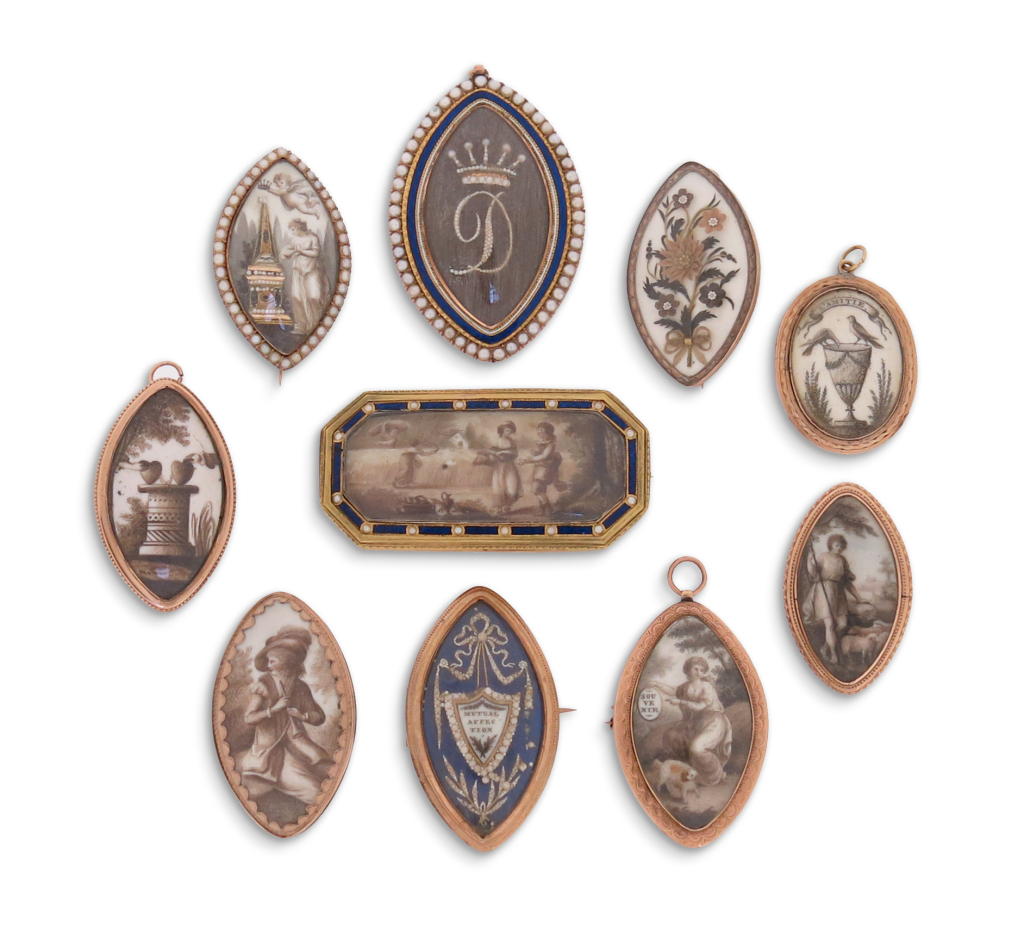
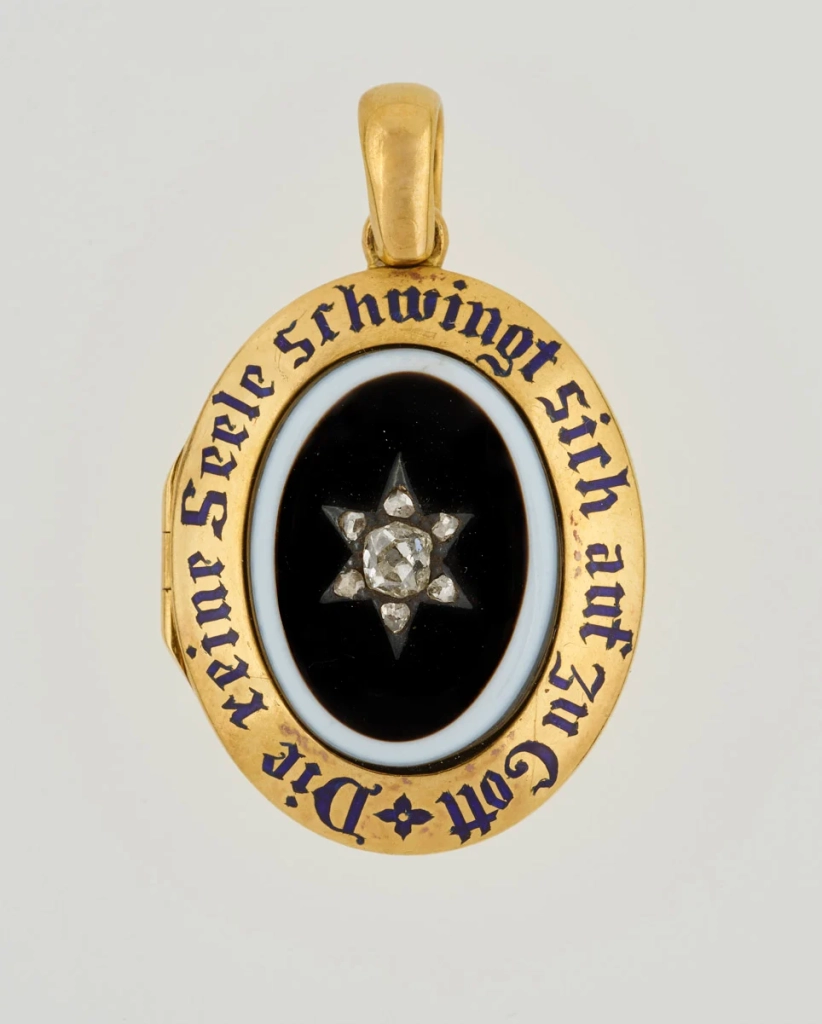
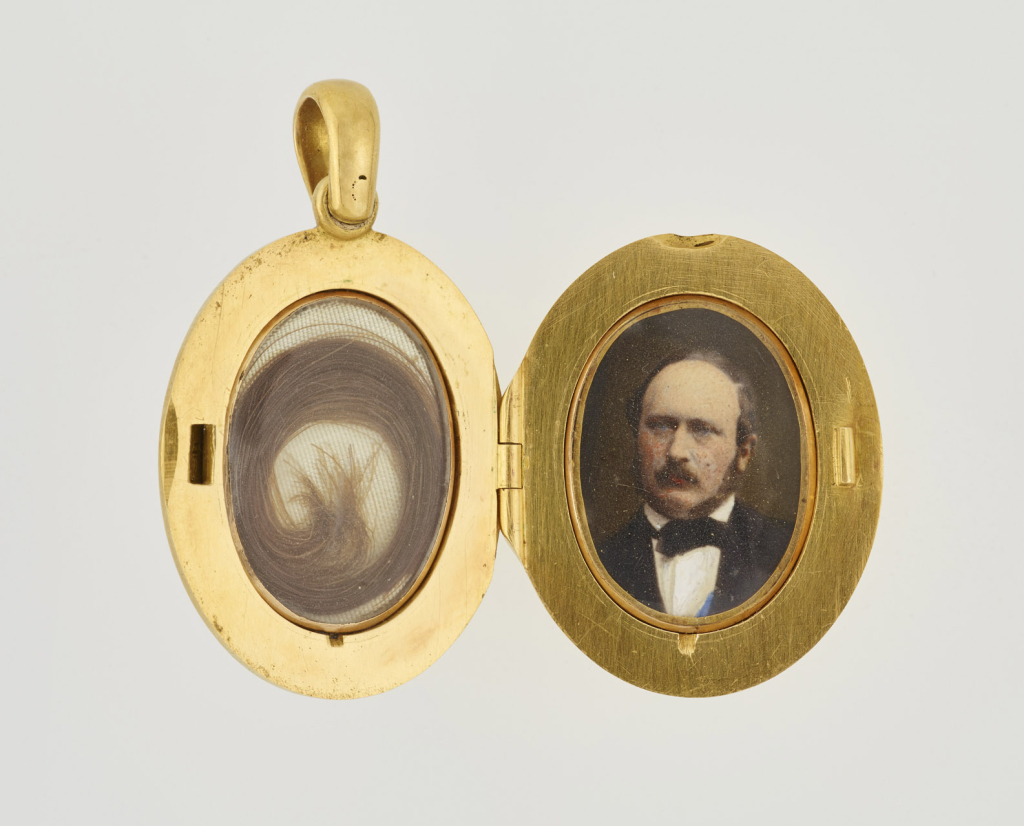
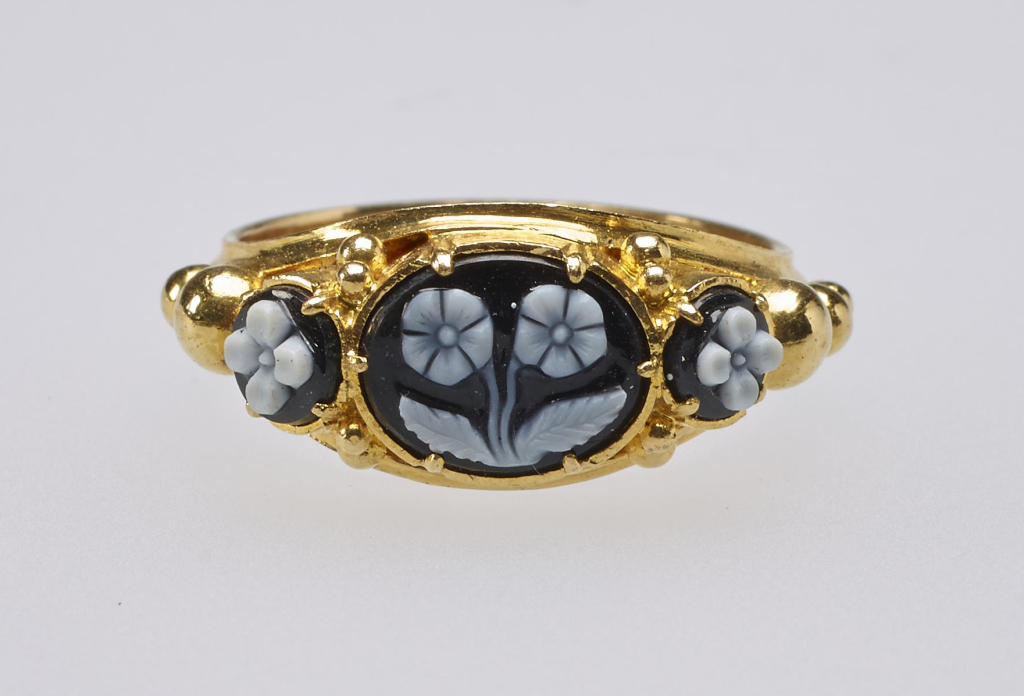
Another kind of ornamentation associated with the Georgian era is sentimental jewellery, which flourished in the first decades of the 19th century. Portrait miniatures, small eye drawings or keepsakes with little locket compartments for locks of hair were proof of love and remembrance. Mothers commissioned such jewels to enclose their child’s portrait or locks of hair. Husbands, wives and lovers did the same. Mourning jewellery also existed – it was usually embellished with black enamel and commissioned after the death of a close one.
With time, British society started rejecting the strict laws that dictated what clothing and jewellery could be worn by the representatives of various social classes and ethnicities (Sumptuary Laws). Jewellery gradually lost its elitist character and demand increased exponentially. New ornament designs appeared on a monthly basis. They all served different purposes and were supposed to be worn during different times of the day.
An important factor in the development of jewellery-making was the gradual emancipation of women. For the first time in British history, women could change and influence their own image. The literate, culturally- and politically-oriented female representatives of the higher classes abandoned their roles as housewives and living room decor. They started engaging in social discourse, hosting balls and meetings in Pump Rooms found in fashionable cure houses, like those in Bath or Tunbridge Wells. The evening meetings and games were facilitated by the modernization of candle-production technologies: wax lasted longer and the candle flames shone brighter. The prolongation of daily activities also influenced the design of daytime and nighttime jewellery.
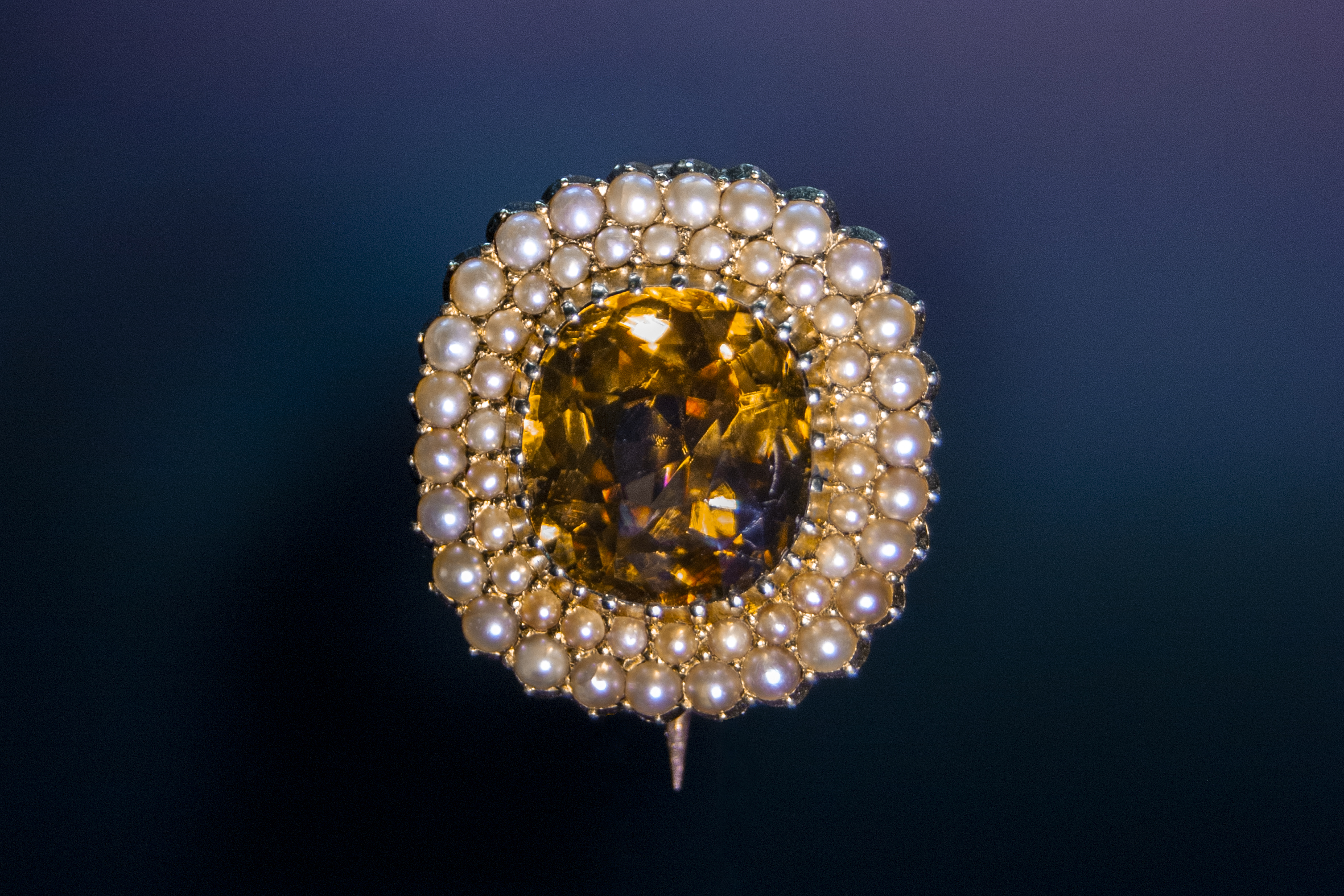
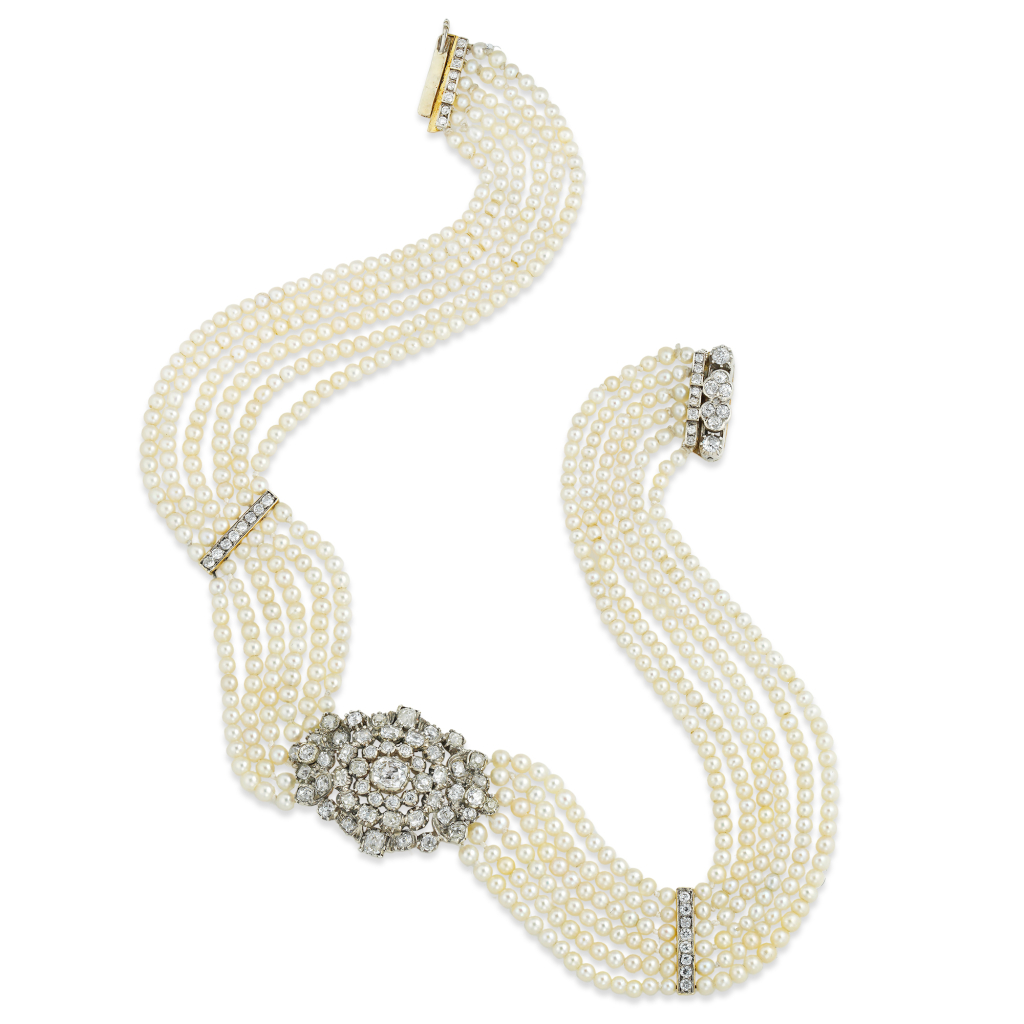
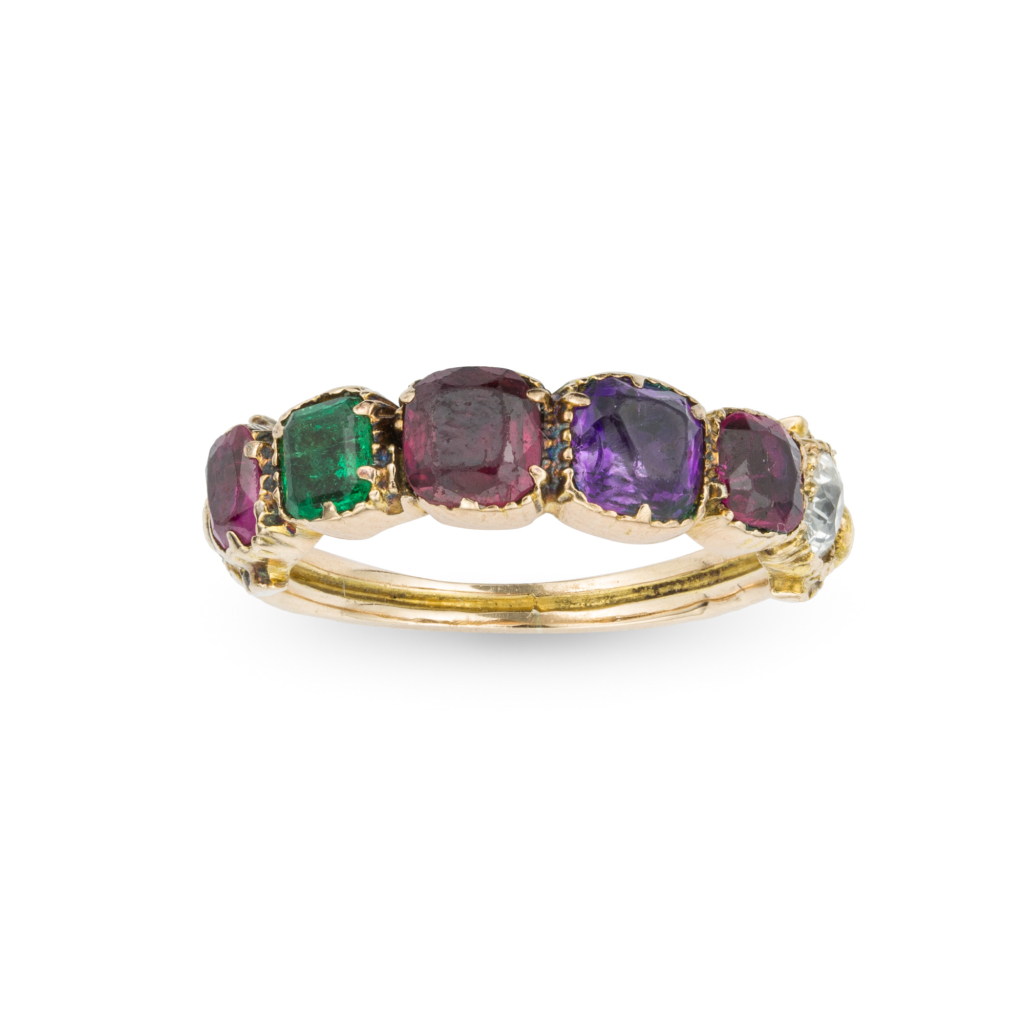
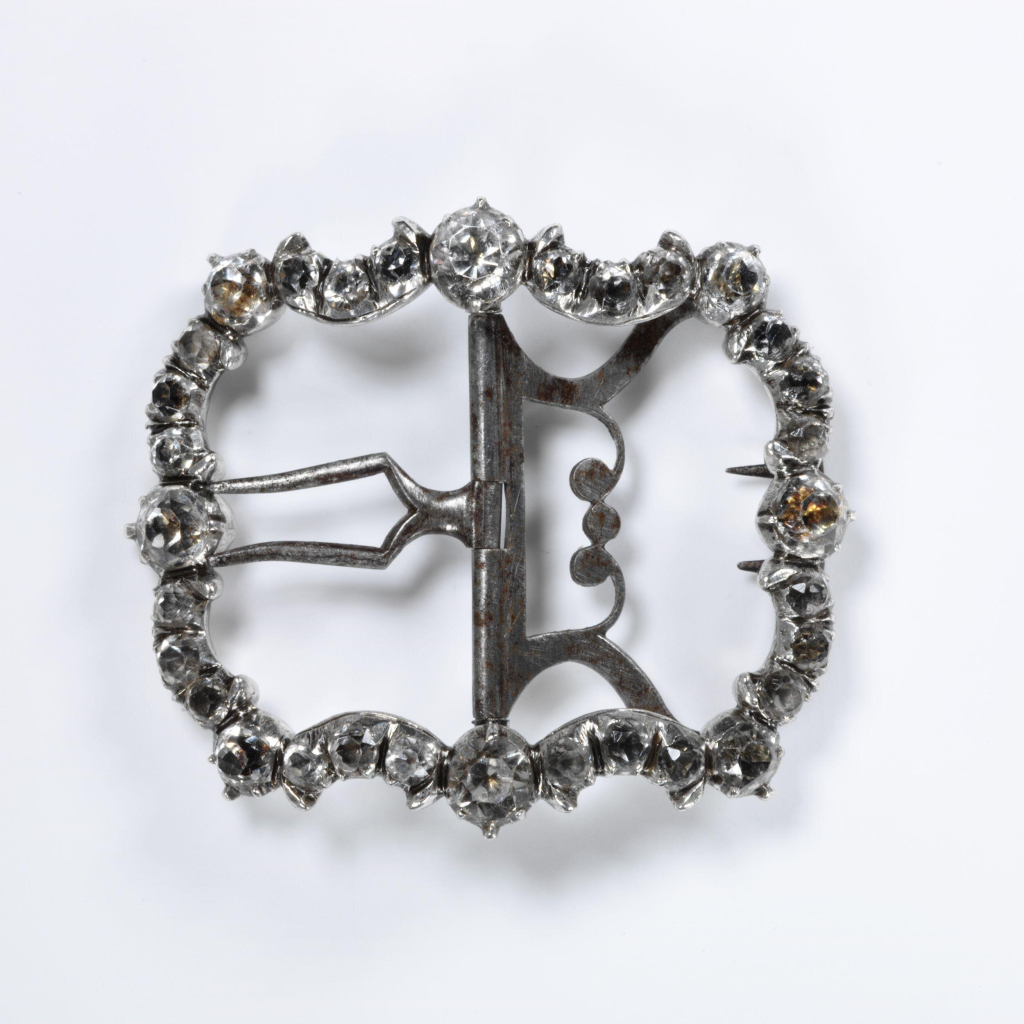
Natural light was perfect for emphasizing the beauty of paste and gems. Pearls were also a favourite during the day, and the tiny seed-pearls found on the Indian coast were incredibly popular. They were made into very long necklaces, called sautoir, with dangling tassels (also made of pearls); they could also be set around gems in brooches and rings. Extravagance and abundance were in vogue, so rings were worn on each finger, most often a few at a time (just like bracelets). Fobs became extremely popular among women; various accessories were attached to them, including sewing kits. Men were fond of decorative belt- or shoe buckles and gem-studded buttons.
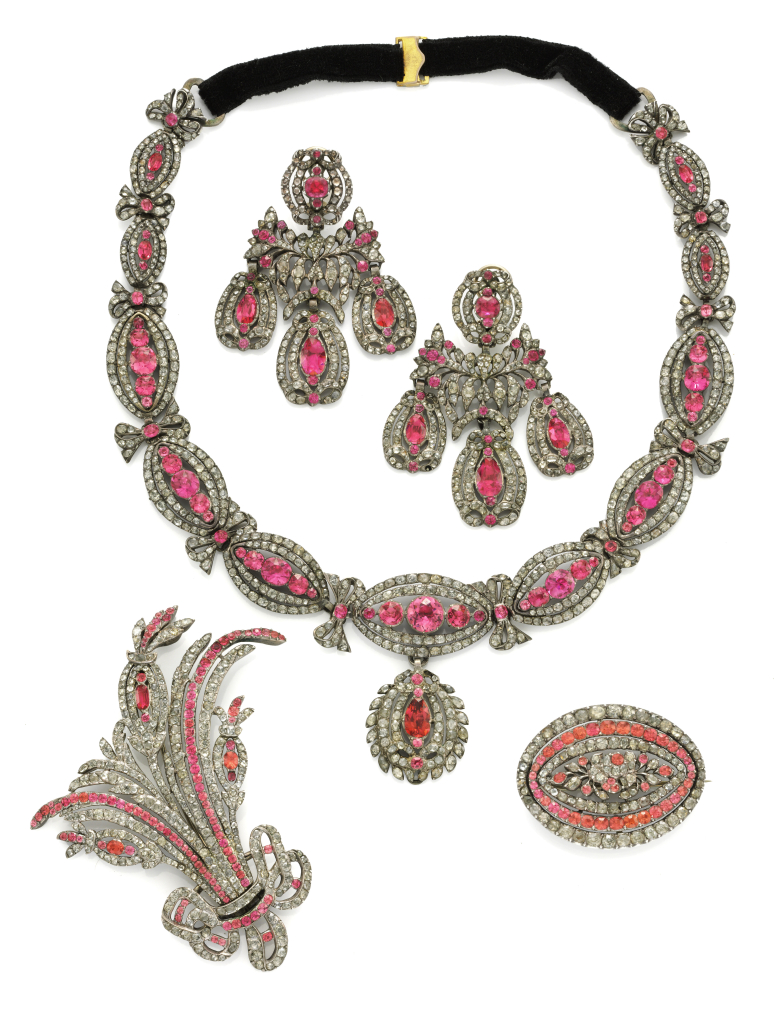
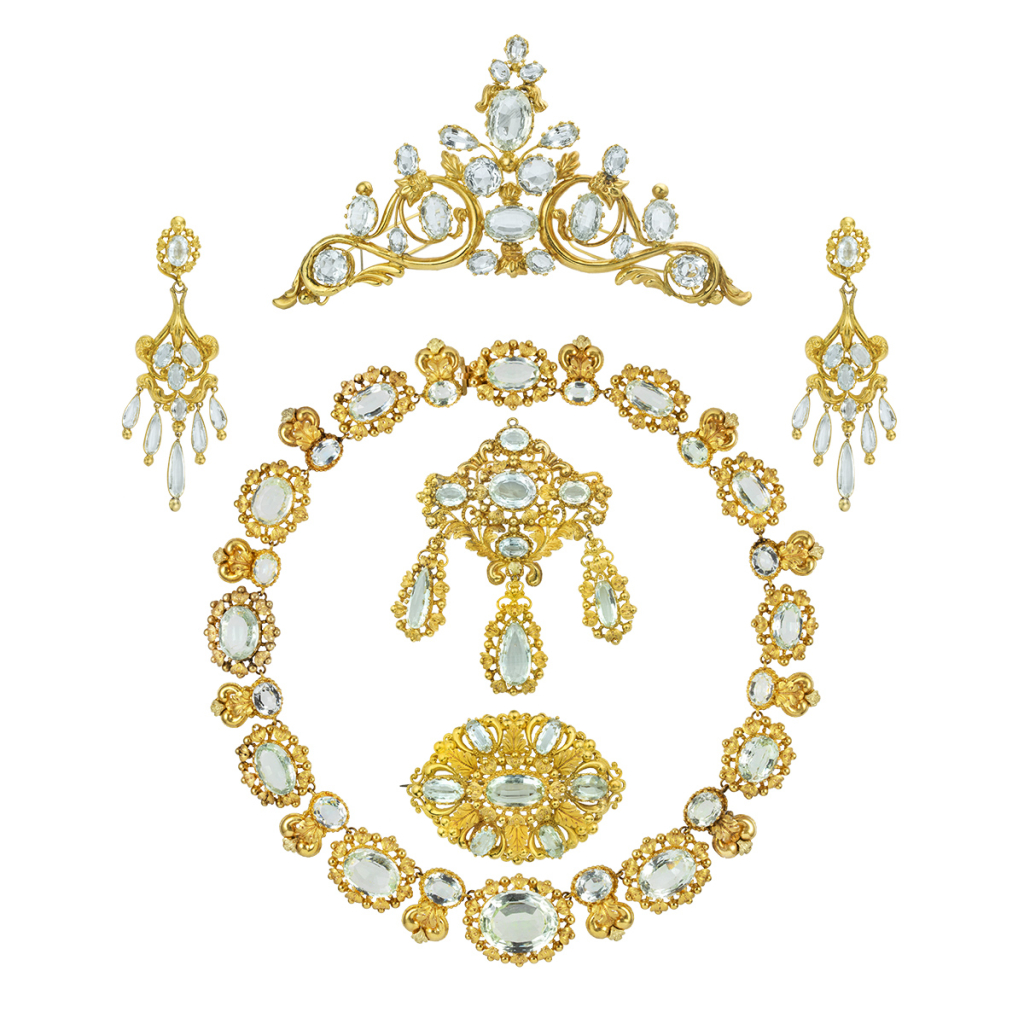
At night, diamonds reigned in the ballrooms. The new diamond mines in India and Brazil were becoming more and more accessible. But the true wave of sparklers flooded the United Kingdom with the arrival of immigrants escaping the French Revolution. The greatest admirer of diamonds in Britain, the Prince of Wales, collected them without any restraint. The future king did not spare money when it came to jewellery and parties: the splendour and exquisite attires seen at his balls went down in history. The ladies invited to the events he hosted wore flowing, fashionable rivière necklaces or entire jewellery sets called parure. Moreover, some women ordered costumes entirely made of jewels to attend the royal parties.
Georgian jewellery is very hard to find nowadays. It was used for years, then melted down to satisfy the needs of its owners in new forms. The specimens that survived are undoubtedly beautiful examples of an ancient craft, as well as some of the last ornaments of their kind, handmade with old techniques. Due to the galloping industrial revolution, new technologies triumphed among the goldsmiths of the Georgian era. Moulds started being produced by machines – faster and in larger quantities – but they often lacked the subtle magic of Georgian ornaments. Unfortunately, these changes were only noticed in hindsight.
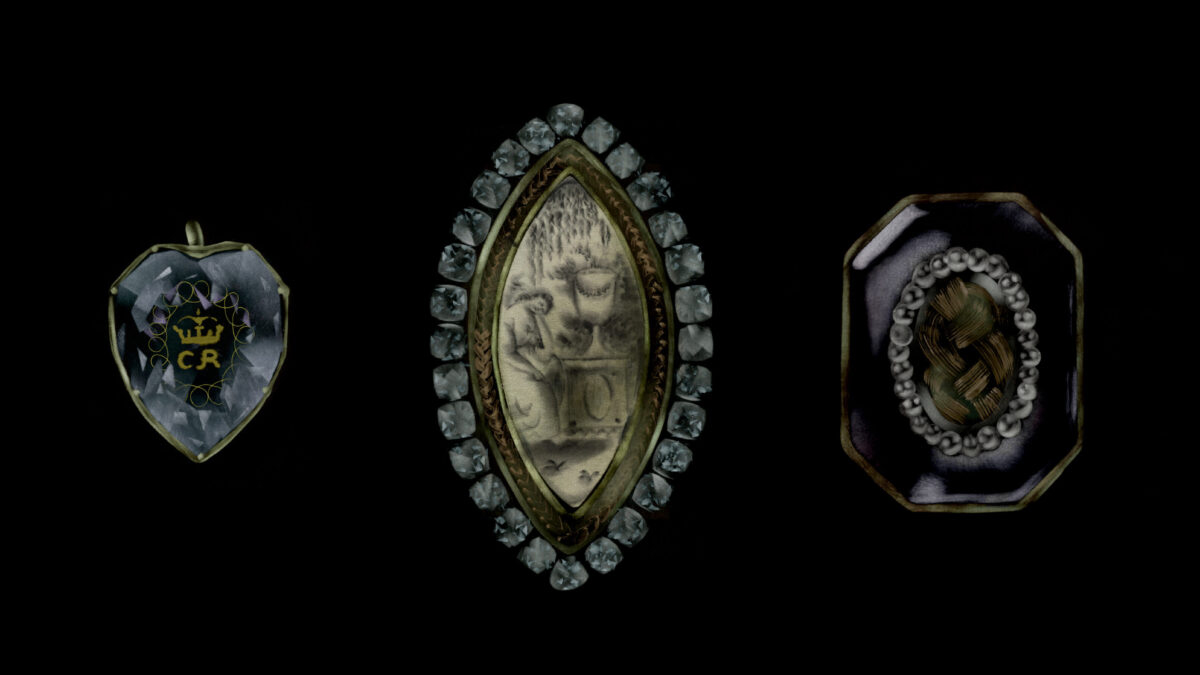
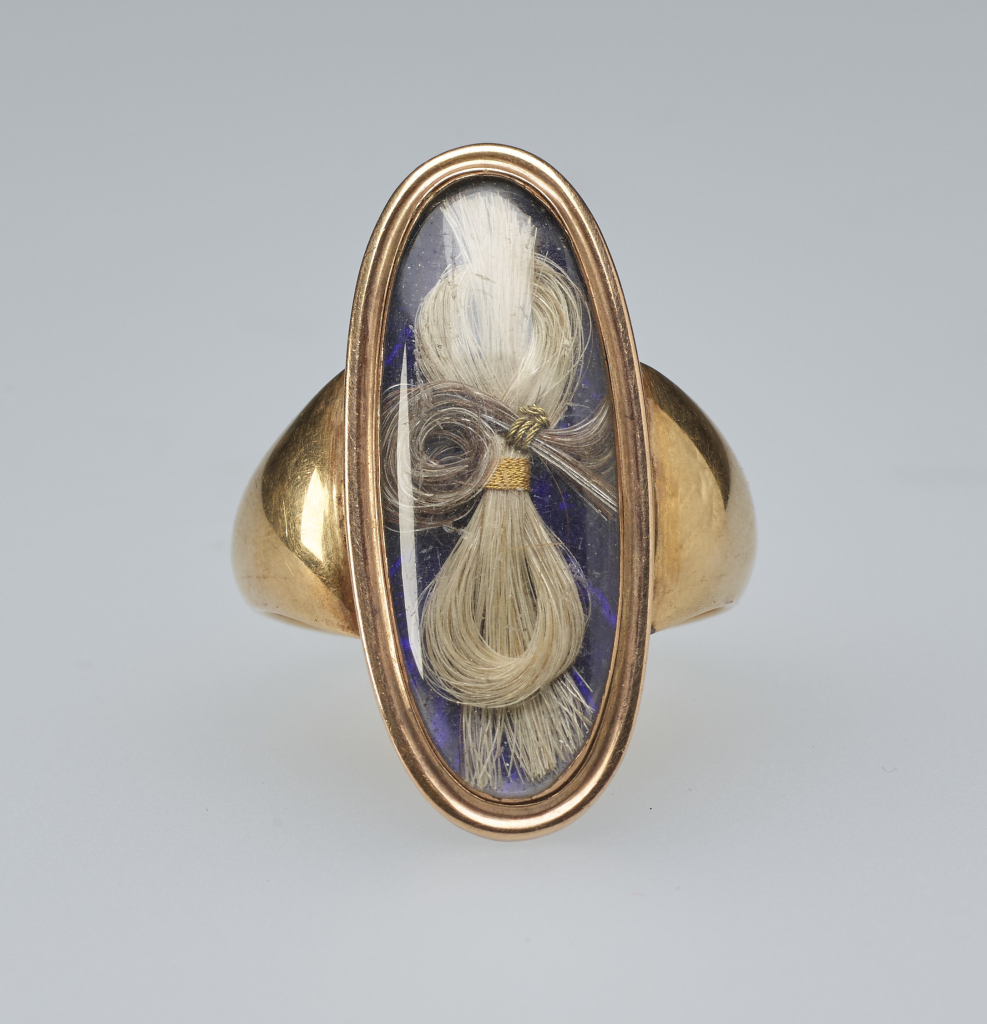
Mourning jewellery used to be worn for the same reason we now cherish photographs of those who passed away – jewels were keepsakes, tokens of remembrance commissioned by the wealthy and handcrafted by the poor. They were usually made with locks of the deceased’s hair.
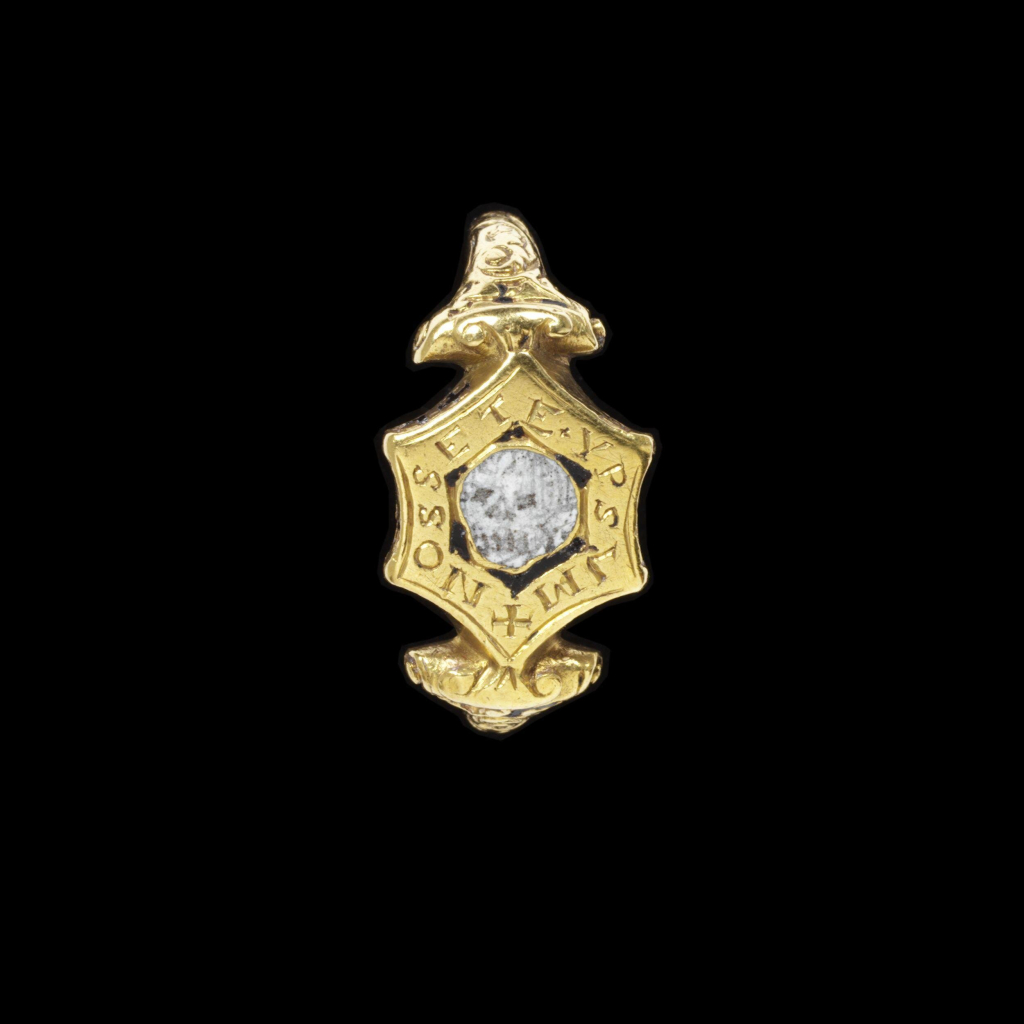
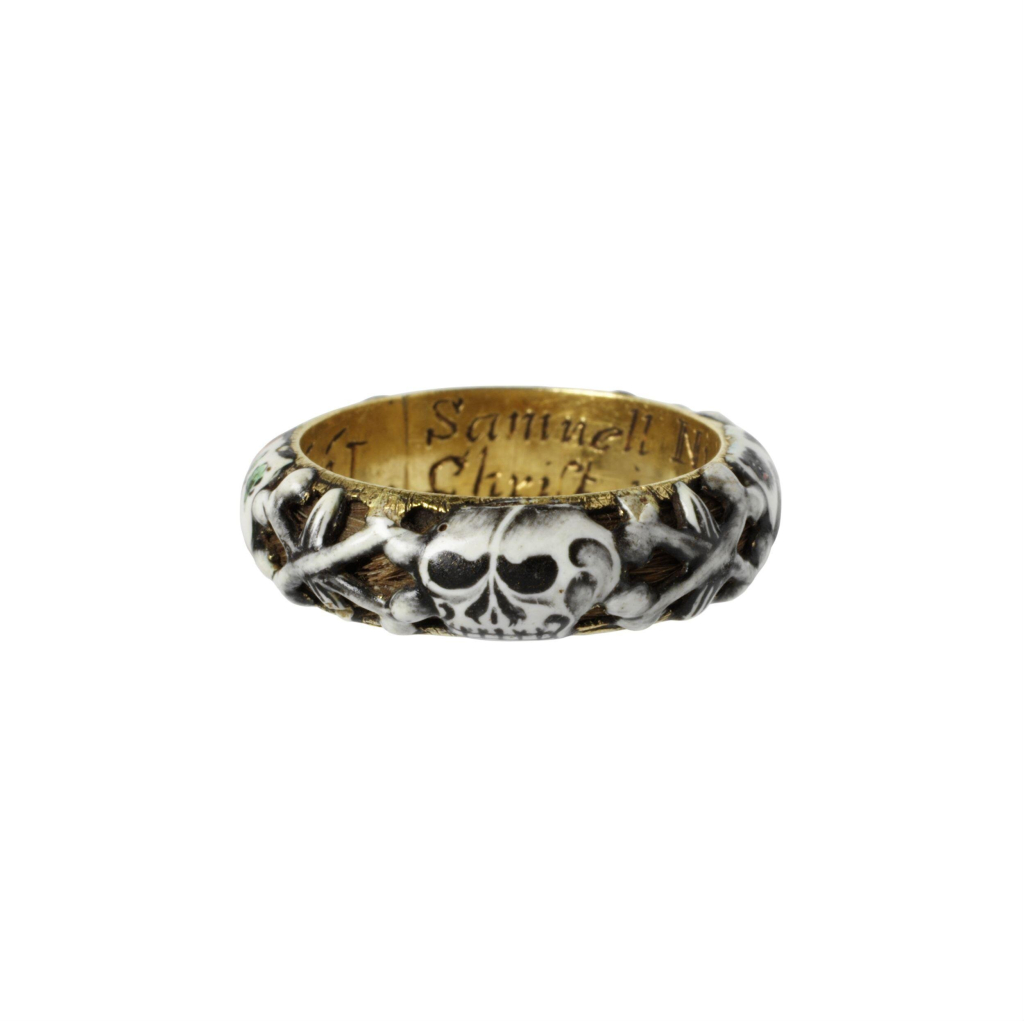
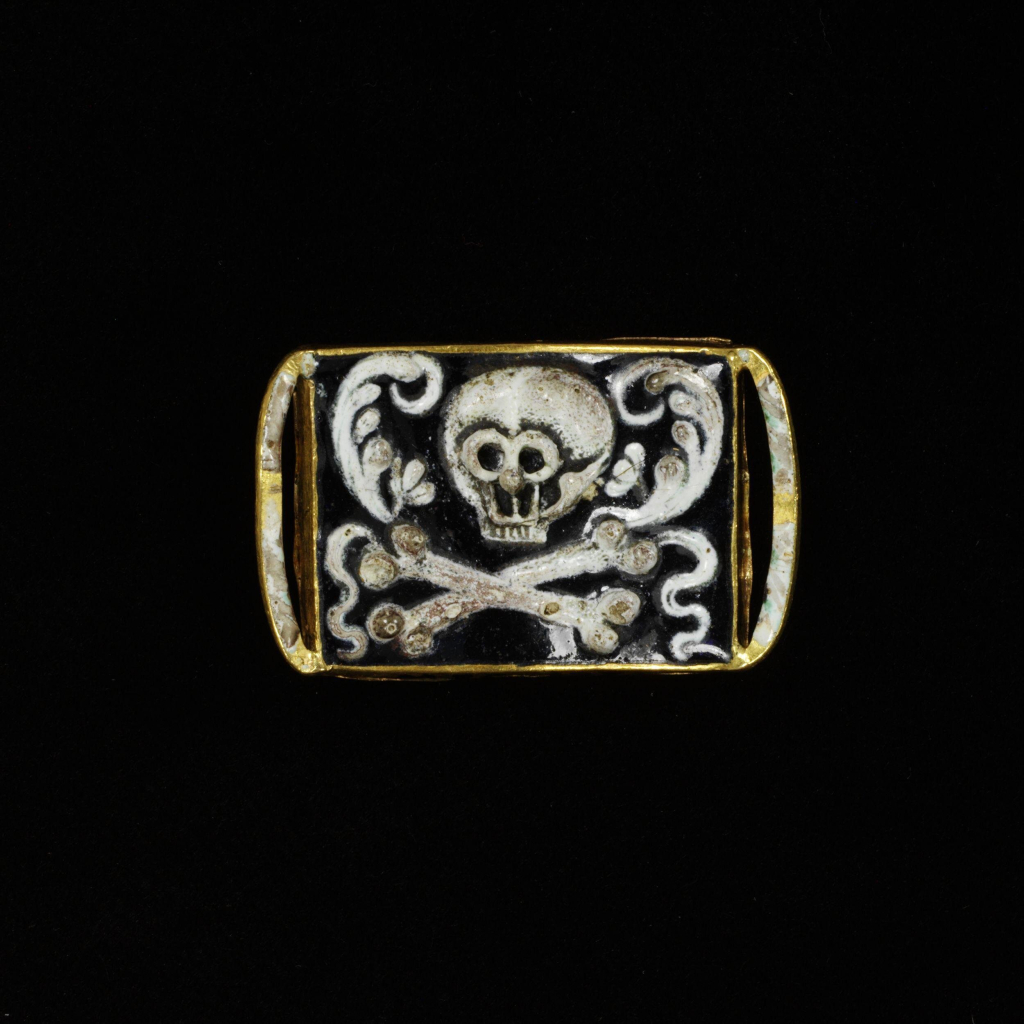
The now-forgotten custom of wearing mourning jewellery goes back to antiquity, but flourished between the Middle Ages and the turn of the 19th century. Popular vanitas symbols, such as the skull and crossbones, were initially meant to provoke thought on the transience of life and earthly goods. The motto Memento mori, literally meaning ‘Remember about death’, was etched on metal plates and conveyed a similarly moralizing message. During the Renaissance period, more and more attention was paid to personalizing mourning jewels. Historical records show that from the 16th century onwards, some wills included instructions about specific designs and funding for mourning jewels to commemorate the legator. Rings were commissioned most often.
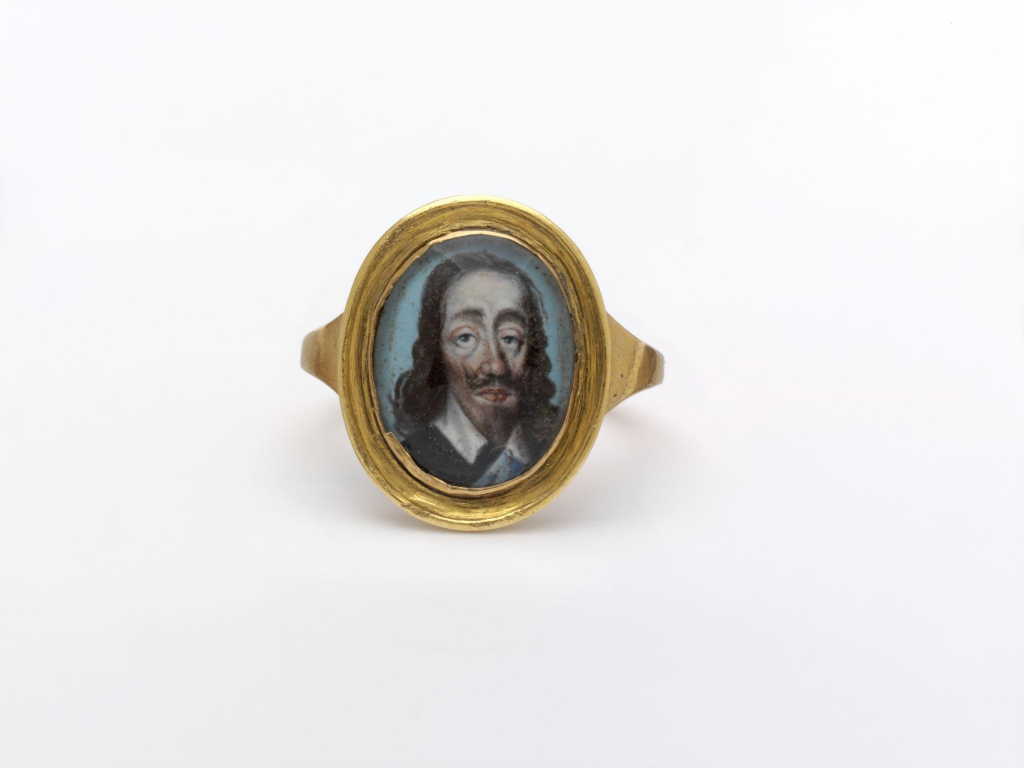
Mourning jewels were usually made of gold and decorated with black enamel as well as the above-mentioned symbols. Centuries passed and this style became the standard design, although more and more personal touches were added to the jewels. In the 17th century, mourning jewellery started featuring miniature portraits of the deceased. This custom may have been inspired by the rings of English royalists, set with depictions of King Charles I.
Despite a large following, Charles I was not a popular ruler. He showed absolutist inclinations, maintained ruthless tax policies and tried to take control of the Church, just like his father. His decisions antagonized the parliament and many of the king’s subjects, which eventually caused a civil war. The king’s defeat led to his tragic death. On 30th January 1649 in London, Charles I became the first and only English ruler to be sent to the scaffold and beheaded. His death marked a temporary end to the monarchy itself, and the reign was taken over by Oliver Cromwell as Lord Protector.
The king’s marginalized supporters started wearing jewels with his miniatures as a symbol of mourning and loyalty to the crown. In the Interregnum period the new government sequestered the estates of many loyalists, and so their monarchism had both ideological and economical foundations. By showing their loyalty, they hoped for compensation once the Stuarts eventually reclaimed the throne.
The jewels they wore had to be discreet in order to avoid the risk of exposure. Apart from the king’s miniatures set under crystal tablets, the jewels could be engraved with his initials or date of death. In those times of repression, commemorative jewellery was most often crafted in the form of lockets and other ornaments with small compartments that contained locks of the king’s hair or bits of cloth soaked in his blood. After the Restoration in 1660, jewellery worn in memory of the king’s death was legalized, but wearing it still bore political connotations – the jewels became a bone of contention between those who saw themselves as longstanding monarchists and the rest, whom they accused of sucking up to the new authorities.
Despite the conflicts they caused, mourning jewels worn in memory of the king are an important example of how different social classes united under a common cause: royalism. They also mark a crucial stage in the development of commemorative jewellery. Their symbolism was so much larger than royalism itself, since it represented the idea of commemorating death. Monarchist ornaments allowed for the evolution of jewels that expressed all kinds of grief over personal loss. Soon enough, commemorating the dead with jewellery became incredibly popular and goldsmiths developed a whole new branch of their craft that focused on mourning.
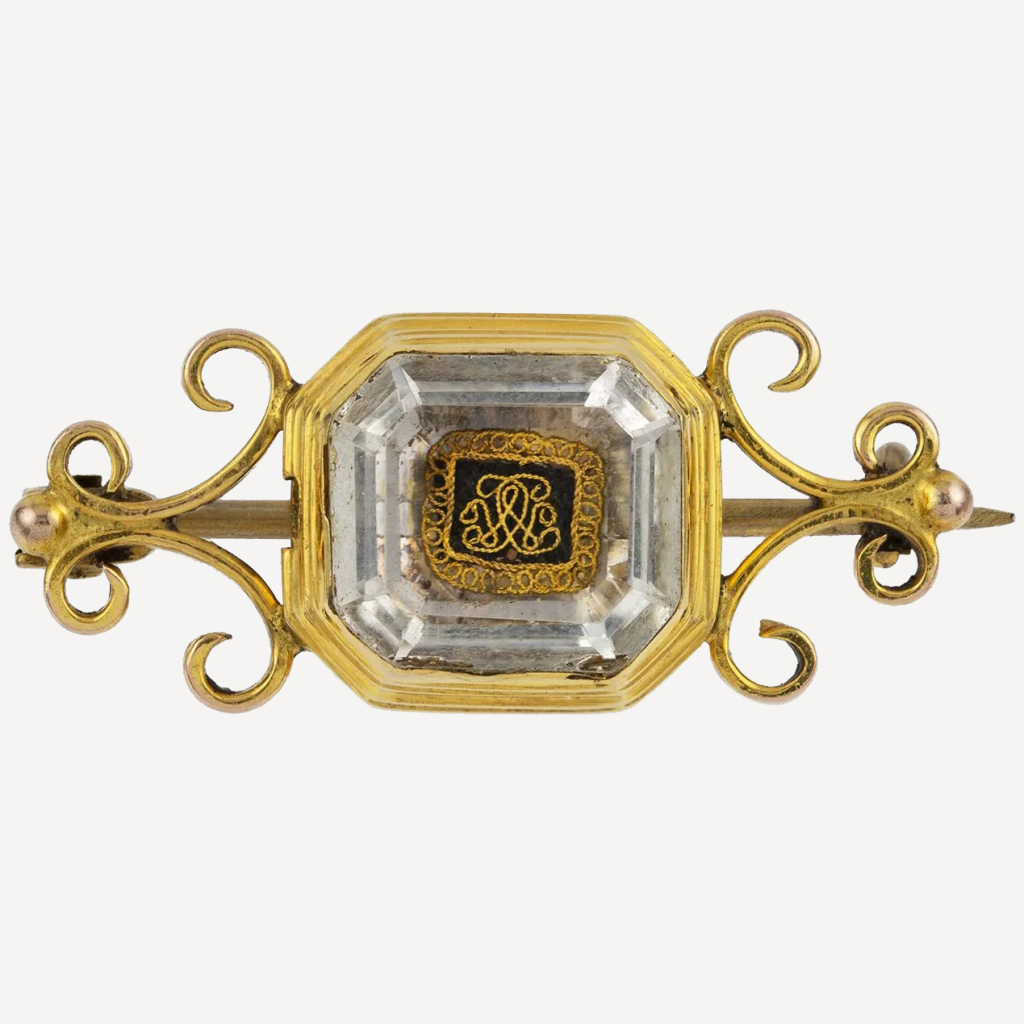
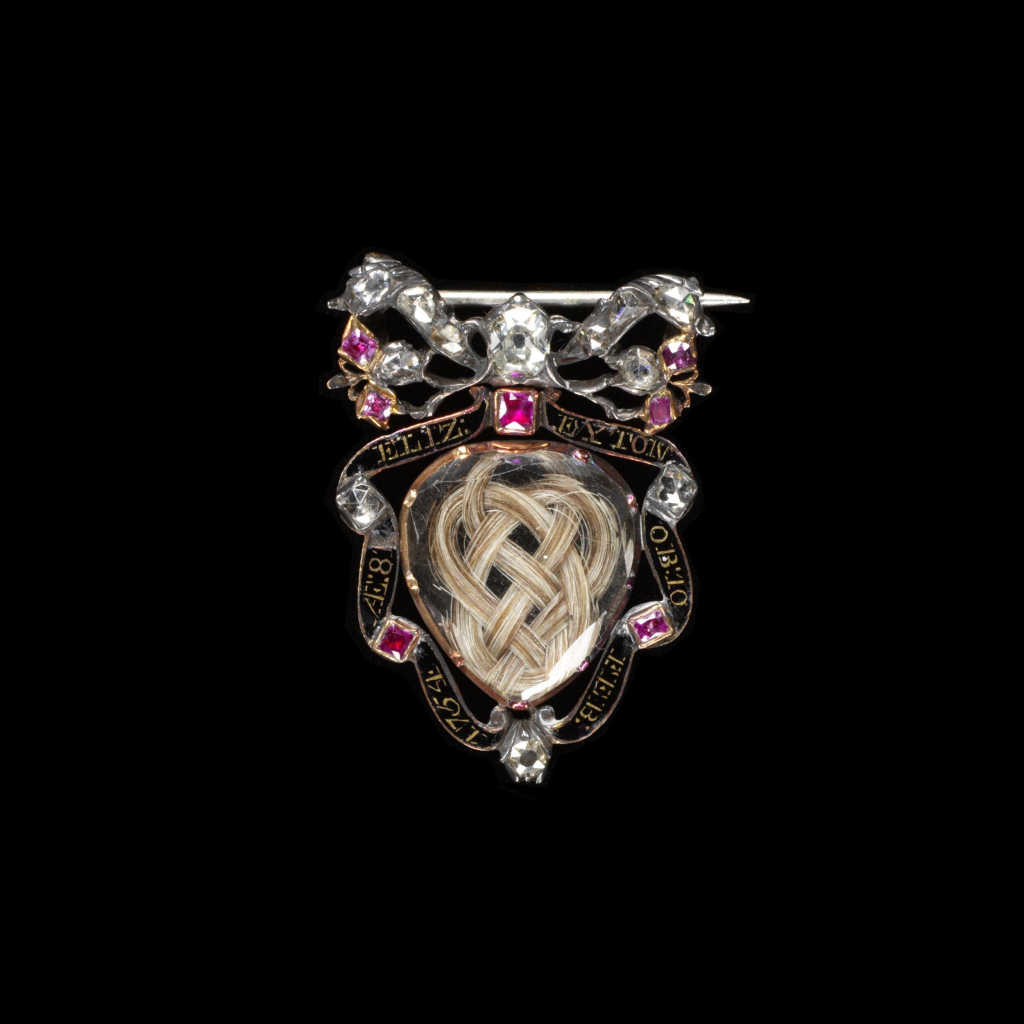
At the turn of the 17th century, few could afford enamelled or painted miniatures, so other elements were used to mark the relation between the ornament and the deceased. Apart from initials, inscriptions and death-related iconography, hair was exceptionally popular. It was set with great precision in rings, lockers, brooches, earrings, and even cufflinks. The 17th century is known for its characteristic jewel designs featuring flat crystals with faceted sides covering a composition of the deceased’s hair, intricately braided and decorated with small gold-wire monograms. Because of their origins, these ornaments are now called Stuart crystals.
In those times, death was life’s steady companion. Due to wars, sicknesses (and numerous epidemics), difficult deliveries and a high mortality rate among children, it was next to impossible to meet someone who had not experienced loss. Funeral processions were part of everyday life in British cities. Depending on the social position of the deceased, sometimes even hundreds of people participated in these corteges.
The famous British government official and diarist Samuel Pepys noted that for the funeral of Sir Thomas Vyner, a goldsmith, two city halls had to be rented out, and they were all crowded anyway. On another occasion, Pepys mentioned that 400 or 500 mourners gathered at the funeral of his late cousin, Anthony Joyce. Such high attendance rates were not only caused by grief, but also the obligation to invite as many of the deceased’s friends and relatives as possible. Moreover, funeral practices included distributing black scarves, armbands and mourning rings that were allotted in accordance with the rank and type of the mourner’s relationship with the deceased. The expensive and ornamental rings included in the will were usually bequeathed to close family members. At the funeral of Samuel Pepys himself in 1703, as many as 123 rings of the more expensive kind were given out (they were divided into 10-, 15- and 20-shilling categories, with the rings in the latter category being worth approximately £100 in current value). The rings distributed at funerals did not have to be intricate: only simple inscriptions concerning the deceased were a must. Some of the well-connected mourners gathered whole caskets of mourning jewellery that was never worn and has survived to this day in pristine condition.
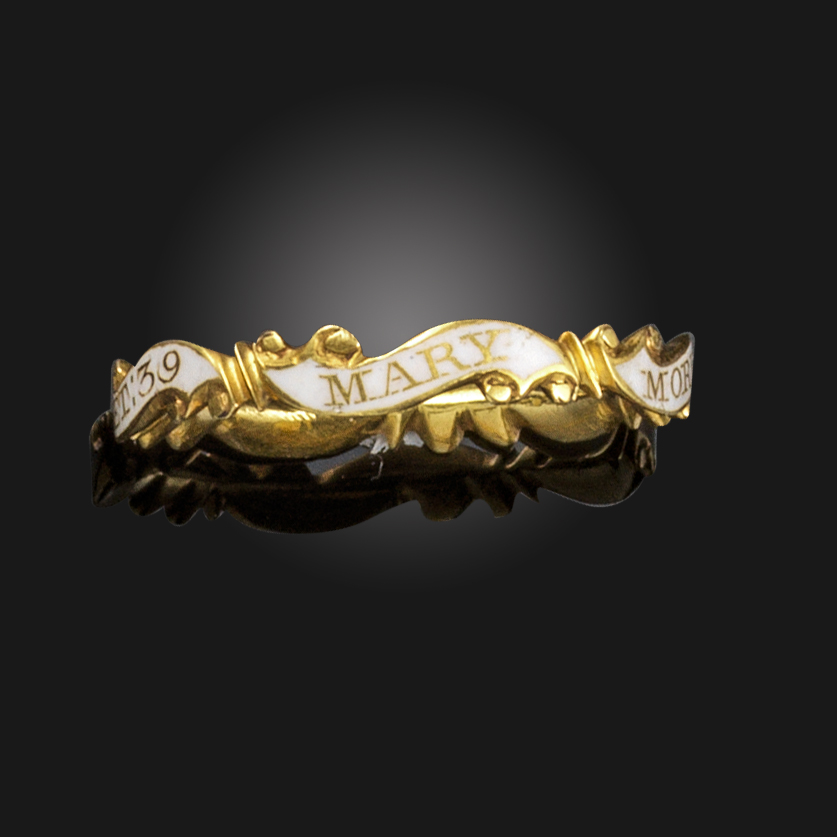
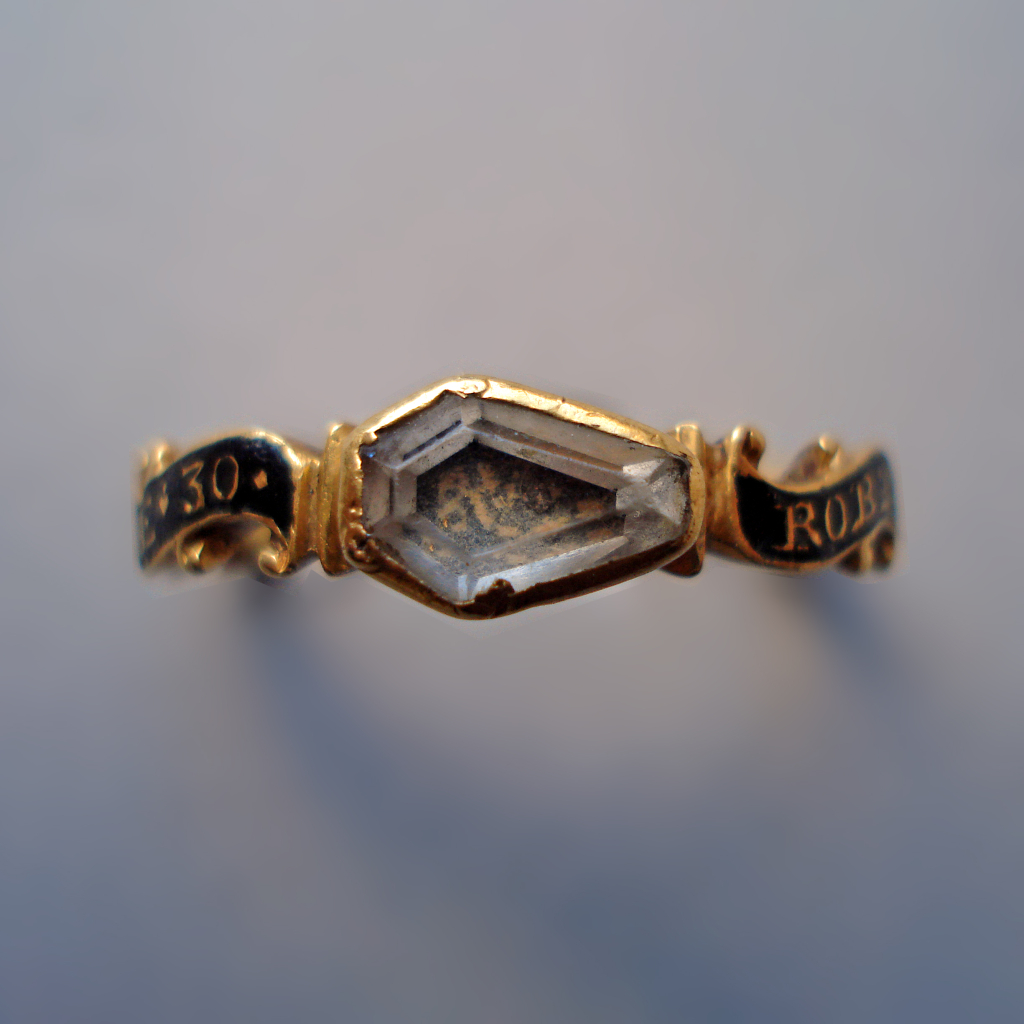
In 1742, the writer Edward Young published a poem entitled “The Complaint: or, Night-Thoughts on Life, Death, & Immortality”. The incredible popularity of his work almost certainly increased popular interest in mourning jewellery. At the same time, under the influence of rococo aesthetics, the crystal elements of mourning rings became smaller, taking on meaningful, ornamental shapes, for instance those of small coffins. Ring bands also became more fanciful. They resembled ribbons or scrolls, engraved with commemorative inscriptions dedicated to the deceased. Some rings were decorated with miniature skeletons made of ivory, enamel or paper. Mourning jewels were still manufactured in black or gold, but there were some exceptions, for instance white enamel rings, worn to commemorate children and unmarried adults.
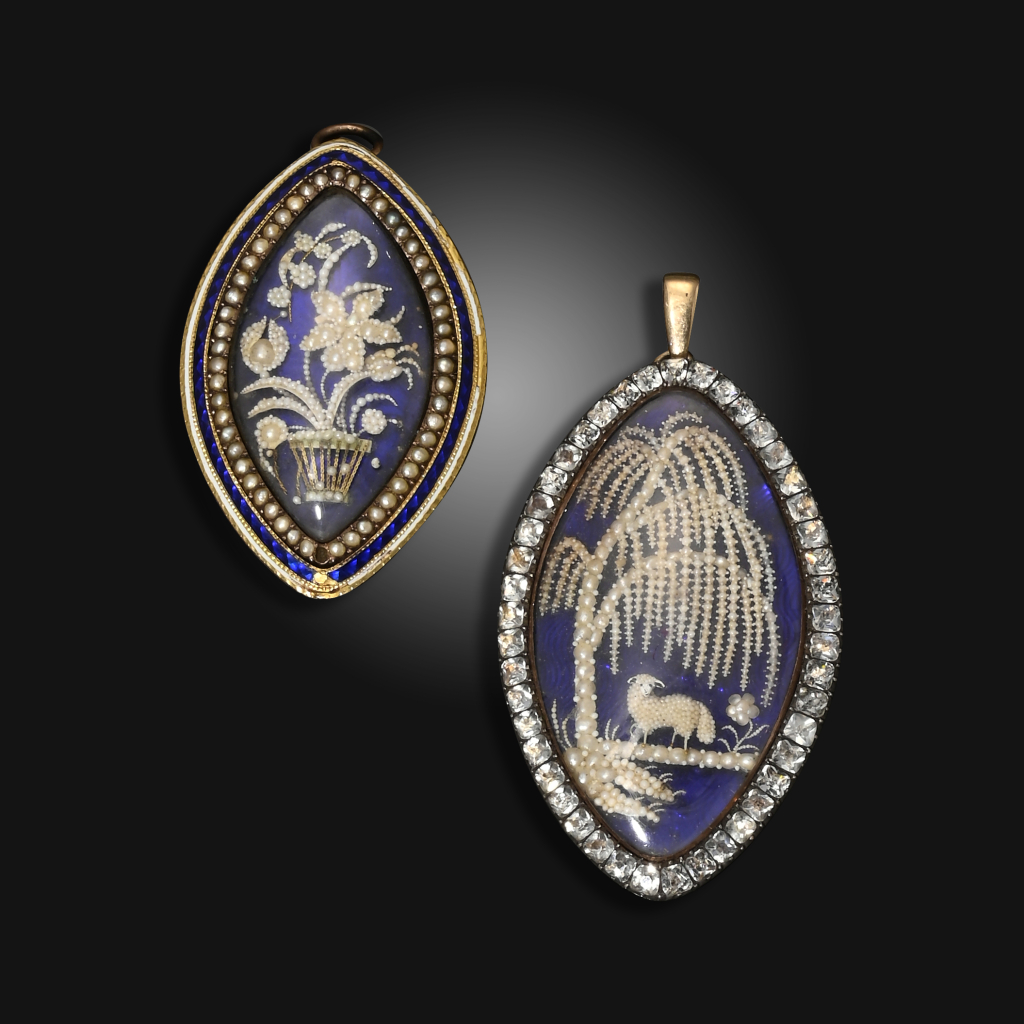
In the mid-18th century, rococo gave way to neoclassical styles and designs inspired by antiquity. Neoclassical ornaments were incredibly elegant and detailed. Different shades of gold were used, as well as coloured enamels or much-loved seed pearls, arranged into initials, ornaments, and even whole landscapes. Sentimental jewellery was also decorated with mourning miniatures painted on ivory or white enamel. They usually depicted sad scenes with a shrouded, grieving figure seated next to an urn placed under a weeping willow (the type of tree was symbolic, too). The long willow branches were sometimes fashioned from the deceased’s hair to personalize the ornament.
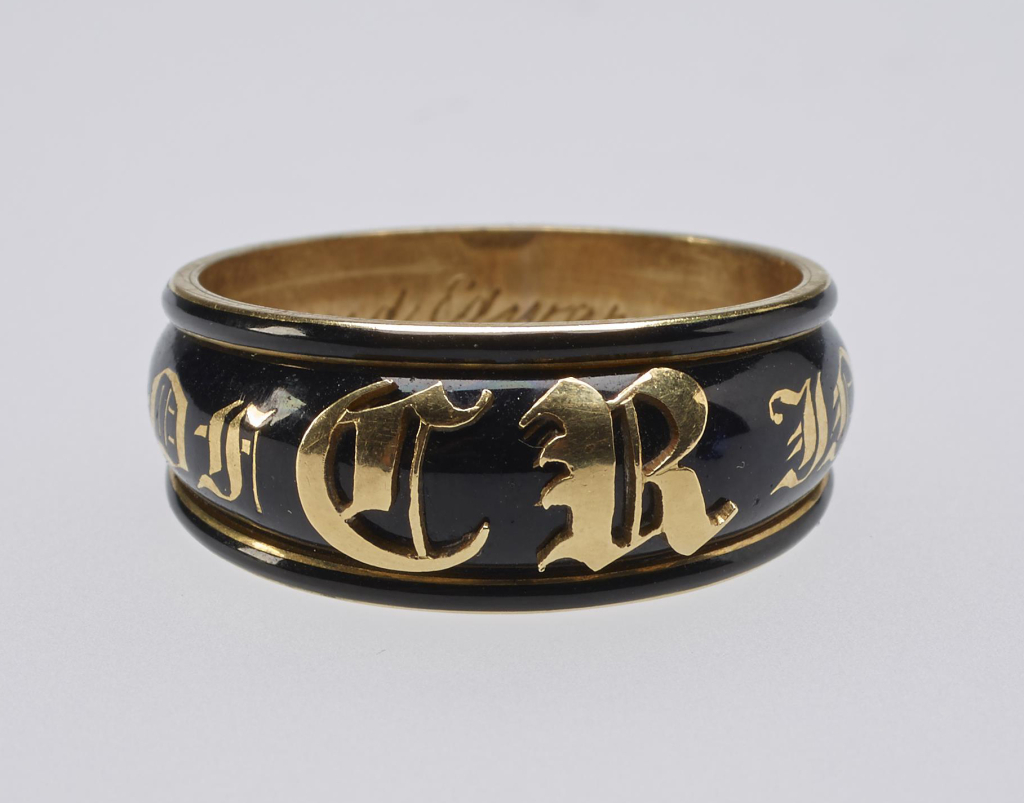
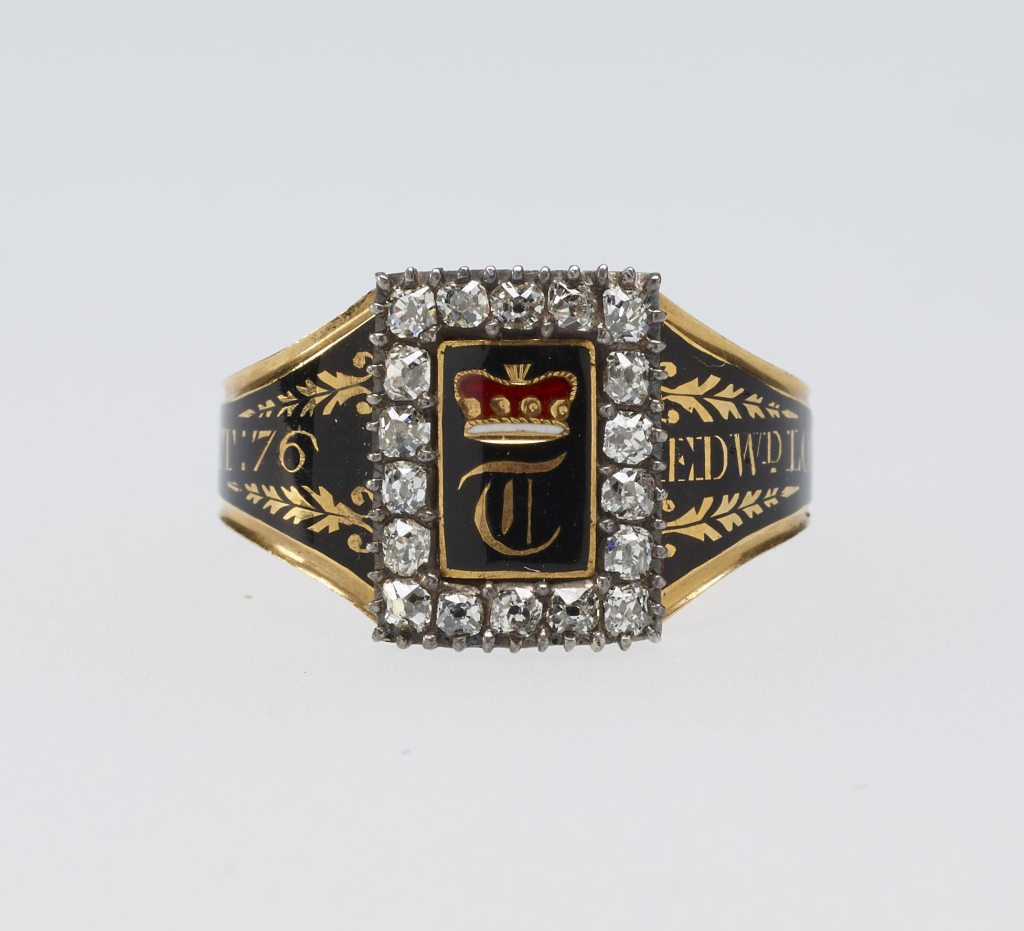
In the 1820s, decorative arts were conquered by the Gothic Revival (even though earlier periods were still duly referenced). Different jewellery styles were based on standardized designs, with black-and-gold colour sets triumphing once again. The ornaments were most often decorated with a characteristic, Gothic-style typeface. The visible parts of jewels usually featured the inscription “In memory”, and the inside facets were engraved with a commemorative text.
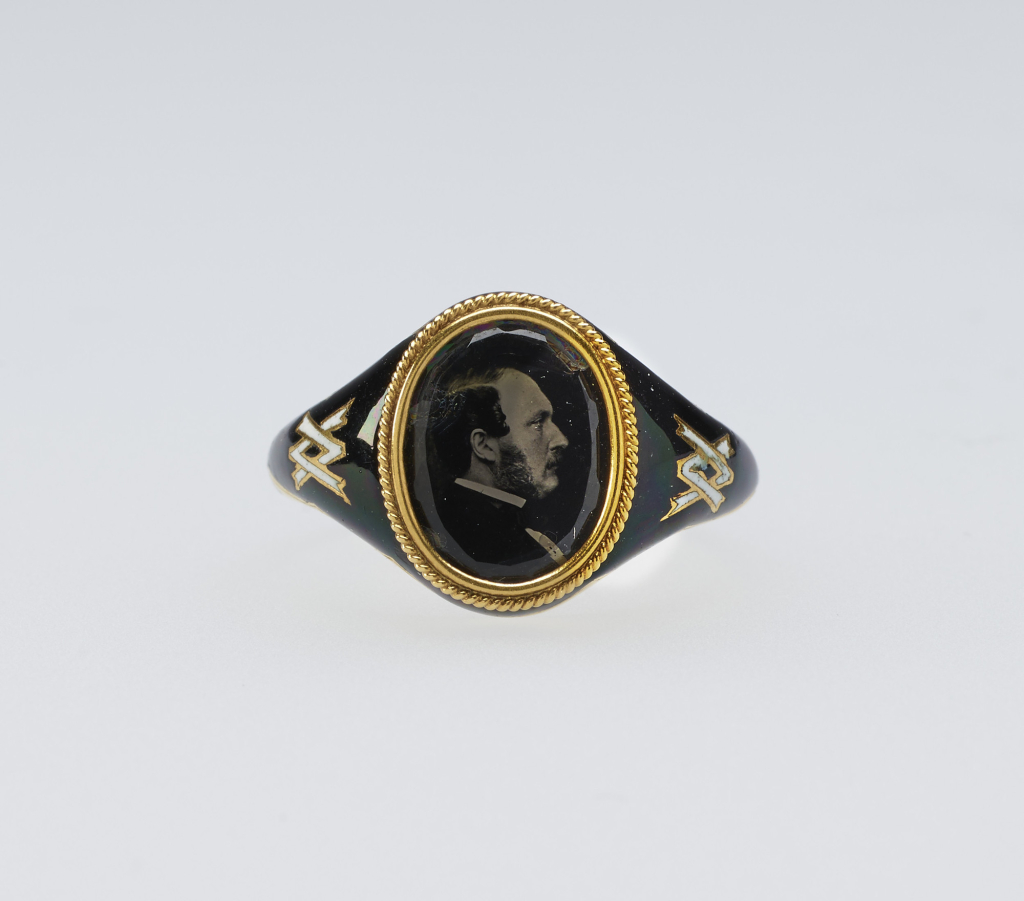
The Victorian era brought mourning rituals to a whole new level. After the death of Prince Albert in 1861, Queen Victoria was grief-stricken along with her courtiers, and expressed her sadness by adopting a series of personal grieving rituals. Her mourning lasted 40 years. In the meantime, the Queen ordered that the palace be kept in the state it was in on the day of Albert’s death. The servants arranged the Prince’s wardrobe, prepared the bedlinen and hot water for shaving as if he were still alive. Due to the development of photography, some of Victoria’s mourning habits became public. Because of the existing conventions and rigid social norms that shaped almost every aspect of everyday life in the United Kingdom, the Queen’s grief became a paragon of virtue.
Mourning had to be expressed publicly and could not end too soon. Strict rules dictated what looks and behaviour were acceptable for mourners, especially women. Most ornaments were banned in mourning, with the obvious exception of mourning jewellery.
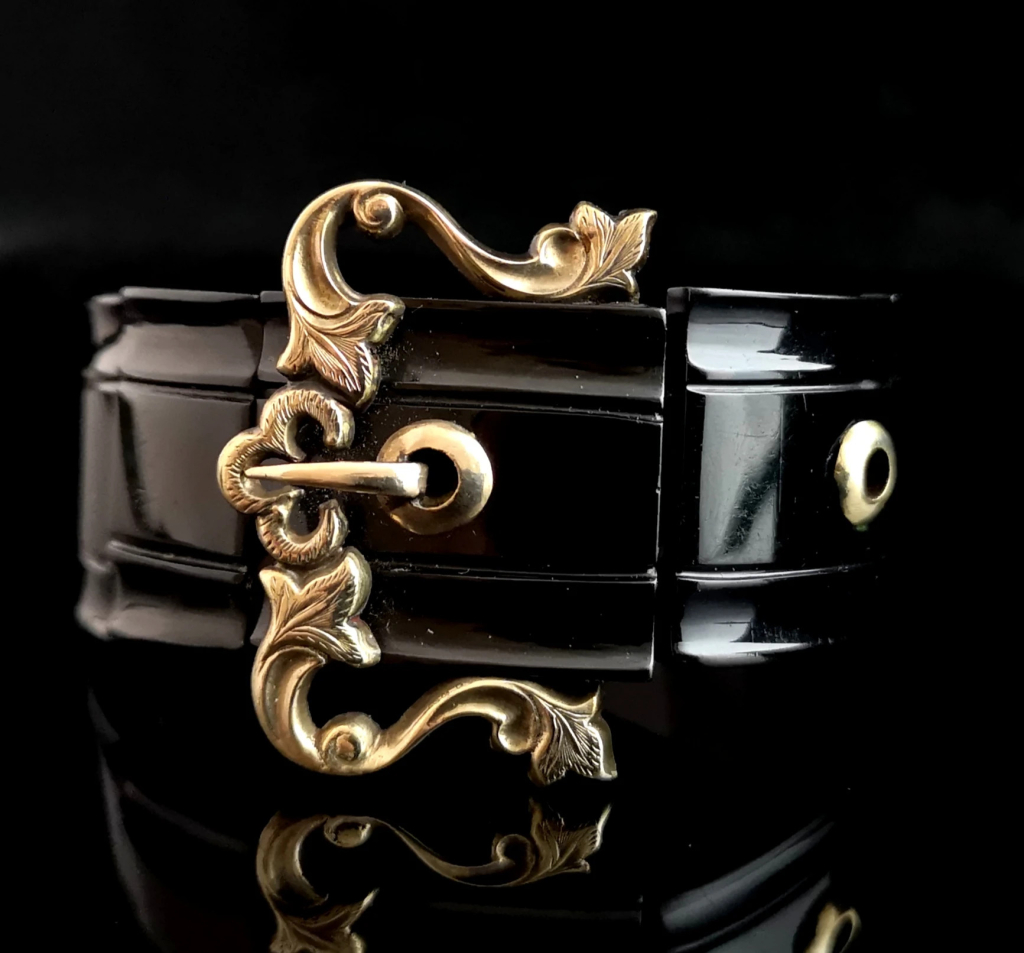
A large fraction of commemorative jewels was made of black Whitby jet, popularized during the Great Exhibition of 1851. This shiny and light mineral proved very easy to carve. It was used to produce the necklaces, bracelets, earrings and other ornaments that are so readily associated with the Victorian era nowadays. The second material that was used in large-scale production was hair. The deceased’s locks, however, were often too meagre or brittle, so in order to satisfy their clients’ substantial demand, English artisans had to import approximately 50 tonnes of human hair a year. Mourning jewellery was handcrafted not only by goldsmiths, but wigmakers and hairdressers as well. Ornaments made from hair were time-consuming and, consequently, expensive. Those who could not afford to commission such ornaments would usually try to make the keepsakes themselves, which was possible due to easily-accessible stencils, books and starter kits. The demand for commemorative jewels was a result of the high mortality rates of those times – in London, the average lifespan of middle- and upper-class men was 44 years, 25 for merchants, and only 22 for labourers.
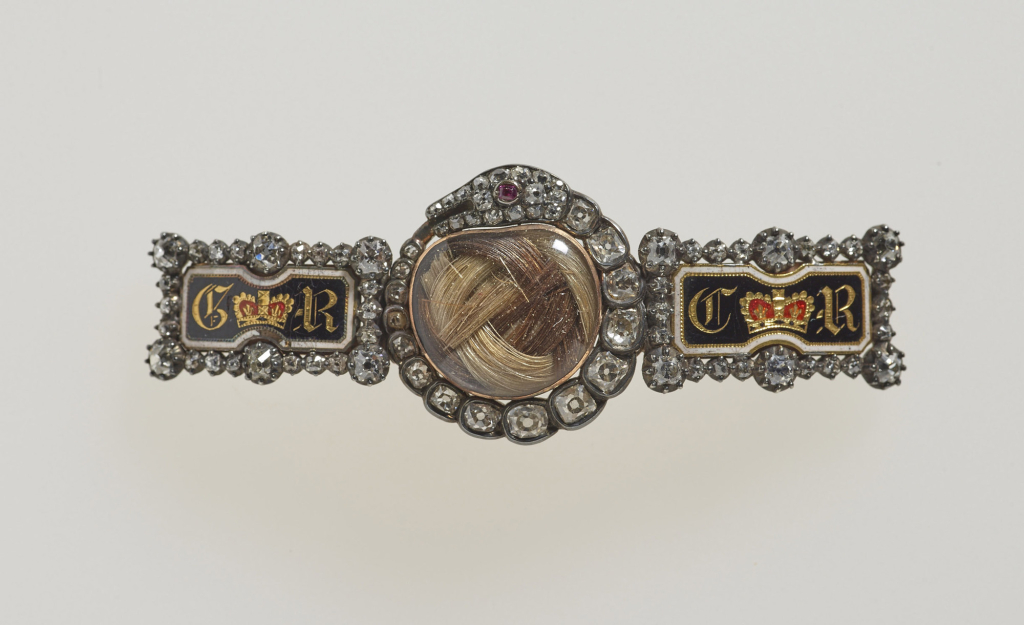
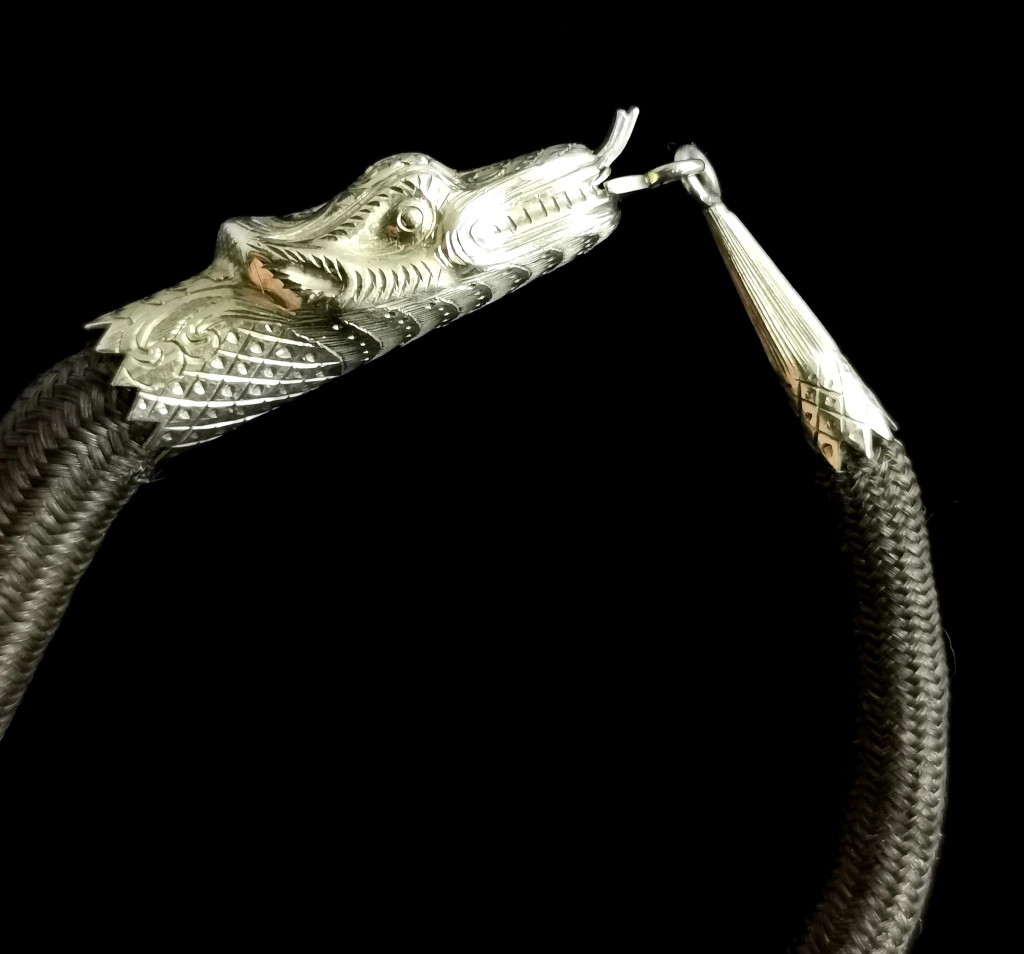
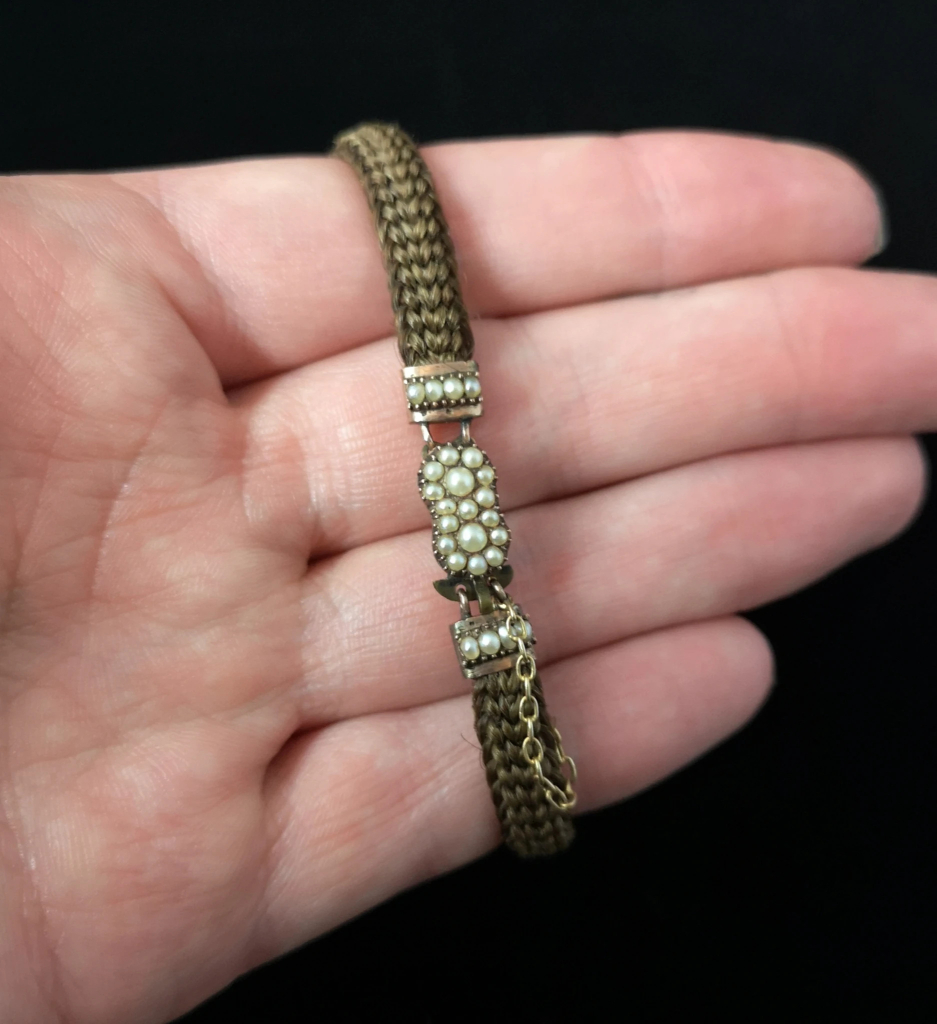
Sentimental or mourning bracelet from the Victorian era, made of Whitby jet, in the form of a strap with a gold buckle; photograph: StolenAttic, www.stolenattic.comVictorian mourning bracelet woven from brown hair, decorated with gold elements, in the form of an ouroboros—a serpent devouring its own tail, a symbol of immortality; photograph: StolenAttic, www.stolenattic.comVictorian mourning bracelet made of braided brown hair, decorated with pearls. Source: StolenAttic, www.stolenattic.com
Mourning jewellery was also used outside of Great Britain and the Commonwealth. In partitioned Poland, typical mourning jewels were manufactured alongside unique patriotic ornaments. This so-called black jewellery became popular during the January Uprising; it was worn to express both patriotic values and grief for the owner’s homeland.
Sentimental jewels fell out of fashion at the beginning of the 20th century, although keepsakes reappeared for some time during World War II. When the war ended, however, the custom was forgotten once again. Nowadays, such tokens of remembrance may seem grotesque, but if we look back to the glory days of mourning jewellery without prejudice, it becomes easier to understand its ties to human emotions. Jewels allowed mourners to keep close a small part of the deceased, which helped them express grief and – above all – love. It is a gesture that transcends chronological and cultural boundaries.
The Sumerian sky goddess Inanna had a necklace and staff made of lapis lazuli. Pigment obtained from the rich blue mineral was used to paint the Madonna’s robes. In fact, the rock, mined in the mountains of Central Asia, is vital to many cultures.
The cold, inhospitable wilderness of the Afghan province Badakhshan is a network of rocky peaks, furrowed with treacherous gorges. The mountain range of the Hindu Kush rises there, 24,600 feet above sea level. Its name fully reflects the hostile character of this place—in Pashto, Hindu Kush means “killer of Hindus.” Despite these adverse conditions, the mines here have been exploited continuously for more than six thousand years. They are used to extract lapis lazuli—a stone which has become an attribute of divinity in many cultures, and was one of the first luxury goods.
The Rarest of Pigments
Lapis lazuli (literally, “blue stone” in Latin) is a metamorphic rock, or one that was transformed deep in the earth’s crust. Today it is considered a semi-precious stone. It is of medium hardness, which makes it relatively easy to process. However, what determined its enormous importance is its beautiful dark-blue color, which it owes to one of its ingredients: lazurite. Ever since ancient times, stones and gems have been associated with beliefs, magical powers, and social status. They shouldn’t be treated as mere minerals—they are also elements of culture, mythology, and art. Gemstones reflect human motivations, aspirations, and anxieties.
For many societies, blue was a color with a symbolic dimension. This probably happened because people desire everything that is unattainable or unusual—and blue pigments are some of the rarest on Earth. In the few plants and animals that boast this color, it is most frequently part of their structural coloration. This means that their bodies contain no blue pigment, but in the process of evolution they have developed fine structures that refract light to generate various shades of blue. Wanting to obtain this color for themselves, humans had to reach for rocks and minerals. In antiquity, their choice wasn’t great. Apart from the very rare and hard sapphire and light-blue turquoise there was only lapis lazuli.
Throughout the ages, merchant caravans from Bactria (as Badakhshan was once called) loaded with the precious stone made their way to the cities of India, China, Rome, Greece, Egypt, and Mesopotamia, a region located in the Tigris-Euphrates basin.
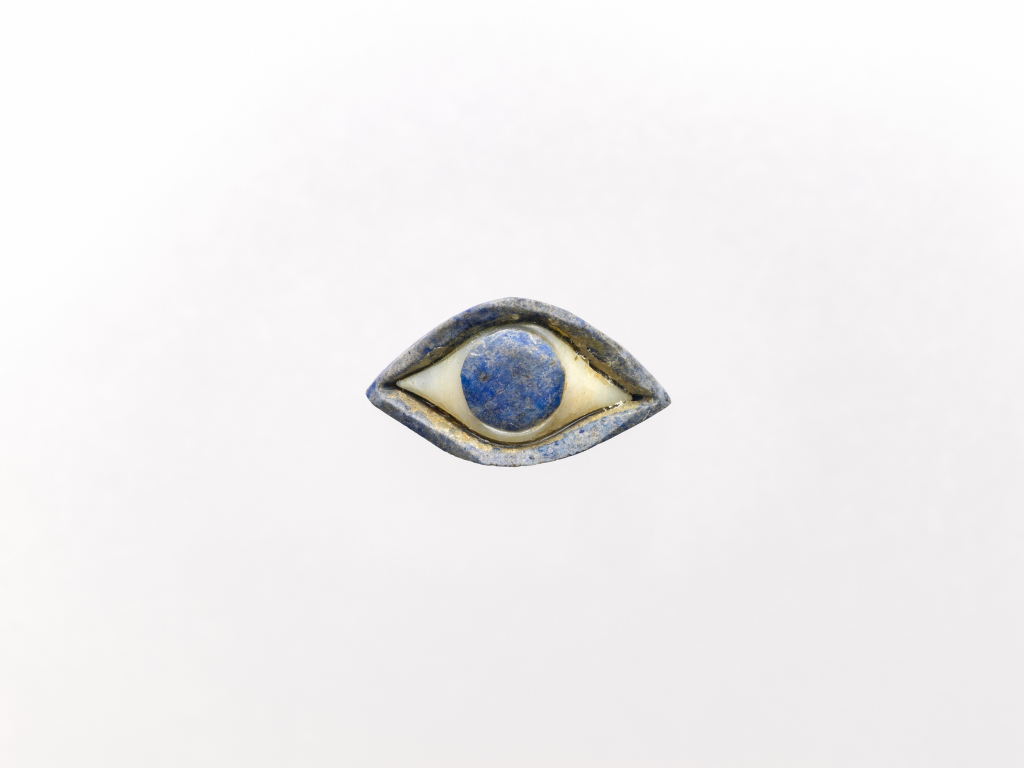
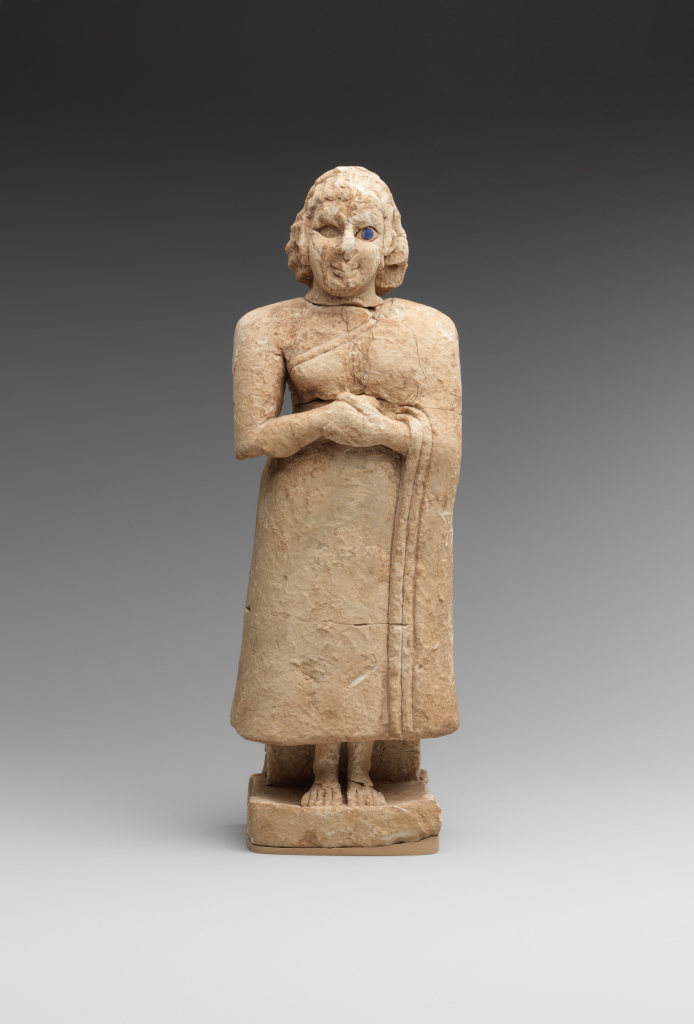
Eye-shaped inlay, circa 2600-2500 BC, Sumer; photo: MET/public domainFigurine of a praying woman, circa 2600-2500 BC, Sumer; photo: MET/public domain
The documented history of lapis lazuli trade dates back to the Neolithic period. The earliest traces, some nine thousand years ago, come from the Indus River valley, where in the mid-70s, French archeologists began to explore the remains of the ancient burial grounds of a settlement called Mehrgarh and encountered many ornaments made from the stone.
About seven thousand years ago, the inhabitants of Mesopotamia—as possibly the first in history—had enough wealth and leisure time to start seeking luxury goods. They were overwhelmed by a desire for the blue stone. The languages of the region attest to its incredibly high value. For example, zagindurû, the Akkadian word for lapis lazuli (but also for blue pigment or blue glass) contains the root za-gin, which describes something shiny and precious. Interestingly, ancient languages didn’t usually have a separate word for the color blue itself. This is related to the above-mentioned fact that it rarely occurs in nature.
The exclusive character of blue meant that both in Mesopotamia and other areas it was reserved for those of high social status and the ruling classes. The usage of a whole palette of blue as the key ornamentation feature at the Northwest Palace of Ashurnasirpal II in Nimrud is a good example. The wall paintings there, as well as various architectural details such as glazed bricks, colored sculptures and large-scale bas reliefs were all blue.
In ancient Mesopotamia, large quantities of small, personal objects were made from lapis lazuli. These could be figurines of animals or people; jewelry or cylinder seals, which were used for impressing official signatures and religious inscriptions on damp clay.
Royal Tombs
Some of the most sophisticated lapis lazuli artifacts are undoubtedly those found in southern Iraq by Charles Leonard Woolley. In 1922, this British scholar of the ancient “Near East”—now considered a forerunner of modern archeology—took the lead at the excavation of Tell el-Muqayyar, which used to be the famed Sumerian city-state of Ur. After many setbacks, Woolley made a ground-breaking discovery. He excavated the ancient city’s necropolis from under a thick layer of desert sand and bricks. Present-day estimations indicate that the dead were buried there for almost 3,300 years.
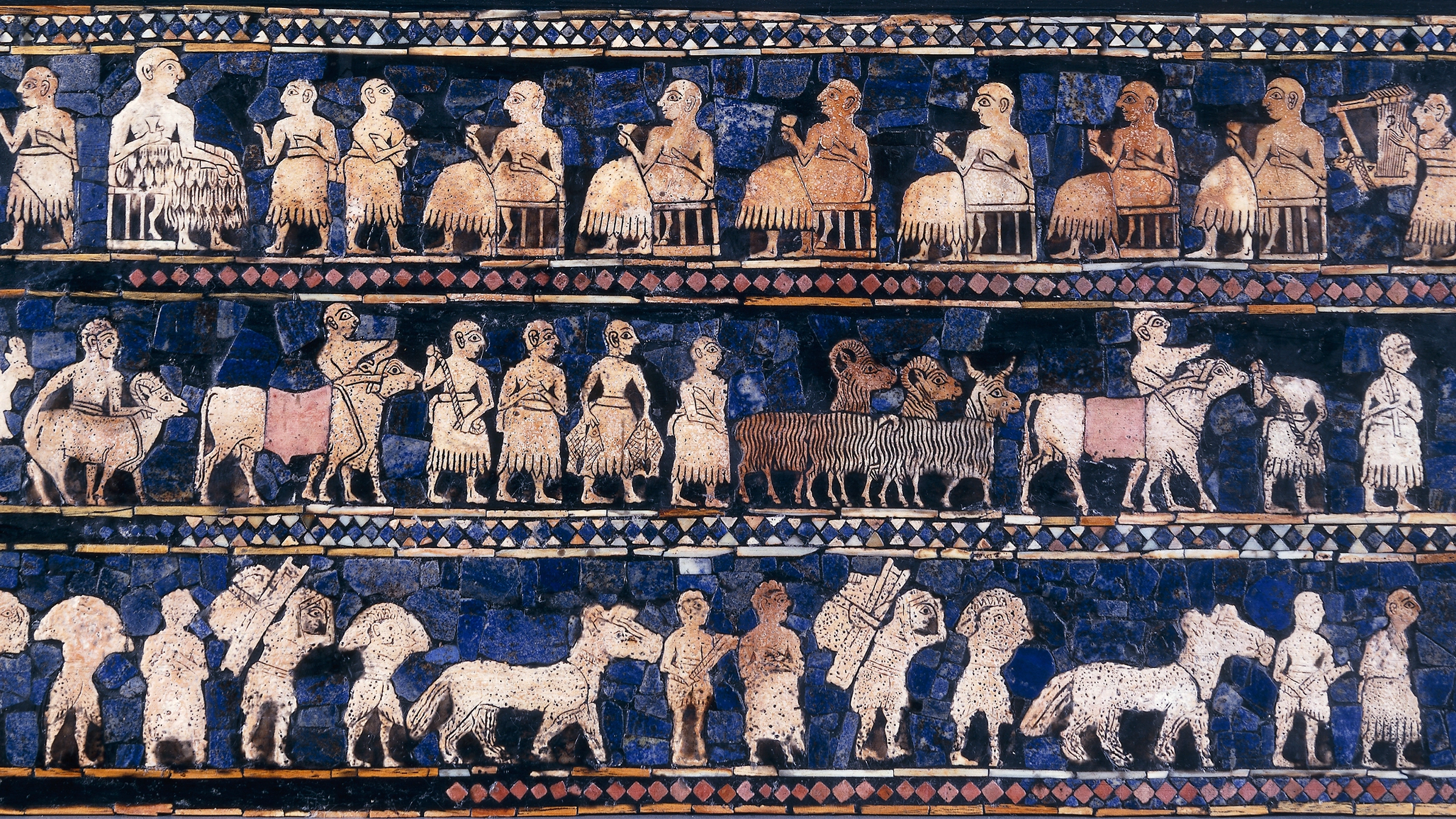
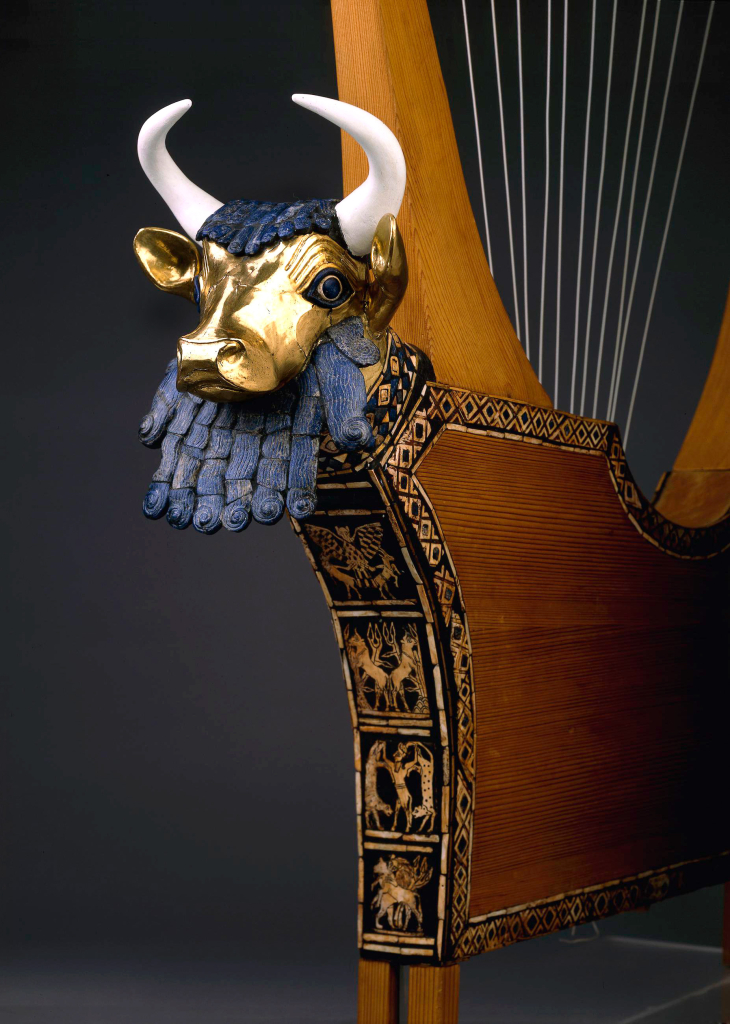
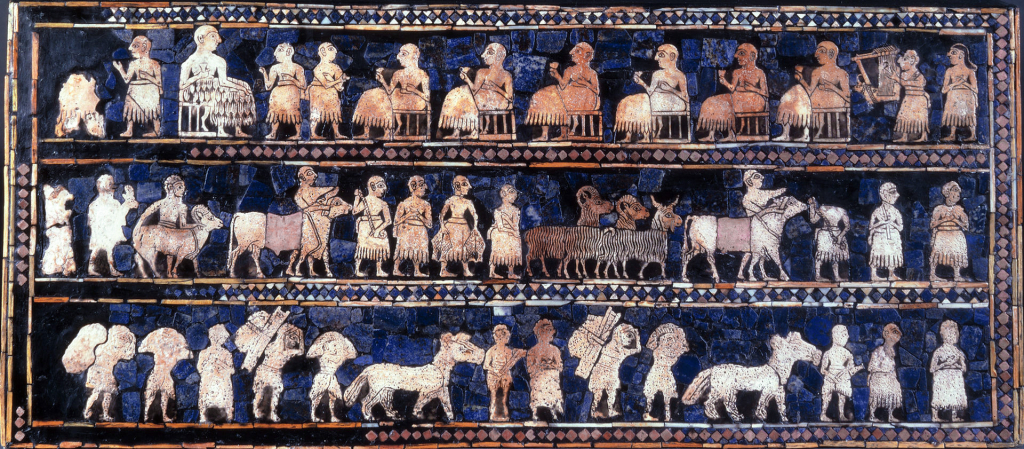
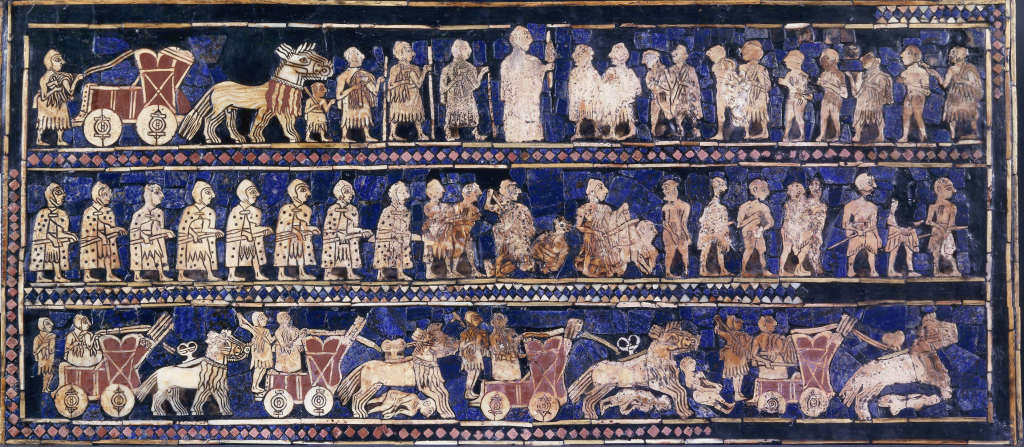
Woolley discovered more than two thousand burials there. The unique construction and furnishing of sixteen tombs, which he called “royal” on the basis of their inscriptions, stood out. In addition to innumerable items of jewelry, weapons, and golden vessels, the archeologists found a lyre—once belonging to Sumerian queen Pu-abi. It was decorated with a golden bull head and a stylized beard made of lapis lazuli. There were two gilded lambs resting against some golden thickets, with fleeces also made of the blue stone and shells. Finally, one of the most emblematic examples of Sumerian art was the famous ornate box, called the Standard of Ur, and also made of lapis lazuli and mother of pearl.
The aforementioned stone is also the most frequently mentioned gem in Sumerian written sources. An approximately five-thousand-year-old history of the goddess Inanna invokes it as a crucial symbol of divine power. The myth tells the story of how the great goddess, the Queen of Heaven, descended into the underworld, struggled with her sister Ereshkigal—the Queen of the Dead—and finally restored the balance between life and death. While preparing for her journey, the fearless Inanna (later called Ishtar) donned the emblems of her divine powers, which doubled as the container of her magical talents—apart from her most splendid robes and the crown of heavens, she also had a lapis lazuli necklace and staff. The choice of this stone in the legend shouldn’t be a surprise, given that in ancient Sumer it was commonly associated with divine power. Sumerians believed that the stone houses the deity’s soul, which could be connected to through jewelry worn on the body.
Lapis lazuli also played an extremely important role in ancient Egypt, which was reflected in the language, just like in Mesopotamia. To name the color blue, Egyptians often used the phrase “lapis-lazuli-like,” and the hue, which to them symbolized the supernatural, was associated with the home of the highest deity Ra, heaven—its Egyptian name, shbd, was also used for lapis lazuli.
From the very beginnings of Egyptian statehood, lapis lazuli was used to create jewelry and amulets, and to decorate ornaments. The Egyptian Book of the Dead—a collection of magical texts aimed at helping the deceased in their journey through the Duat (the underworld) and into paradise—contained detailed descriptions of the use of the stone in burial rites. In the religious context, lapis lazuli was equated with resurrection, which is why many Egyptian handicraft items found in tombs contain the rock. In daily life, powdered lazurite was used by rich Egyptians as eyeshadow. Much later, this powder found application as a painter’s pigment, revolutionizing the European art world.
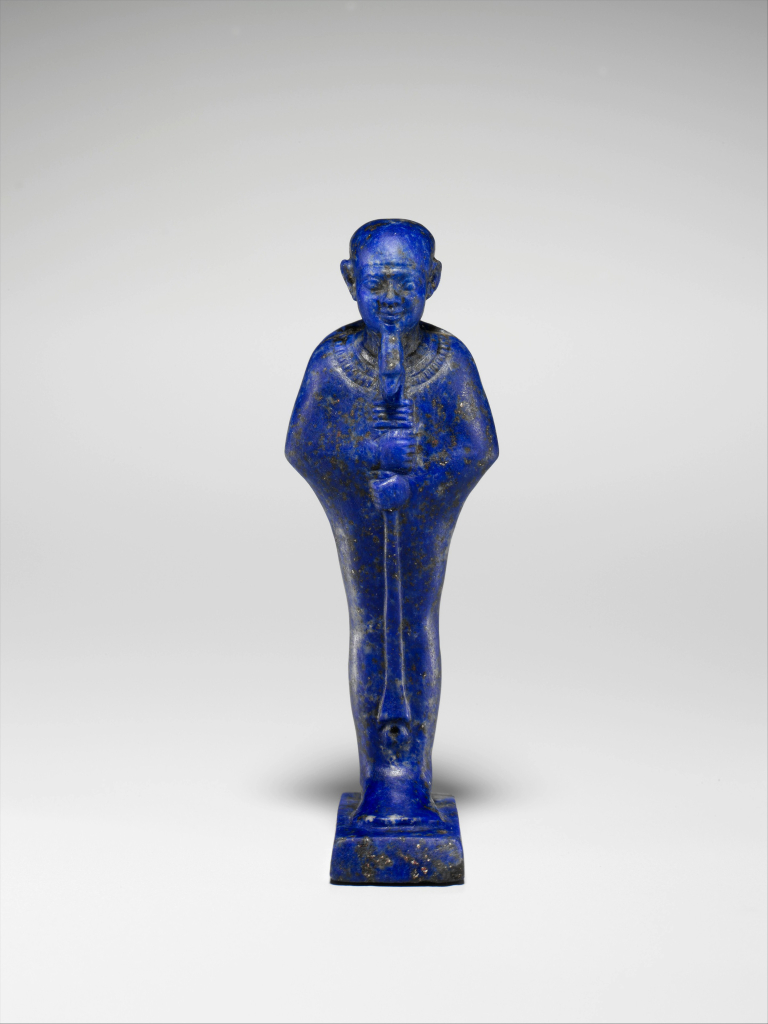
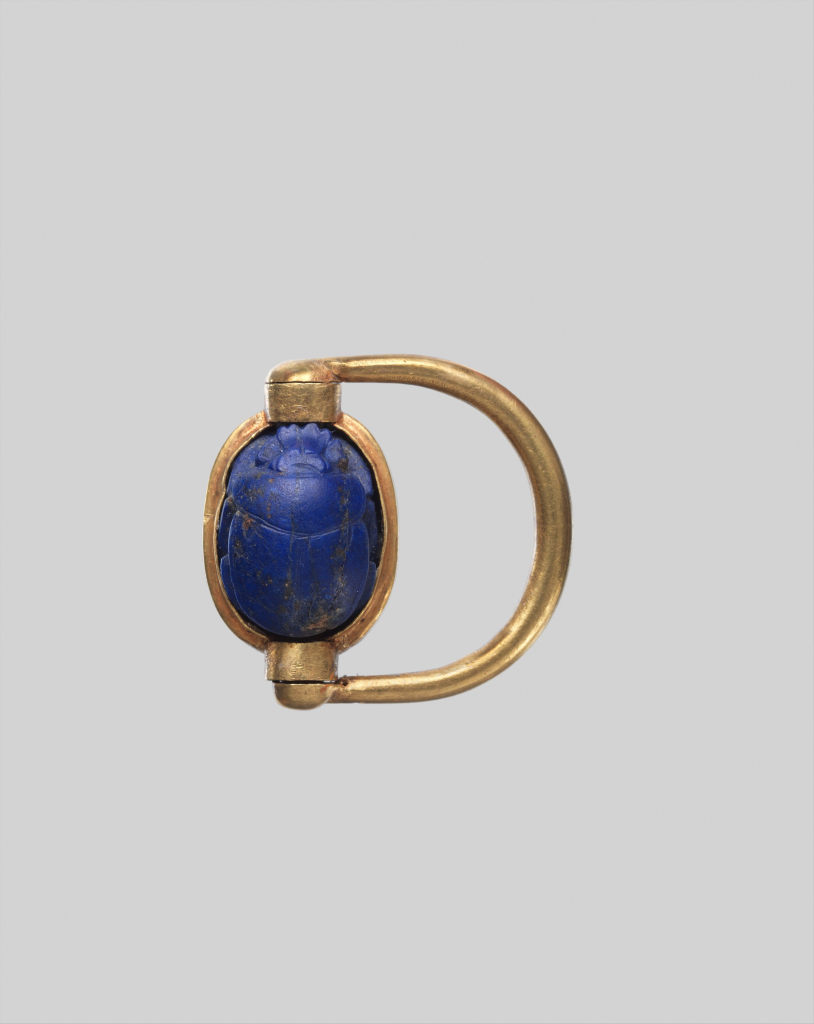
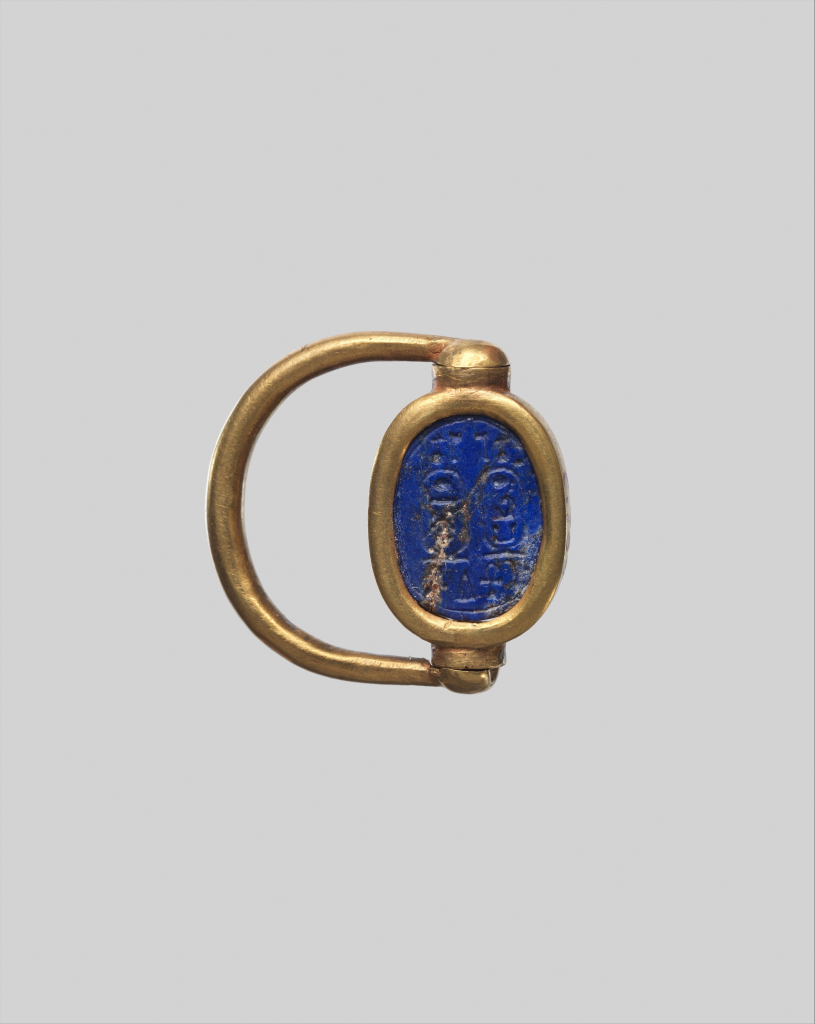
Figurine depicting the god Ptah, made around 945–600 BC, Egypt; photo: MET/public domainRing decorated with a scarab with the names of Thutmose III and Hatshepsut (obverse), approx. 1479–1458 BC, Egypt; photo: MET/public domainRing decorated with a scarab with the names of Thutmose III and Hatshepsut (reverse), approx. 1479–1458 BC, Egypt; photo: MET/public domain
The Venetian Monopoly
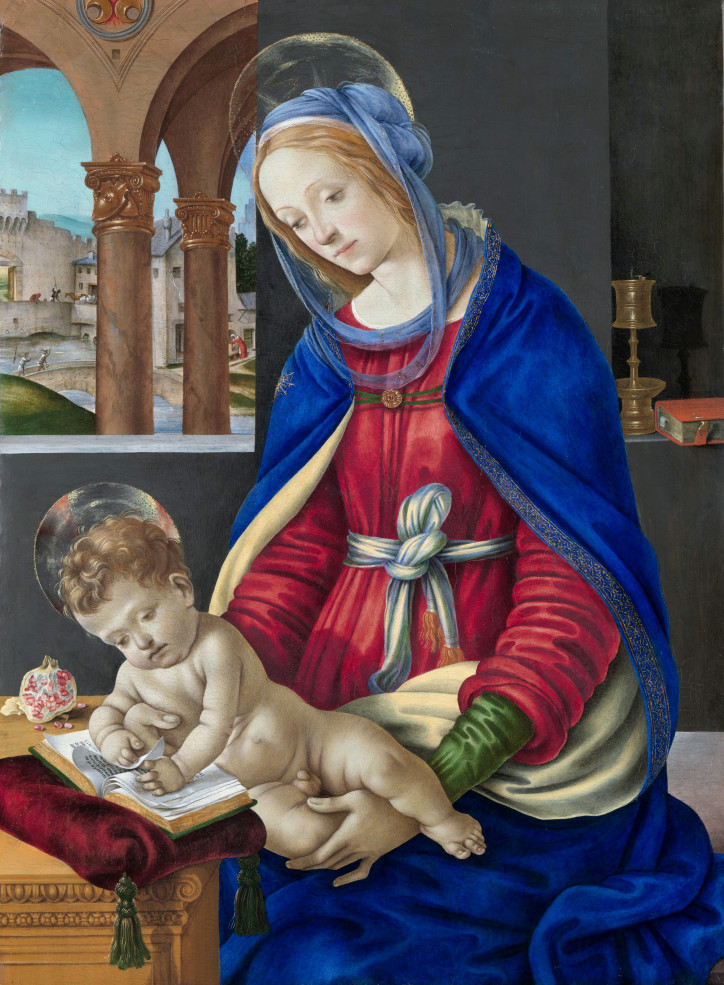
Ultramarine was first used in the early Middle Ages. From around the thirteenth century onward, Europeans started experimenting with its formula in order to intensify its blue color. One of the recipes developed at the time was included by Cennino Cennini in his treatise entitled Il Libro Dell’arte: O, Trattato Della Pittura (A Treatise on Painting), which is still a rich source of information about the techniques used in the early Italian Renaissance. The goal of the lengthy and complicated extraction described by the painter was to separate pure lazurite from the other minerals constituting lapis lazuli.
According to Cennini, to obtain the pigment one needs to start with selecting the material for its lazurite content. The darkest fragments of rock were selected, and then burned, rapidly cooled, and finely ground. The resulting powder was mixed with liquid pine rosin, mastic, and beeswax. These procedures yielded a doughy paste called pastello, which was then kept at room temperature for a week and kneaded once a day. Later the paste was combined with heated potash, which extracted the blue pigment particles. Repeating the process several times yielded various gradations of color—from dark blue to a pale one, called ultramarine ash.
Filippino Lippi, “Madonna and Child”, ca. 1483–1484; photo: MET/public domain
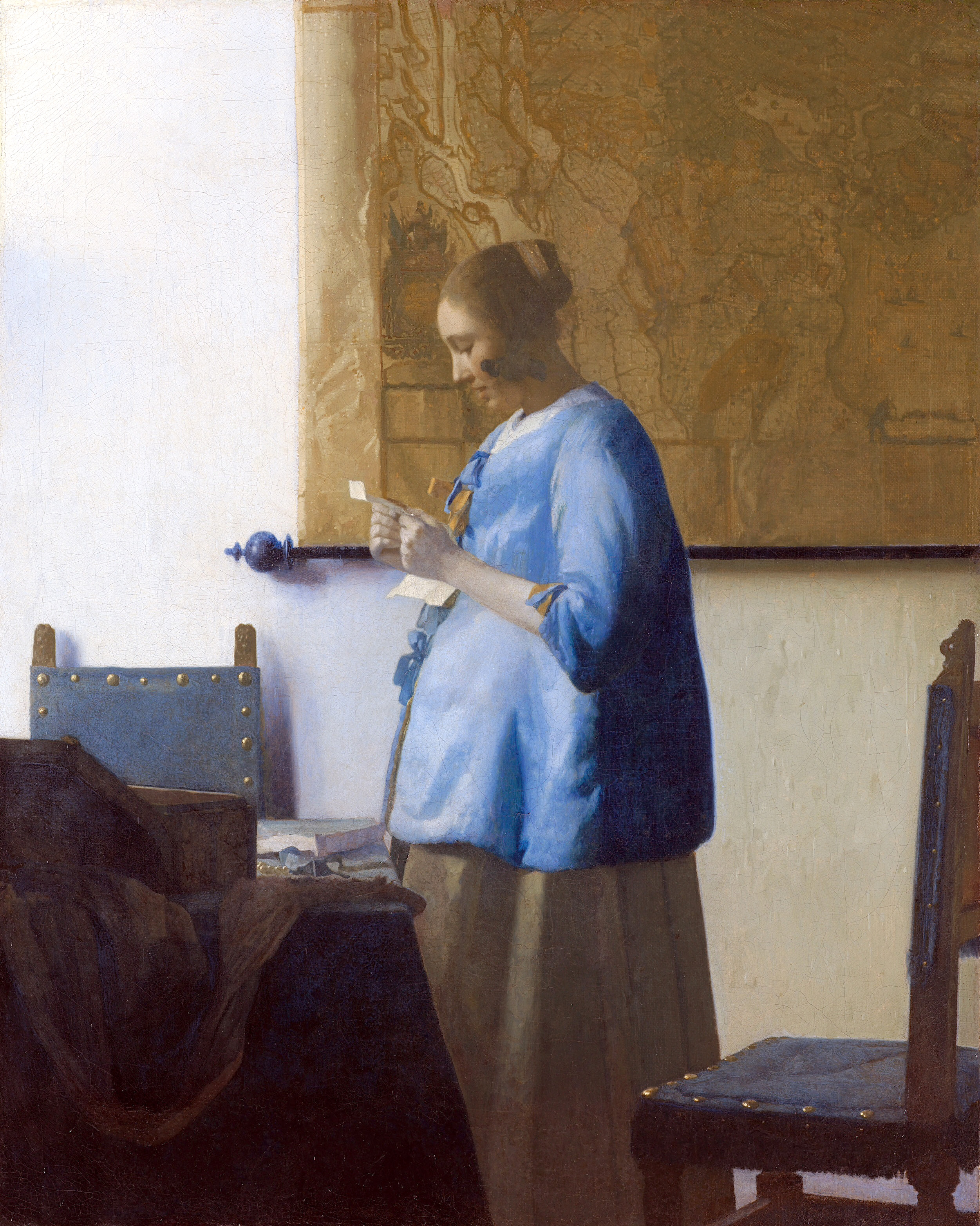
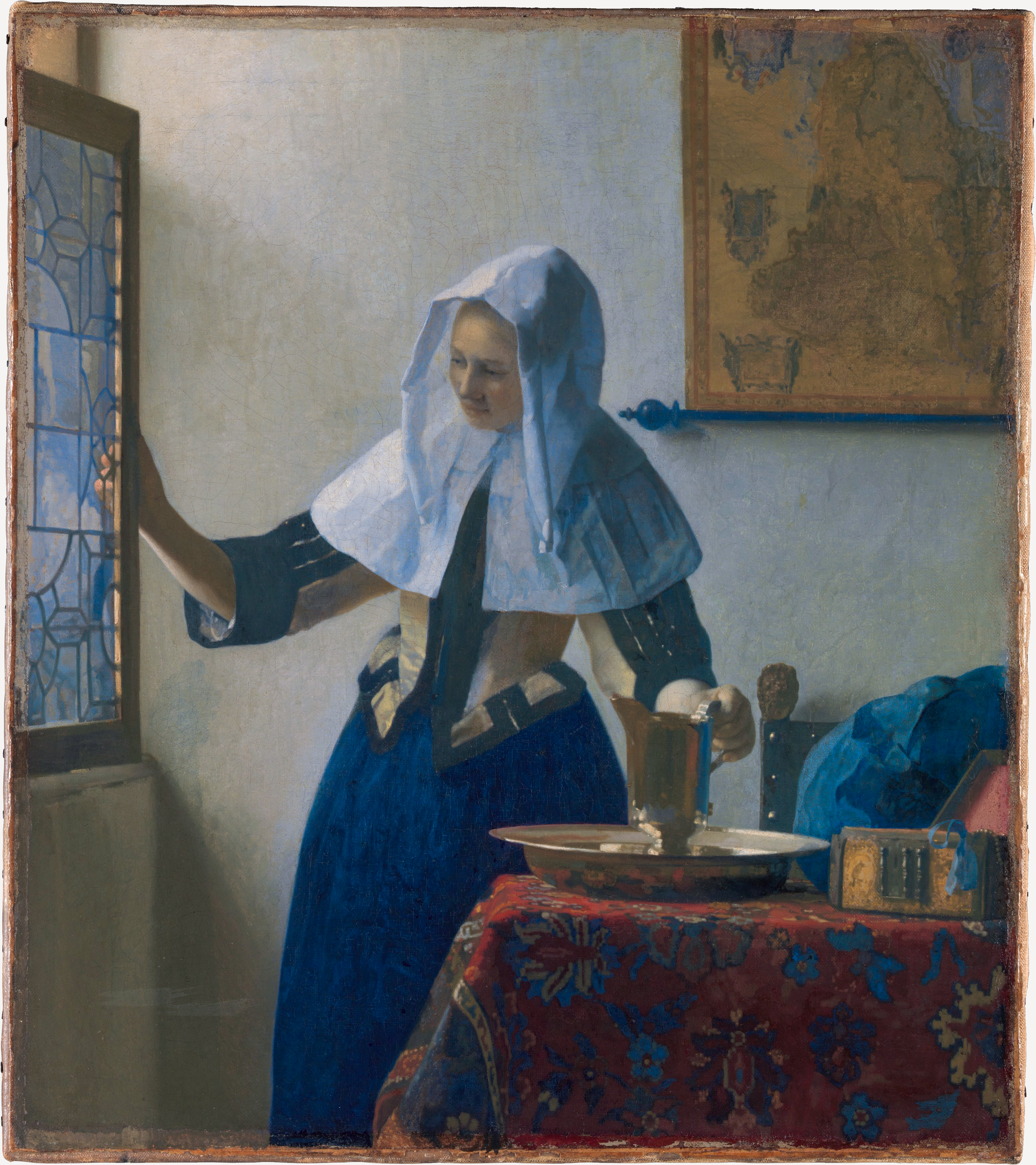
From the fifteenth century onwards, imports of lapis lazuli were almost entirely controlled by Venice. It was through its ports that shipments of the Asian stone arrived in Europe. This mode of transport also influenced the name of the pigment—ultramarinus means “from beyond the sea.” At that time, ultramarine was already the world’s most expensive pigment. Its prohibitive price quite often made it impossible for many famous artists to work. Michelangelo and Raphael had to count on the generosity of their patrons, and Johannes Vermeer’s predilection for ultramarine got him and his family into enormous debt. Today, the blue pigment is one of the Dutch Baroque painter’s most distinctive features—it appears in almost all of his works, and it was with its help that Vermeer achieved the characteristic brightness of strong daylight.
Johannes Vermeer, “Woman in a Blue Dress”, ca. 1662–1665; photo: public domainJohannes Vermeer, “Woman with a Jug”, ca. 1658–1662; photo: public domain
The discovery of Prussian blue at the beginning of the eighteenth century did not satisfy artists. It still wasn’t ultramarine: deep and durable. The synthetic version of this shade only became available a century later. In 1814, engraver and painter Jean-Joseph-François Tassaert accidentally noticed a residue with a color very similar to ultramarine in a lime kiln. This prompted the French Society for the Development of National Industry to invite proposals on how to synthesize the pigment. Two chemists, Jean-Baptiste Guimet and Christian Gmelin, were up to the task, and in 1828 this previously so expensive color became widely available. This doesn’t mean, however, that there are no more takers for real lapis lazuli. The mines of Badakhshan continue to operate, and the blue stone, the carrier of the loftiest symbolism of many glorious cultures, is still—aside from opium—the province’s main export.
People always loved it for its beauty, but mostly they believed in its power. It was said to cure the ailing, and to assist those in the afterlife. Amber, with its aura of mystery, built a bridge between the living and the dead.
Amber generally has a yellowy-orange hue, though one also encounters whitish-yellow and brown shades, more seldom cherry-red or nearly black. Green and blue specimens also occur—these can be found in the mountain mines scattered around Santiago in the Dominican Republic. Although amber is extracted all around the world, its largest deposits are found in the Baltic Sea region.
The kind found on Baltic beaches is called succinite, from the Latin succinum, as the Romans believed that it came from the congealed “juice” (Latin: succus) of trees. Today it is believed to come from the fossilized resin of various now-extinct trees—a pine (Pinus succinifera), a golden larch (Pseudolarix wehri), or perhaps a species of Japanese pine shrub.
Seeping out from canals under the bark, the resin protects the plant from fungi and insects, safeguards it against mechanical damage, and helps it survive extreme weather conditions. It is assumed that a sudden change in climate—probably a great increase in moisture—caused Baltic trees to excrete this resin in large quantities. This occurred around forty million years ago, in an epoch known as the Eocene, when prehistoric forests covered an area now partly submerged by the Baltic Sea. The climate of this region was warm and damp back then—it resembled more the tropics of present-day south Asia than its contemporary landscape, with mixed-tree forests and thickets growing on the dunes by the sea.
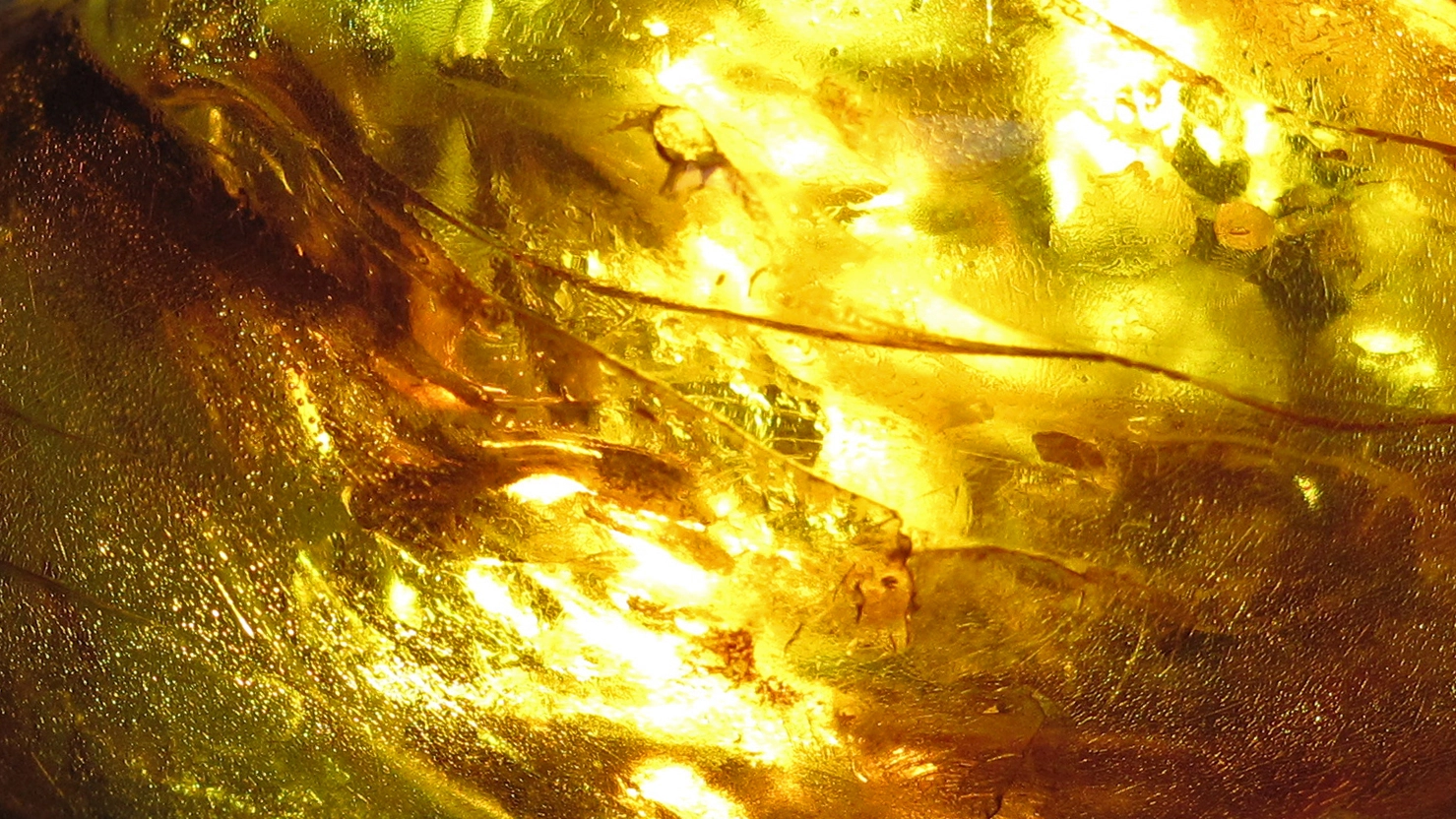
Over millions of years of physicochemical processes, this Baltic resin was exposed to a variety of conditions, fusing with a wide array of organic substances. This is why amber has a diverse range of marvelously preserved inclusions—organisms and fragments thereof, samples of ancient nature.
Inclusion in Baltic amber (caddisfly – about 13 mm long, from the head to the end of the leg), photo: Anders L. Damgaard, CC BY-SA 4.0, Wikimedia Commons Inclusion in Baltic amber (aphids – about 1.6 mm long, without wings), photo: Anders L. Damgaard, CC BY-SA 4.0, Wikimedia Commons
Along the Elbe and the Vistula
There was an interest in amber even back in prehistoric times. People were extracting it ten thousand years ago, as evidenced from its presence in late-Paleolithic burial sites. Yet it was only demand from the ancient inhabitants of the Mediterranean basin that led to the creation of an infrastructure for circulating it on a larger scale.
The first amber shipments set off from the coast of the North and Baltic seas to the Adriatic in the Bronze Era. Initially, the amber trail went along the Elbe, cutting through the Alps, not far from present-day Resia and the Brenner Pass. Over time, however, a new route was marked out, from the Vistula through Greater Poland, Silesia, and the Moravian Gate to the pass of the Eastern Alps, and onward via the Isonzo River to the northern part of the Adriatic Bay. There the road forked: one arm led toward the Padua Delta, the other headed for the eastern coast of the Adriatic, running from there to the shores of the Mediterranean.
Initial trade in the “gold of the north” was probably a series of short-range transactions. The price of amber was already quite high by the time it reached a Greek or Roman customer—many middlemen added their mark-ups along the way. Direct exchange between Italy and the Baltic region only began in the first century CE. It was then, too, that the first measurements were taken of the distances between the two regions. This had not been done before, though not because of limited opportunities or neglect—owing to the secrecy shrouding the amber trail, traders could say it had traveled whatever distances they pleased, often making absurd claims, giving their goods an even more exotic flavor and hiking up the price. High demand for amber caused the communities trading it to grow wealthy. It also brought about a total transformation of the original market in the Mediterranean region and utterly pushed out Sicilian amber.
Death and the Young Man
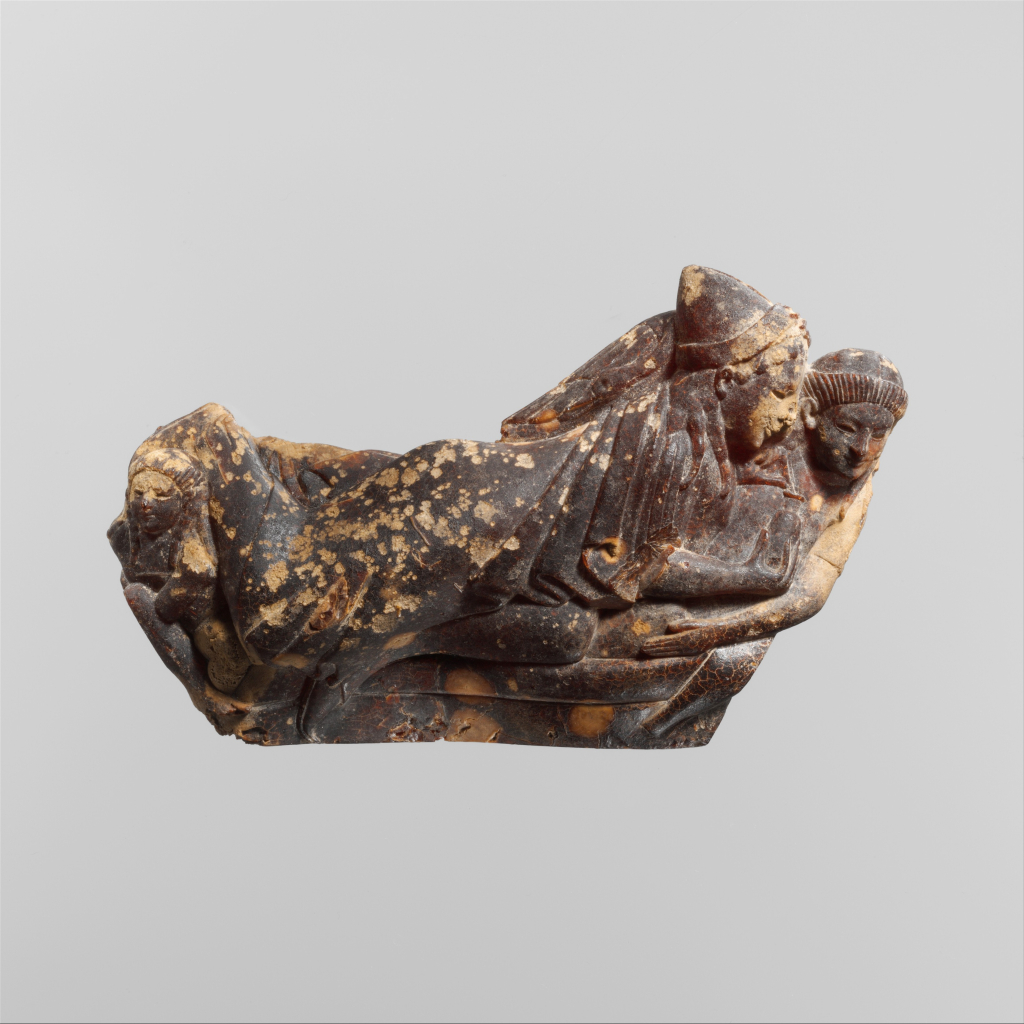
talian Etruscans connected amber with the sun, magic, and vitality, but also with death. Pieces with inclusions were particularly associated with the afterlife—ancient life caught in a trap. For the Etruscans, such amber was a symbol of life after death.
To ease the journey to the hereafter, the amber amulets they possessed were placed in Etruscan tombs, to be used in the afterlife. Owing to its supposed magical protective properties, amber was favored by Etruscan women, and their resting places are where it is most often found—this connection is so reliable that finding amber often helps archeologists determine the gender of the deceased.
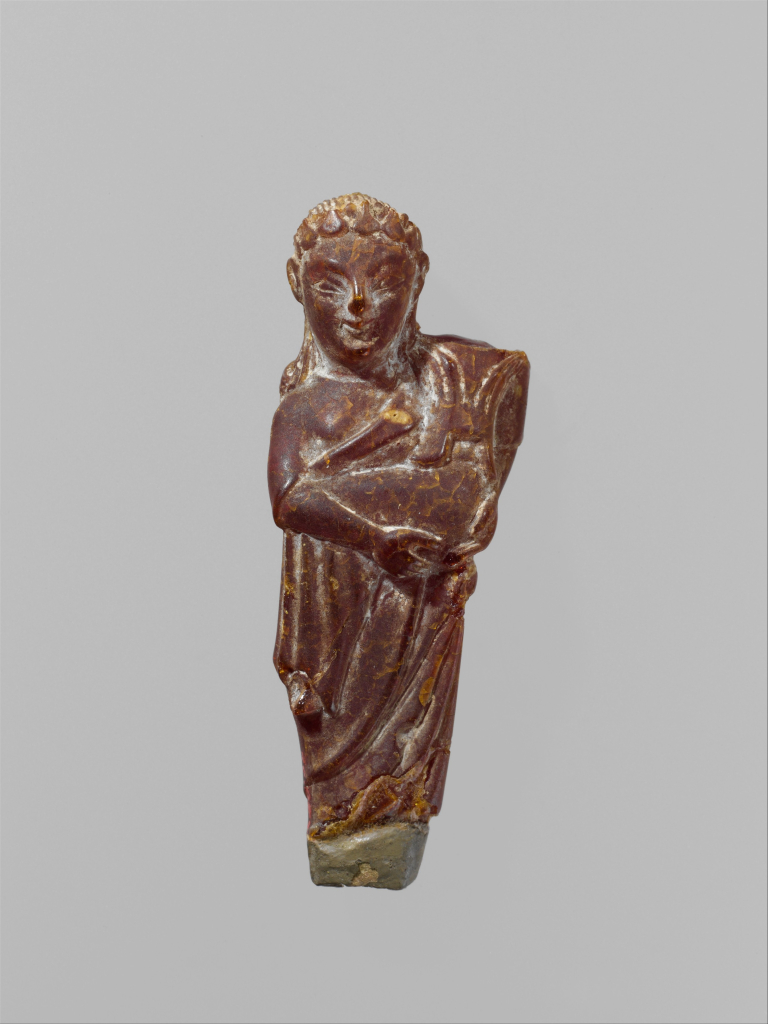
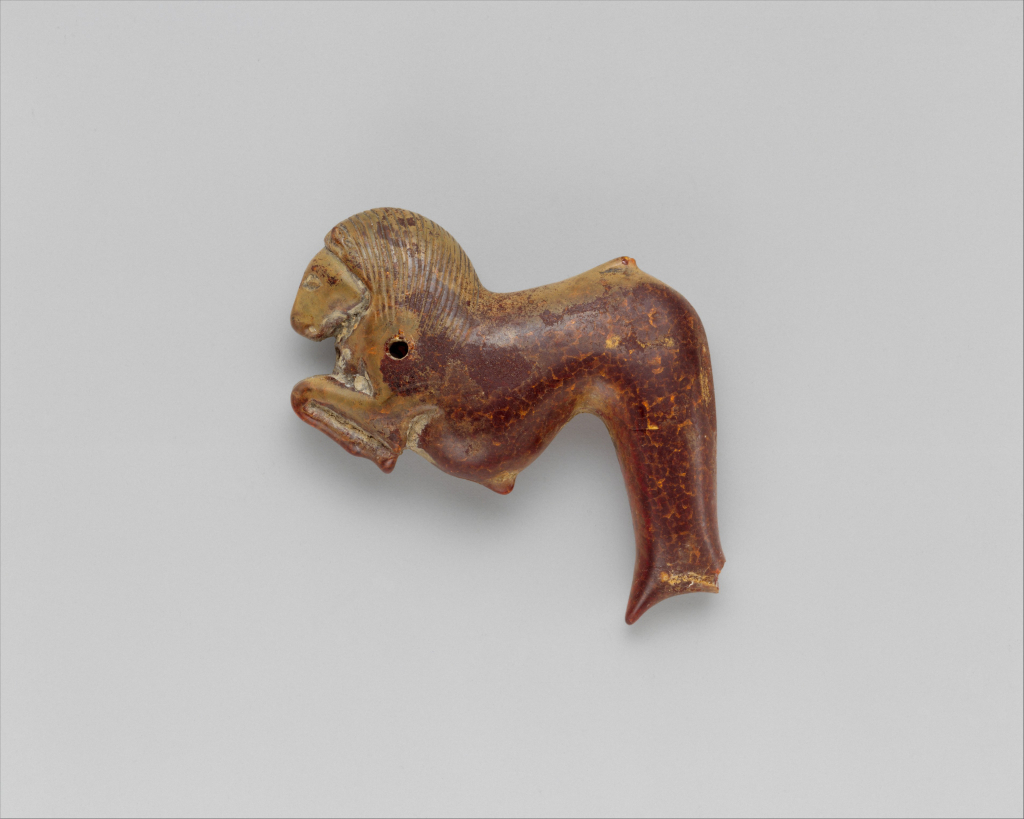
Etruscan fibula in the shape of a lying couple, 5th century BC, photo: MET/public domain Etruscan pendant – figure of a woman carrying a child, 5th century BC, photo: MET/public domainEtruscan pendant – Hippocampus, 5th century BC, photo: MET/public domain
Many Mediterranean amber origin myths tie it to the tragic death of young men. The most famous of these is surely the Greek myth of Phaethon, told by Ovid in his epic Metamorphoses (ca. eighth century CE). While it is true that the story was mentioned by older Greek authors, such as Plato and Euripides, Ovid’s version most unequivocally speaks of amber.
Phaethon was the son of the sun god (Roman: Sol; Greek: Helios) and the Oceanid Clymene, and lived in the world of humans, in the kingdom of his father-in-law, Merope. The young man liked to boast of his divine parents, but one day his friend Epaphus, son of Jupiter (Greek: Zeus) and the nymph Io, challenged Phaeton’s parentage. Ashamed, Phaethon went to his mother to beg her to confirm his lineage. While giving him her assurance, she suggested he take his request to Sol himself. Following her advice, Phaethon headed east, through Ethiopia and India, to the glistening palace of Sol. The god greeted him warmly and assured him of his parentage. As proof, he swore on the River Styx he would make his son’s every wish come true. Emboldened by this declaration, Phaethon asked to drive his father’s solar chariot for just one day. Recognizing how perilous this would be for his son, Sol tried to discourage him. Alas Phaethon insisted, and bound by his oath, the father ultimately conceded.
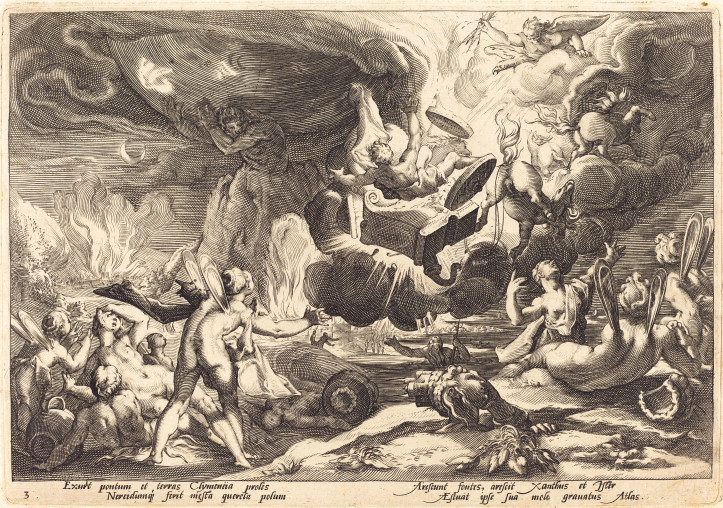
At dawn, Phaethon joyfully set off across the sky. However, the flaming horses pulling the chariot were unable to feel Sol’s weight, and decided their vehicle was empty. Freeing themselves from Phaethon’s control, they ran off course, causing wanton destruction on Earth. The flames of the low-riding chariot consumed the lands, scorching the hills, fields, and forests, drying out the rivers. Libya became a desert, and the skin of Egypt’s inhabitants went dark. The horses’ rampage brought Gaia herself to a pause, and she in turn called upon Jupiter, who, having no other option, cast a bolt of lightning at the chariot. Cast down from the sky and set aflame, Phaethon fell into the waters of the river Eridanus.
Anonymous Dutch artist (based on Hendrick Goltzius), The Fall of Phaeton – illustration to Ovid’s Metamorphoses, around 1588, photo: MET/public domain
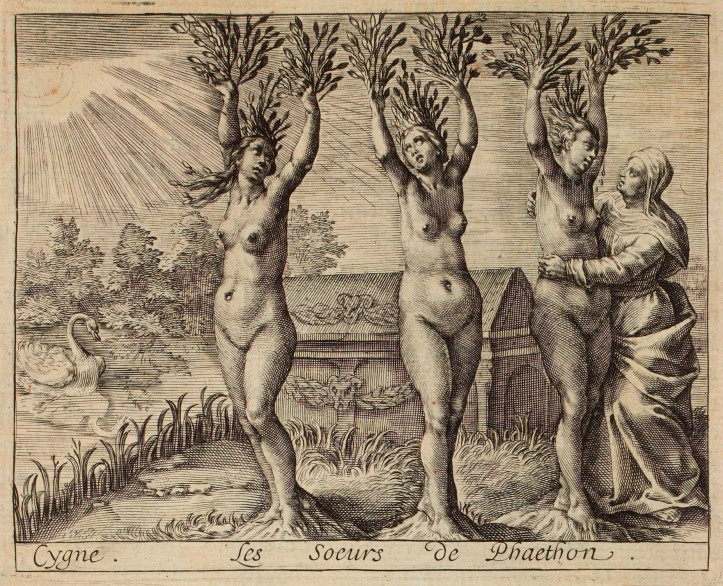
His mother found her son’s grave far up north, and she and her daughters, the Heliades, mourned his death. Their grief lasted so long that the daughters turned into black poplars. Yet their tears flowed on. Hardened in the sun, they fell from the virgin branches as amber. These were swept up by the bright river, found by humans, and gathered to decorate the homes of brides.
Jean Mathieu, illustration to Ovid’s Metamorphoses in the edition by Nicolas Renouard, circa 1619, photo: public domain
The Rubble of an Underwater Castle
Contemplating the origins of amber was quite popular in Antiquity. It is mentioned, for example, by Roman historian and writer Pliny the Elder, born in 23 CE, who devoted a great deal of space to amber in his Natural History. Recapping the various ideas on the applications and origins of amber, Pliny mentions, for instance, the fantastical opinion of Athenian politician Nicias (ca. 470–413 BCE), according to whom it was a fluid produced when the rays of the setting sun struck down hard on the surface of the Earth and left behind a thick, amber-colored “sweat,” later scooped up by the tide and tossed onto the German shore. Despite many such theories, Pliny was conscious of the organic origins of amber. He was convinced that it came from the resin of old pines growing near the North Sea—perhaps in the land of the Hyperboreans on the mythic island of Avalon.
Elsewhere, Pliny’s Natural History rejects the opinion of Athenian speaker and demagogue Demostratus, who named amber with the Etruscan lyncurion, tracing its origins back to the urine of a wild beast known as the “lynx” (the male of the species was thought to produce a red-tinged amber substance; the female, a white one). Pliny aptly observed that this creature must not have been a beast, but in fact a tree the Etruscans called “lynx.” A mistake like Demostratus’s was repeated by many other Roman writers and historians—hearing the word “lynx,” they immediately assumed it was an animal.
Pliny also cites the original German name for amber—glæsum—which later transformed into the English word “glass.” The present German name, Bernstein—derived from the Lower German börnstēn, which means “fiery stone”—is a precursor to the modern Polish word for amber, bursztyn. In turn, the Phoenician jainitar (“sea resin”) gave itself to the old Slavic cognate jantar (“amber”), as well as the Lithuanian gintaras and the Latvian dzintars. The old Lithuanian and Latvian legends describing the creation of amber are quite interesting. They speak of an underwater amber palace destroyed by Perkūnas, the god of thunder, its rubble regularly washed up on the shore of the Baltic.
Religion, Magic, Medicine
Undoubtedly, the fact that amber is warmer and much lighter than other gems, and above all, has electrostatic properties, convinced the ancients of its supernatural quality. As a result, it was more in demand for ritual purposes—funerary rites, religious and magical ceremonies, for restoring health—than for decorative use.
It was used for ceremonial fragrances, in oils, ointments, and incense, like those found in Etruscan tombs. Bits of finely crushed amber were left there, most likely as incense for the hereafter (or at least during the journey to the afterlife). Ancient Egyptians also burned bits of amber, often joining the incense with a symbol of divinity. They believed the smell of burnt resin helped them to reveal the presence of gods; it also simply brought them pleasure. They believed amber came from the tears of the sun god, Ra.
In ancient Greece and Rome amber was used in restorative rituals. It was believed to have the power to absorb illness and misfortune, much as it could attract light objects. Mention of the curative use of amber is even found in the works of the father of medicine, Hippocrates, and its beneficial properties were seen as indisputable right up to the 19th century.
Amber was used to make a curative powder, and was later distributed in a whole array of medicinal products: lozenges, tablets, drops, and various tinctures. It was recommended as a remedy for a vast number of ailments, from urinary tract problems to asphyxiation, from drunkenness to impotence, and for a gamut of transmittable diseases. Pliny mentioned the medicinal properties of amber, attributing the following advice to a little known Roman author, Callistratus: “[…] good for any age, as a preventive of delirium and as a cure for strangury, either taken in drink or attached as an amulet to the body. […] triturated with honey and oil of roses, it is good for maladies of the ears. Beaten up with Attic honey, it is good for dimuess of sight; and the powder of it, either taken by itself or with gum mastich in water, is remedial for diseases of the stomach.”
Grind It up with Crab Eyes
In later centuries, amber was increasingly cited as a medicine for various ailments. German doctor Eucharius Rösslin, alive at the turn of the fifteenth and sixteenth centuries, author of European bestseller on midwifery Der Rosengarten (The Rose Garden), recommended taking amber pastilles, along with four or five spoonfuls of water plantain, to cure excessive menstrual bleeding.
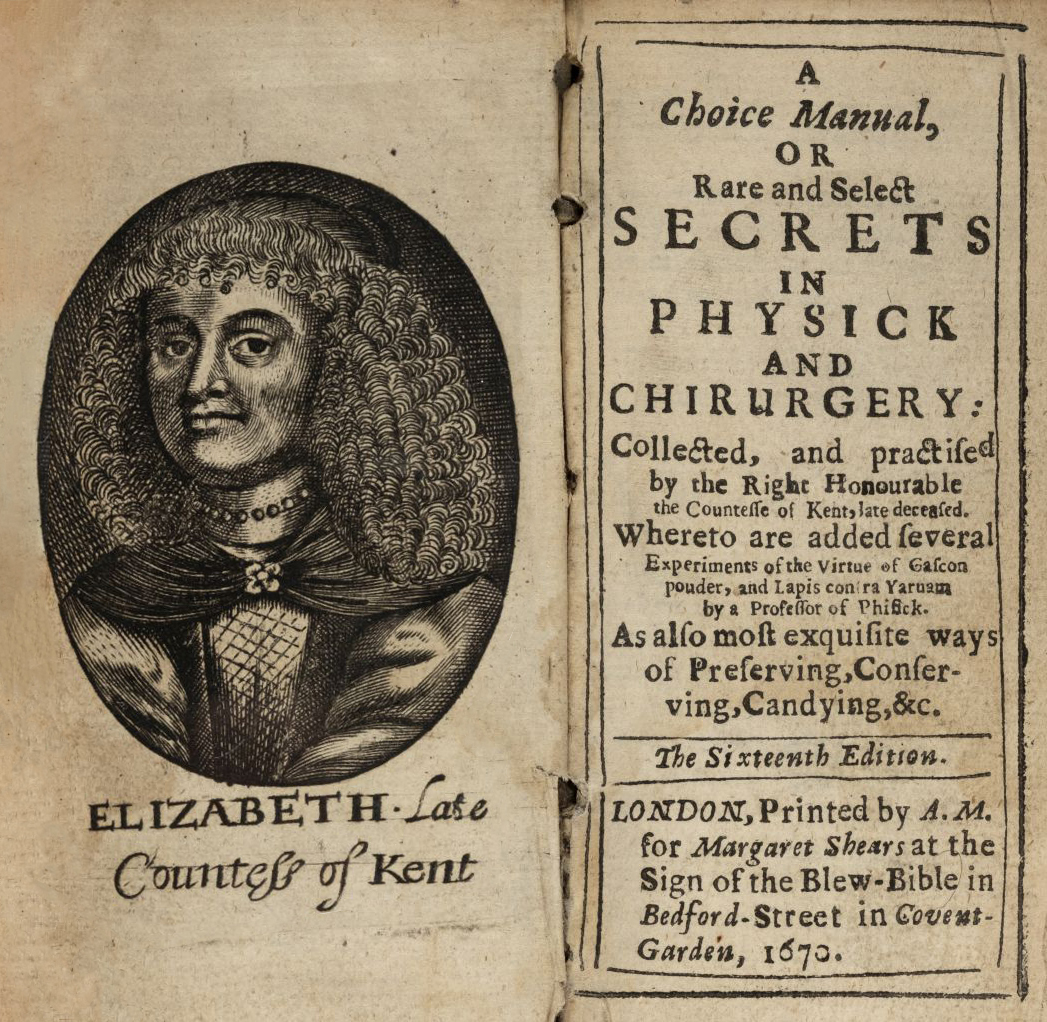
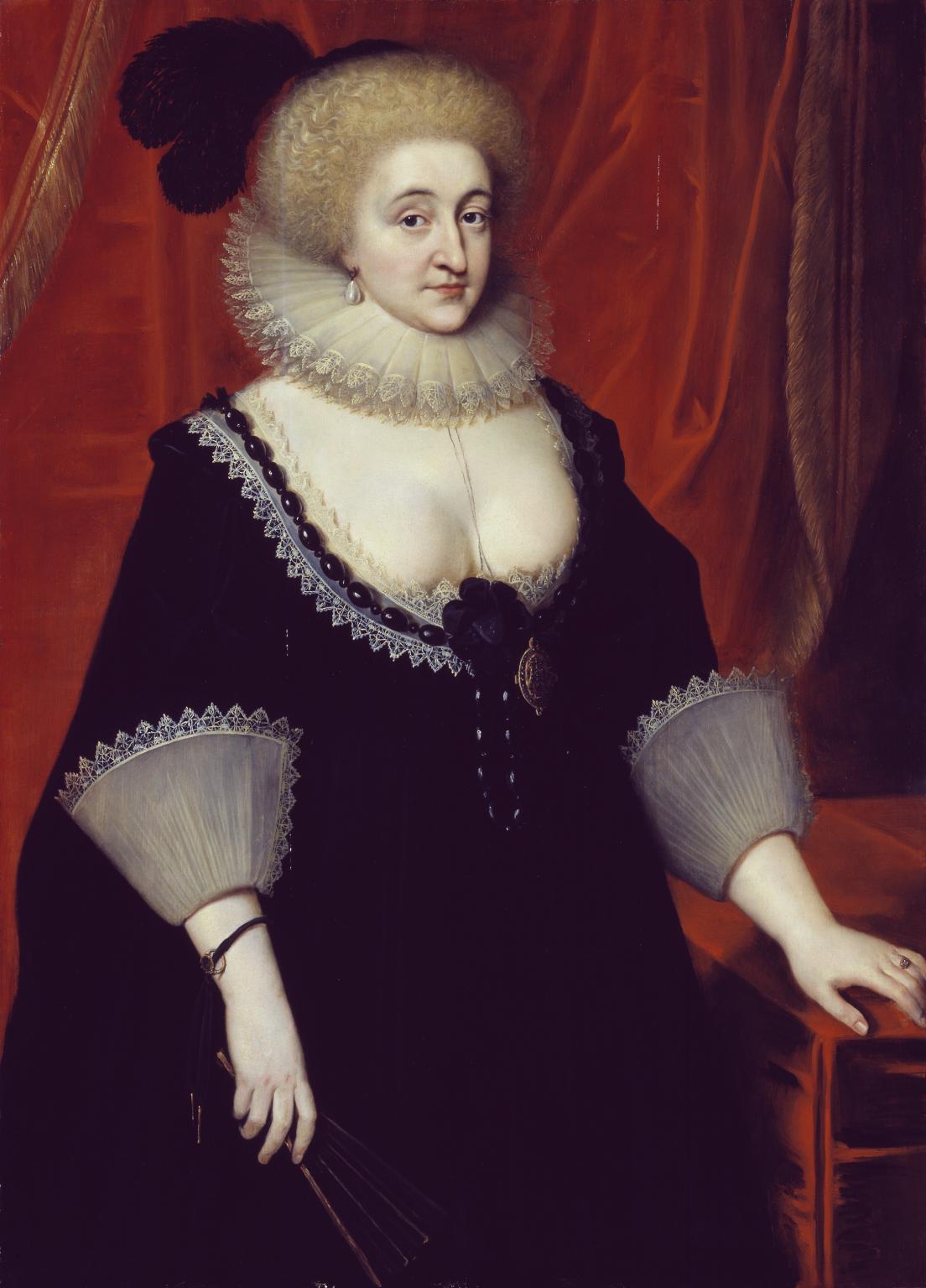
One hundred years later, Felice Passera, an Italian monk of the Capuchin order, wrote in his treatise Il nuovo tesoro degl’arcani farmacologici galenici, e chimici [The New Treasury of Galenic Pharmacological and Chemical Arcana]: “It heats, dries, gently shrinks, tranquilizes, and bolsters.” He took his knowledge of amber’s properties from the writings of a great Greek doctor of the Roman period, Claudius Galenus, known as Galen of Pergamon. In 17th-century Europe, he still enjoyed considerable authority, inspiring, for one, an English collection of medical prescriptions by the Countess of Kent, Elizabeth Grey, who developed a curative amber-based powder. “[…] good against all malignant and Pestilent Diseases, French Pox, Small Pox, Measels, Plague, Pestilence, malignant or scarlet Fevers, good against Melancholy,” ran the ads for the remedy. The countess’s prescription instructed:
Take of the Magistery of Pearls, of Crabs eyes prepared [small stones chiefly made of the calcium found in crayfish stomachs], of white Amber prepared, Harts-horn, Magistery of white Coral: of Lapis Contra Yarvam [the Dorstenia contrajerva root, imported from Peru], of each a like quantity, to these powders infused, put of the black tops of the great claws of Crabs, the full weight of the rest, beat these all into very fine powder, and searce them through a fine Lawn searce, to every ounce of this powder add a dram of true Oriental Beozar, make all these up into a lump, or mass, with the jelly of Harts-horn, and colour it with Saffron, putting thereto a scruple of Ambergreece, and a little Musk also finely powdered, and dry them (made up into small Trochisces) neither by fire, nor Sun, but by a dry air, and you may give to a man twenty grains of it, and to a child twelve grains.
A Manual of Selection, or Rare Secrets of Physics and Surgery Collected and Practiced by the Respected, Recently Deceased Countess of Kent – Title Page, Sixteenth Edition, 1670, London, Photo: Public Domain“Lady Elizabeth Grey, Countess of Kent,” Paul van Somer, ca. 1619, Tate (public domain)
In the context of this recipe it is interesting that, although amber comes in a wide array of colors, it is the white variety that holds a high quantity of succinic acid, whose medicinal properties have now been confirmed. It is not known what drove the countess to choose the color of this ingredient, but the prescription, supported by numerous testimonies of those she cured, swiftly gained success, and was found in the annals of medicine for many years.
In the late nineteenth century, the first efforts were made to undermine many of the aforementioned medicinal properties of amber, which belonged more to medical folklore than science. At the same time, the first serious scientific studies commenced exploring the medical applications of the substance. Thus in 1886, Robert Koch, pioneer of modern-day bacteriology, made an analysis of the succinic acid contained in Baltic amber. He stated that there was no risk of it accumulating in the body, and, above all, declared the positive impact of the substance for one’s health. Today it is known that Baltic amber contains from three to eight percent succinic acid, with proven antibacterial and antiseptic effects, which can be of vital significance in treating some drug-resistant bacterial infections.
Although amber stores the energy and memory of millions of years, unlike diamonds it is unfortunately not eternal. Over time it aerates, and owing to its fragility requires special care from its owner. It is worth taking care of, as it holds marvelous stories and extraordinary beliefs, and its beauty has given luster and power to many objects. While it is a fact that science has not confirmed many of the abilities once attributed to it, this is how it goes with amulets: they do not give us any more than we put into them.
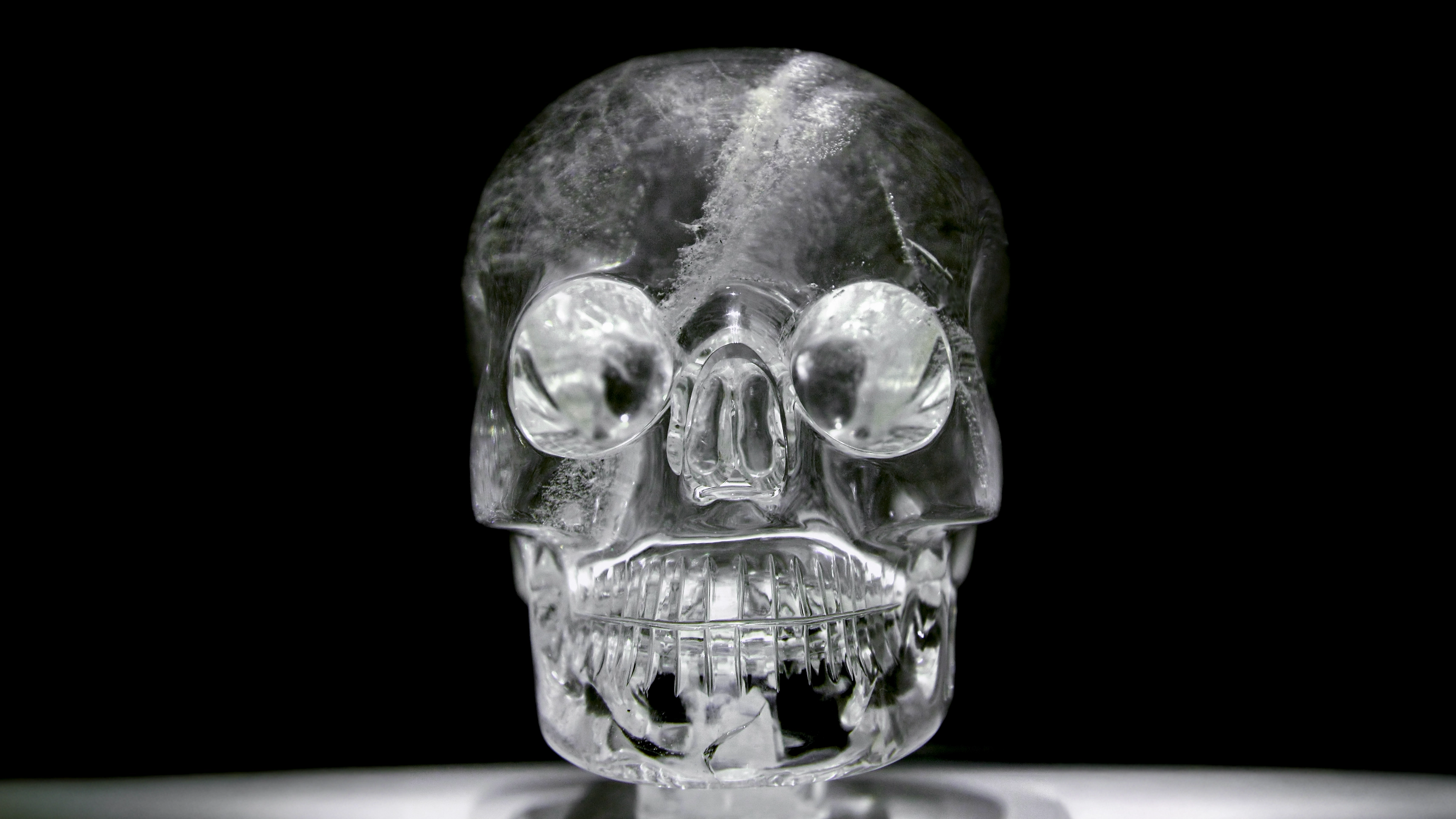
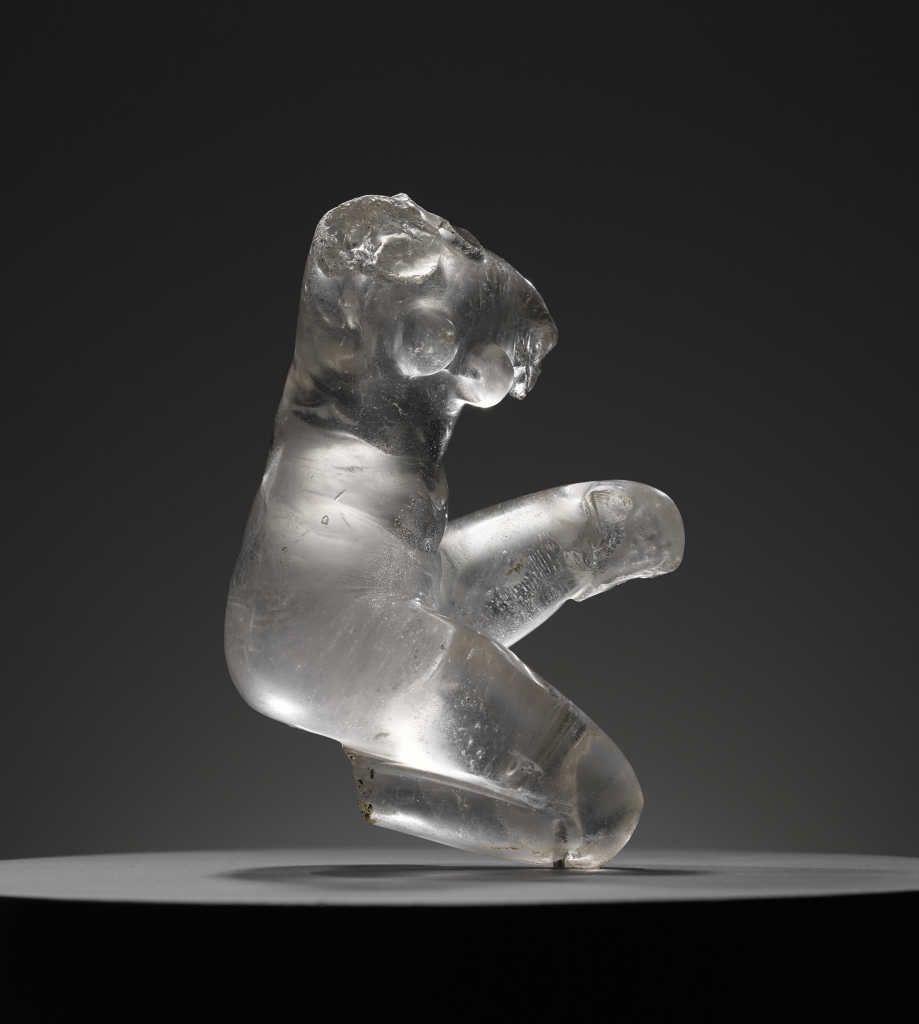
The Romans believed in the power of divination dice made of rock crystal. The advisor to the British Queen Elizabeth I consulted important matters of state with a crystal ball. Belief in the extraordinary properties of this variety of quartz has persisted for centuries.
If a modern person could be transported for a moment to ancient Rome, they would be amazed at how much value rock crystal had for its inhabitants. It was considered a jewel worthy of emperors.
According to the Romans, the mineral’s fragility was proof of its uniqueness. A shattered crystal is irretrievably lost; as Pliny the Elder writes, “the precious pieces cannot be put back together by any means whatsoever.” In his Natural History, the historian known for his passion for precious stones devotes the most space to crystals. In two long chapters, he discusses in detail where they can be found, how they are sourced; he describes their structure and form, and reflects on their peculiar, somewhat opaque transparency.
In the same treaty, Pliny describes the largest rock crystal known to him, gifted by Livia, the wife of Emperor Augustus, to the Capitol—and weighing 150 pounds. The historian also mentions a transaction by a Roman woman who paid the enormous sum of 150,000 sesterces for a single crystal ladle. By comparison, the price of one modius of grain at the time was three sesterces. Pliny also recounts the fate of an unusual stone, an opal, which Mark Antony wanted to buy from the senator Nonius for his mistress, Queen Cleopatra VII of Egypt. The dignitary, however, preferred to renounce his family and flee the country with the gem rather than sell it. According to some modern scholars, the mineral, contrary to its name, may have been a rock crystal that refracted light in an unusual way—it was opalescent.
Another famous Roman historian, Suetonius, in his The Twelve Caesars, mentions Nero’s two favorite cups decorated with Homeric scenes—on hearing that the Senate had declared him a public enemy, he shattered the cups. Pliny, referring to this story, adds that the vessels were crystal and that the emperor broke them so that no one else could use them, thus exacting revenge for the sentence.
Water Turned to Stone
In ancient Rome, there was a widespread belief that rock crystal was a special variety of frozen water. This view was adopted from the Greeks, as reflected in the Greek name krystallos—“pure ice.” Pliny also supports this theory. In his Natural History, he states: “Rock crystal […] is found only in places where the winter snows freeze most thoroughly; and that it is a kind of ice is certain.” According to the scholar, the mineral originates from pure snow—puraque nive—falling from the upper parts of the celestial body.
In his treatise Naturales quaestiones, Seneca pondered similar questions:
Who could fail to suppose that the waters that form rock crystal are very dense? But the opposite is true: it involves very light waters, which cold can freeze very easily precisely because of their lightness. The origin of this kind of stone is obvious to Greeks from their word for it, for they give the name “crystallus” both to this transparent stone and to the ice from which the stone is believed to come. For celestial water contains very little earth, and, when it has gone solid, it is made more and more dense by persistent, long-lasting cold. Eventually all the air is excluded, the water becomes highly compressed, and what had been liquid is turned into stone.
Although both scholars agreed on the origins of rock crystal, Pliny was clearly troubled by its puzzling morphology: “Why it is formed with hexagonal faces cannot be readily explained; and any explanation is complicated by the fact that, on the one hand, its terminal points are not symmetrical and that, on the other, its faces are so perfectly smooth that no craftsmanship could achieve the same effect.” According to the historian, the structure of crystal, which eludes explanation, corresponds with the contradictions one can perceive when looking at the stone—it is perfectly transparent and yet cloudy; close to the earth and yet celestial.
Ask the Icosahedron
Belief in the transcendental nature and aquatic origins of rock crystal explains why so many Roman artifacts made from this mineral were objects intended for magical purposes and dedicated to water symbolism.
One kind of object associated with water were Amphoriskos—small crystal amphorae that held perfumed oils. Yet the most beautiful expression of the connection between crystal and water was in sculpture. This can be seen in the Late Antique crystal statue of Hercules with the Erymanthian boar. The statue alludes to the snow of Mount Erymanthos, where the hero captured the animal, concluding the fourth of his twelve labors. The transparency of another sculpture, made in the first century BCE and depicting Aphrodite, allegorically emphasizes the watery origin of the goddess. The sculptor probably intended for the transparent crystal to take on a flesh-coloured hue in the hand of the person holding it. This gave the impression of the tangible presence of the goddess, making the sculpture even more unusual.
Greek or Roman statuette of Venus, first century BCE. Photo by Sepia Times/UIG via Getty ImagesAncient Roman rock crystal sculpture depicting Hercules with the Erymanthian Boar, fourth century CE (public domain)Roman amphoriskos (flask), ca. 25 BCE. Source: J. Paul Getty Museum, Villa Collection, California
The Romans were convinced that rock crystal made it possible to lift the veil behind which the future was hidden. A popular tool for divination at the time were crystal dice in the shape of an icosahedron. The icosahedron, called ikosaedr in Greek, is one of the Platonic geometric solids and symbolizes water. Letters, and sometimes numbers, are engraved on each triangular facet of the dice. It is assumed that the throw of the crystal dice determined the choice of oracle, i.e., to which temple—where the priestesses foretold the future—it was best to go.
A page from Johannes Kepler’s “Harmonices Mundi,” 1619. In the drawings, symbolic representations of the various elements are inscribed in Platonic solids, for example water in the icosahedron (public domain)
Undoubtedly, the most famous divination device—not only among crystal artifacts—is the crystal ball, or crystallum orbis, also used in ancient Rome. The first author to write about looking for answers in a crystal ball was the aforementioned Pliny the Elder. Faith in the magical properties of these spheres outlasted the Roman Empire.
Mysticism in Service of Politics
In the early Middle Ages, crystal balls were used by the (female) inhabitants of Great Britain—this is known thanks to the archaeological fever that swept through 18th- and 19th-century England. During excavation work at seventh-century burial sites in South East England, particularly around Kent, several crystal balls were discovered. They were all found in the tombs of women, placed between their knees. Marks on the surface of the spheres suggest that they were often worn at the waist. It is believed that, hung on chains or ropes, they were used for healing rituals, during which they were dipped into a liquid—water or wine—with the intention of imbuing it with healing properties. After Christianity spread in the British Isles, the use of magical crystal artifacts disappeared, but not forever.
The first Protestant Queen of England, Elizabeth I, did not shy away from magic, and during her reign crystal balls became legitimate tools of gaining knowledge. This was primarily due to John Dee, the Queen’s famous advisor, who practiced divination using crystal spheres. In 1564, he was appointed “Royal Advisor on Mystical Secrets,” a sort of court astrologer. John Dee, who was also an astronomer, alchemist, and occultist, believed that he communicated with angels and demons through crystal balls. Drawing from his séances, he voiced his opinion on almost every issue of significance in the kingdom. The queen greatly valued his services, which helped to popularize crystallomancy during the Elizabethan era.
John Dee’s crystal, 1582. Source: Wellcome Collection, CC BY-SA 4.0Portrait of John Dee, artist unknown (British School), ca. 1594, Ashmolean Museum. Source: Ashmolean Museum, Oxford
Two and a half centuries later, crystal ball owners no longer had it so easy in Britain. Monarchs did not employ court magicians, and offering to tell fortunes using a crystal ball was considered a criminal offense. A passage from the 1824 Vagrancy Act warned: “Every Person pretending or professing to tell Fortunes, or using any subtle Craft, Means, or Device, by Palmistry or otherwise, to deceive and impose on any of His Majesty’s Subjects […] shall be deemed a Rogue and Vagabond.” Such transgression was punishable by imprisonment in a house of corrections with up to three months’ hard labor. Even so, belief in the power of crystals was well established in the 19th century. Telling fortunes using a crystal ball, among other things, was one of the most popular holiday pastimes in the countryside; occultists were celebrities in London salons. Belief in the existence of supernatural forces was widespread all around the world—it was held by both simple folk as well as the so-called upper classes. This, in turn, opened the gates to an infinite number of fraudsters.
Deceptive Skulls
Indeed, before archaeology attained the status of scientific discipline, it attracted a peculiar mix of intellectuals, eccentrics, antiquarians, and museum curators, for whom self-promotion, charlatanism, and even forgery, were often a way of life. One such figure was the French amateur archaeologist, adventurer, and antiques shop owner Eugène Boban. Relatively little-known today, the Mesoamerican researcher was probably behind the fabrication and popularization of several crystal skulls that are still famous today. The rumor, possibly fabricated by Boban, was that at the time of discovery, the local people told the archaeologists about the magical power these objects possessed.
As many as six skulls of various sizes made of rock crystal can be traced back to Boban. Towards the end of the 19th century, the antiquarian sold three of them, two of which ended up in the Paris Trocadéro Museum in 1878, right after the World’s Fair (Exposition Universelle) in the French capital, where they were exhibited as Aztec antiquities. When the Trocadéro Museum opened to the public in 1882, the artifacts (including the skulls) purchased from Boban served as the gallery’s first Pre-Columbian collection. The third skull was sold to New York’s Tiffany Museum in 1886 and then in 1898 it was acquired by the British Museum. Here it was given a further stamp of authenticity by being grouped with genuine Aztec, Mayan, and Olmec art.
Boban’s skulls long remained some of the most famous artifacts associated with Mesoamerica, although there were also a significant number of skeptics who sensed a forgery. Modern research has proved that the latter were right. All the skulls were made with modern rotary lapidary tools, not available to 15th-century Aztecs. However, it is hard to deny these objects a certain seductive power, a fact reflected in popular culture, where their legend lives on.
Crystal skull from the collection of the British Museum, London (CC0 1.0)
A Down-to-Earth Rarity
One must admit that Eugène Boban showed great cunning in choosing rock crystal as the material for his faked skulls. This fragile rock of exceptional beauty has always appeared to people as something mysterious, even otherworldly. In geological terms, it is nothing else than quartz: a common mineral, made up mainly of silicon dioxide, which makes up about 12 percent of the Earth’s crust weight. The reason for quartz’s abundance is its chemical composition: oxygen and silicon. These elements together produce silica, which, through a slow process, forms crystals.
The outer shape of rock crystal is formed when it grows under favorable conditions, such as in an open rock fracture. As saturation, pressure, and temperature change, oxygen and silicon atoms combine to form the crystal. The chemistry of quartz makes it very stable and resistant to erosion.
For instance, quartz is the main component of common sands and sandstones. The same mineral can also take on more spectacular forms, varying according to admixtures, impurities, and the conditions under which they were formed. The best-known varieties of quartz—sometimes referred to as semi-precious stones—are amethyst, citrine, tiger’s eye or hawk’s eye, as well as chalcedony, which comes in many forms such as agate, jasper, and chrysoprase.
Rock crystal is a colorless and transparent quartz. It is not only European culture that attributed exceptional powers to it. In the Muromachi period (during the 14th to 16th century) in Japan, it would often adorn the then-popular wall niches called tokonoma, which were used to display objects of mystical significance. Quartz was used as a hunting talisman by Indigenous North Americans. There are clues that suggest maban—the material known in Indigenous Australian mythology as mystical, the source of shamans’ magical powers—was, in fact, rock crystal.
One might even go as far as to say that the properties of quartz are even more remarkable than Pliny the Elder, Seneca, and John Dee suspected. The mineral has played a huge role in the development of human technology—from the earliest stone tools to the components of modern machines and appliances.
One of its varieties, piezo-quartz, was used in the early 20th century to build ultrasonic wave transmitters and receivers, and today it is widely used in electronics—wherever a constant electrical vibration frequency is needed. The future was indeed written in quartz.
Notes:
Pliny the Elder, “Natural History,” Book 37, trans. D. E. Eichholz (Harvard: Harvard University Press, 1962)
Lucius Annaeus Seneca, “Natural Questions,” trans, Harry M. Hine (Chicago: University of Chicago Press, 2010)
In Persia turquoise symbolized water and victory, in Mesoamerica it was associated with creative power, while the Egyptians called it mefkat, which meant “joy and delight.” It is a fitting term for turquoise: after all, its luminous color does evoke both of these feelings.
Turquoise appeared in Europe with the caravans of medieval merchants to whom it owes its name. It sounds similar in most modern European languages and derives from the French words pierre turquoise, meaning “turquoise stone.” However, the gem was a source of fascination in much earlier times. What became nothing more than an expensive, beautiful ornament for Europeans, carried a plethora of sophisticated meanings in other parts of the world.
From a geological point of view, turquoise is a relatively rare mineral, consisting of hydrated aluminum phosphate and copper, which is the source of its characteristic shades of green and blue. Variations in the proportions of these elements, as well as admixtures of other substances such as iron and oxides, affect its color and form. Therefore, it is simply impossible to determine the exact color of turquoise stones; some are greenish, some are bluish-green, and some, which are considered the most valuable, have an intense blue tint. They are usually opaque, although there also exist very rare, translucent specimens. Moreover, turquoise stones are fairly soft, which makes them easy to process. Unfortunately, they can fade over time. This explains the undersaturated colors of some ancient turquoise artifacts that have survived the whirlwind of history.
Miners and the Alphabet
It is difficult to say exactly when and where turquoise began to be extracted. An early extraction site may have been the Sinai Peninsula: locals mined the blue stones as early as 5000 BC. This is evidenced by pieces of high-quality turquoise found in tombs on the El-Qaa Plain, in the southwestern part of the peninsula.
A little later, in the Predynastic Period (4000 BC), turquoise began to be extracted by miners who came from the Nile Valley. Six mines were established on the peninsula. Two of them are particularly important to historians: Sarabit al-Khadim and Wadi Maghareh. They are considered to be among the oldest turquoise mines in the world. During the reign of Pharaoh Senusret I of the Twelfth Dynasty (who ruled Egypt between 1947 and 1911 BC), a temple dedicated to Hathor—the goddess of heaven and love, protector of the desert and mining—was erected in their vicinity. Miners made offerings to her before they set out for work, and the building was successively decorated and expanded. Over time, the temple at Sarabit al-Khadim became one of the key sanctuaries in Egypt, as well as the largest and most important site of the Sinai Peninsula. It was there, in the early twentieth century, that a British archaeological mission led by Hilda Petrie and her husband, William Flinders Petrie, discovered dozens of inscriptions written in Proto-Sinaitic script, the oldest known form of the alphabet. According to the archeologists, they were made by the miners themselves, who used characters drawn from hieroglyphs. However, scientists only managed to decipher one word: mʿhbʿlt, meaning ‘Lady.’ It designated the Turquoise Lady, the goddess Hathor.
In ancient Egypt, small items such as amulets, beads and jewelry inlays were made from turquoise. Light blue turquoise, red carnelian (or jasper) and dark blue lapis lazuli constituted one of the most popular color patterns in the country on the Nile. The combination was very popular during the Middle Kingdom period. A magnificent example of this type of inlaid jewelry is the pectoral cross and necklace of Princess Sithathoriunet, found in the El-Lahun pyramid complex and made ca. 1887–1813 BC. It is considered a masterpiece, one of the highest-quality ornaments ever discovered in the tombs of ancient Egypt.
Pectoral and necklace of Princess Sithathoriunet with the name Senuserata II, circa 1887–1878 BC, ancient Egypt; photo: public domainPectoral and necklace of Princess Sithathoriunet with the name Senuserata II, circa 1887–1878 BC, ancient Egypt; photo: public domain
Turquoise, often associated with the culture of the land of the pharaohs, was in fact a luxury raw material there. Jewels decorated with this stone usually belonged to people of royal power or high social standing. Almost all turquoise found in the tombs of ancient Egypt came from the previously mentioned mines on the Sinai Peninsula. Nevertheless, there are a few notable exceptions, all of which were produced in the first millennium BC. They are believed to have come from the ancient Central Asian kingdom of Khwarazm, which supplied turquoise to another empire that was fond of this semi-precious stone: Persia.
The Ring of Glory
Among the numerous gemstones that were highly valued in ancient Iranian courts and temples, turquoise stones held a unique position since they were used in almost every significant work of architecture and art. Their value surpassed gold and they were an important part of royal deposits. The abundance of turquoise-decorated jewelry, dating back to the Median and Achaemenid dynasties, proves the stone was extremely important.
In a twelfth-century book entitled Jauharname Nezami, written by the jeweler Mohammed bin Abul-Barakat Jauhari Nishapuri, turquoise was said to be mined since ancient times in four different regions: the previously mentioned Khwarazm, as well as Khorasan, Transoxania, and Turkestan. Jewelers who traded in turquoise stones were able to identify their origin, as the stones differed in quality and color. Persian turquoise, the ones extracted in Khorasan, were considered the most beautiful. It is worth mentioning that to this day, among jewelers and gem dealers, the name “Persian turquoise” is often used to describe the specimens of highest quality, regardless of their origin.
The most valuable turquoise was mined near the Persian city of Nishapur. The local mines are among the oldest in the world; they may be even older than the Egyptian ones. Although sources give different dates for the beginning of extraction, a legend stating that their first owner was Isaac, son of Abraham, suggests that the mining has been carried out in the region for thousands of years. Between 500 and 600 AD Nishapur became a major Iranian center for trading turquoise and other valuable stones, and held a strategically important position along the old Silk Road which connected Anatolia and the Mediterranean with China.
Turquoise stones were highly-prized jewels in Persia as well, a luxury beyond the reach of ordinary people and a symbol of prestige and power. They were also associated with supernatural properties: it was believed they provide strength and protect their owners from evil, especially from defeat; the Persian name for turquoise, pērōzah, means ‘victory.’ This is why Persian kings liked to decorate personal items with these stones. A monarch holding turquoise insignia and sitting on a throne with turquoise ornaments embodied powerful, steadfast authority. Moreover, it was believed that drinking wine from turquoise-inlaid cups ensured future war triumphs. Legends spoke of the stone’s special power. According to one of them, none of the soldiers whose corpses covered the battlefields were found to have worn turquoise rings. This was supposed to prove that whoever owned a turquoise was invincible.
Persian ring with turquoise, 13th century; photo: courtesy of RISD Museum, Providence, RI
Mares Bring Rain
In Persia, the value of turquoise as a magical gem was primarily associated with its color. To fully understand the significance Persians attributed to its blue hue, one must delve into the myths and cosmological concepts of their culture. One such ancient legend is the Hymn to the Lord of Rain and the Dog Star of Sirius, recorded in the Avesta—the holy book of Zoroastrianism, the religion of ancient Iran. It tells the story of the benevolent deity Tishtrya (also known by the name Tir, the personification of Sirius and guardian of water) waging a cyclic battle against Apaosha, the demon of drought.
The myth recounts the story of Tishtrya who travels once a year to the cosmic sea of Vourukaṧa in the form of a beautiful white stallion with golden ears and a golden barding. There he is reunited with the mares that emerge from the foamy depths. Before this can happen, however, he must confront Apaosha, who brings drought and resembles a menacing black horse. After a battle that lasts three days and three nights, Apaosha wins. Upon leaving the battlefield, Tishtrya confesses to the supreme god, Ahura Mazda, that he did not have enough strength to vanquish Apaosha because the people did not make the right offerings and did not worship him properly. In response, Ahura Mazda himself offers a sacrifice to Tishtrya, which allows the deity to gain enough power to win. His triumph thus depends on the worship of his followers in the year preceding the duel. If they do not skimp on prayers and offerings, he will prevail and cover the mares, which will then be lifted by the god of wind, Vayu-Vata, toward the clouds, and there they will give birth to the much-awaited rain.
The fight between Tishtrya and Apaosha is interpreted as a mythical tale about two important events for the Persians. The first is the heliacal rising of Sirius, which occurs in July. The second—the arrival of the hottest and driest season of the year. The heliacal rising occurs when a star or planet, after a period of invisibility, appears above the horizon for the first time, just before dawn. The Persians considered the appearance of the shimmering Sirius to be a sign of Tishtrya’s struggle with Apaosha. Every night the star became more and more visible and its blue light shone brighter, which was believed to herald the fall of Apaosha. Finally, the hot period is followed by the rainy season that revives the land. To this day, the name of the fourth month of the Iranian calendar, Tir, reminds us of Tishtrya’s struggle with the demon of drought. The myth demonstrates the importance of water in desert Iran. Its symbolic representation, the color blue, is the reason why turquoise stones were of such great value to the Persians.
The love of turquoise was adopted by the culture of Islam after the Arabs won over the Sassanids and dominated Iran. The heritage of the ancient Persians was supported by the words of Muhammad, written down in the Hadis. The Prophet supposedly said, “God will not cut off the hand that wears a turquoise ring.” According to Muslim tradition, turquoise was supposed to be a gift from paradise brought to Muhammad by the archangel Gabriel. But more important in Arab culture than the stone itself is its color. The Arabs consider the distinctive shade of Persian turquoise to be one of the seven colors of paradise. To them, it symbolizes heaven, faith, and the infinity of the soul.
Mihrab (prayer niche) decorated with a mosaic of glazed tiles, 1354–1355, Isfahan, Museum of Murdern Art, New York; photo: public domain
Pupal Warriors
Apart from the Middle East, Egypt or Central Asia, turquoise deposits may also be found in the Americas. The stone was primarily valued by the ancient civilizations of Mesoamerica, an area stretching from central Mexico to the Isthmus of Panama. However, most of the specimens came from today’s southwestern United States, proving that turquoise was an important trade item between these regions.
In the Aztec Nahuatl language, turquoise is called xihuitl. The same word was also used to refer to fire, the solar year, comets, nobility, and grass. The stone was an important symbol in Aztec poetry, ritual, and cosmology. In addition, it was used to decorate jewelry, masks or ceremonial weapons. Today, artefacts embellished with turquoise mosaics are the best-known examples of Mesoamerican arts and crafts. Their creators typically used small tiles made of precious stones and other materials, which they glued onto a wooden base, using a mixture of charcoal and chia or sage seed oil, as well as wood or fossil resins as a binder. Initially, the Mesoamerican people decorated their works with mosaics made of jade, which was the most prized gem in the region at the time. It was only at the end of the Classical period, around 900 AD, that this green stone was almost completely supplanted by its main competitor, turquoise.
The most beautiful examples of turquoise mosaics date from the late Post-classical period (the thirteenth to sixteenth centuries) and were probably made by highly skilled Mixtecan artisans (the Mixtecs are a group of indigenous people from the modern Mexican states of Oaxaca, Guerrero, and Puebla in Mexico). Delightful examples of this type of ornamentation have survived to the present day. They include a magnificent pectoral in the shape of the two-headed snake Xiuhcoatl, made of cedar wood and covered with a mosaic of turquoise, red oyster shells of the Spondylus princeps species, and white pieces of sea-snail shells of the Strombus genus.
For both the Aztecs and the ancient Persians, turquoise was more than just an extravagant ornament. It served an important ceremonial function, became a symbol of nobility and a metaphor for life in the social and religious spheres. The importance of these jewels was starkly illustrated by the Spanish chronicler Bernardin de Sahagún who described the gifts that the emissaries of Emperor Montezuma II gave to Hernán Cortés, believing him to be the incarnation of the god Quetzalcoatl who had arrived in Mexico. In his Florentine Codex, de Sahagún described the following gifts: […].
“First was the array of Quetzalcóatl: a serpent mask made of turquoise mosaic; a quetzal feather head fan; a plaited neck band of precious green stone beads, in the midst of which lay a golden disc; and a shield with bands of gold crossing each other, or with bands of gold crossing other bands of sea shells, with spread quetzal feathers about the lower edge and with a quetzal feather flag; and a mirror upon the small of the back, with quetzal feathers, and this mirror for the small of the back was like a turquoise shield, of turquoise mosaic-encrusted with turquoise, glued with turquoise; and green stone neck bands, on which were golden shells; and then the turquoise spear thrower, which had on it only turquoise with a sort of serpent’s head; it had the head of a serpent; and obsidian sandals.”
Turquoise was referred to as a “heavenly stone,” but at the same time it remained closely associated with fire and the sun (which was made, the Aztecs believed, of turquoise). For this reason, the Aztec god of fire was named Xiuhtecuhtli, or Turquoise Lord, and his spiritual form was the turquoise fire serpent, Xiuhcoatl. It is likely that the diadem of the Aztec kings, called xiuhuitzolli—“pointed turquoise thing”—symbolized the creature’s tail. Interestingly, Aztec beliefs linked the Xiuhcoatl not only to fire, but also to meteorites. They believed that once the cosmic rocks hit the ground, they transformed into immaterial worms and caterpillars, which were the pupal souls of warriors.
A page from the medieval Codex Mendoza, a document describing the history of the Aztecs; photo: public domainA card from the medieval Codex Mendoza, a document describing the history of the Aztecs – a fragment depicting Emperor Montezuma II in a turquoise crown; photo: public domain
The Jewel’s Promise
At first glance the associations made between the blue stone and fire may seem puzzling, but they are quite easy to explain. The color of turquoise is the color of the heart of the flame. Fire, in turn, was a sign of renewal and fertility for the Aztecs; the New Fire ceremony marked the beginning of the Aztec calendar cycle, which was fifty-two years long. Thus, although the symbolism of turquoise in Mesoamerica and Persia differs greatly, it does have a common feature—that of a hidden meaning, similar for both cultures. Furthermore, if we consider that the Egyptian Turquoise Lady, the goddess Hathor, looks after the souls of the dead and gives birth to the Sun god Ra every day at dawn, we may conclude that the beautiful, joyful color of turquoise promises the exact same thing always and everywhere: new life.